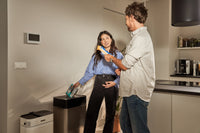
AI technology and recycling symbol representing smart waste sorting and sustainable plastic recycling

How ZeroTrash® AI Helps You Identify Soft Plastics Correctly

Alena Hileuskaya
AI technology and recycling symbol representing smart waste sorting and sustainable plastic recycling
Navigation

ZeroTrash® AI is designed to take the guesswork out of everyday waste decisions. Using a camera-based interface, the app analyzes packaging to help you determine whether an item is a soft plastic, fits accepted resin types, and is suitable for soft plastic compaction.

Instead of relying on symbols or vague recycling rules, you can quickly figure out what an item is and how to properly discard it. Receiving this type of immediate, item-specific feedback can significantly improve trash sorting and reduce contamination in the recycling process.

How much soft plastic do we end up throwing away by mistake? Probably much more than you think. Keep reading to learn how to properly sort your plastics and keep them out of landfills.

15 Common Soft Plastics People Throw Away by Mistake

Below are some of the most commonly mis-sorted soft plastic items found in household waste streams.

  1. 1. Chip Bags and Snack Wrappers
    Often assumed to be unrecyclable due to their shiny appearance, many snack wrappers contain layers of soft plastic that can be compacted when accepted by downstream processors.
  2. 2. Cheese and Deli Packaging
    Flexible cheese sleeves and deli wrap films are frequently discarded, even though they belong in the soft plastic category once emptied and cleaned.
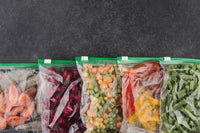
  3. 3. Frozen Food Bags
    Frozen vegetable and fruit bags are a major source of soft plastic waste and are commonly thrown away because they look “too thick” to recycle.
  4. 4. Bread Bags
    One of the most recyclable soft plastic items, bread bags are still among the most frequently trashed.
  5. 5. Produce Bags
    Lightweight produce bags are often forgotten or knotted and discarded, despite being a core soft plastic.
  6. 6. Cereal Box Liners
    The plastic liners inside cereal boxes are rarely recognized as recyclable soft plastics.
  7. 7. Takeout and Delivery Packaging
    From inner wraps to plastic liners inside delivery bags, many of these materials are soft plastics hidden in plain sight.
  8. 8. Bubble Wrap
    Often reused, but just as often trashed, bubble wrap is a recyclable soft plastic when properly compacted.
  9. 9. Plastic Film from Paper Products
    The plastic wrap around paper towels, toilet paper, and tissues is a common soft plastic item people overlook.
  10. 10. Dry Cleaning Bags
    Large, thin plastic films from dry cleaning are frequently misidentified and discarded.
  11. 11. Pet Food Bags
    Many pet food bags include soft plastic layers that people assume are non-recyclable.
  12. 12. Plastic Overwrap from Multipacks
    Shrink-style overwraps around multi-item products are rarely sorted correctly.
  13. 13. Shrink Wrap
    Clear or tinted shrink films are widely used in retail packaging and commonly trashed.
  14. 14. Packaging from Online Orders
    Mailer liners, air pillows, and inner plastic films from packaging add up quickly.
  15. 15. Soft Plastic Pouches
    Stand-up pouches and refill packs are increasingly common and often thrown away due to their shape and structure.

Why Proper Sorting and Compaction Matter for Recycling

Soft plastics are lightweight and easily contaminated. When incorrectly sorted, they can jam recycling equipment, lower material recovery rates, and increase processing costs.

According to research from materials recovery organizations, pre-sorted, compacted soft plastics have a significantly higher chance of being successfully recycled into secondary products. Correct sorting at the household level directly improves the economics and feasibility of recycling downstream.

Soft plastic bags tangled in recycling machinery while workers inspect a jam at a materials recovery facility

Environmental Impact of Correct Soft Plastic Recycling at Home

Soft plastics that are handled correctly can reduce landfill volume, decrease plastic leakage into ecosystems, and lower the demand for virgin plastic production.

One of the most immediate ways you can reduce your plastic footprint is by improving your household’s plastic collection, especially for flexible packaging. Small, consistent actions at home scale into meaningful environmental outcomes.

So, how can you ensure your plastic gets recycled properly? First, scan the item using ZeroTrash® AI, then add it to your Clear Drop Soft Plastic Compactor (SPC).

How To Get Started With ZeroTrash® AI and the Soft Plastic Compactor (SPC)

Getting started is intentionally simple. Use ZeroTrash® AI to scan everyday packaging, and follow the app’s guidance for sorting.

Once an item is identified as a suitable soft plastic, the next step is proper preparation.

What the SPC helps households do

  • Compress soft plastics into dense, manageable forms
  • Reduce storage volume
  • Keep materials clean and consolidated
  • Prepare plastics for real recycling pathways

Compaction is critical because loose soft plastics are difficult to handle, transport, and process at scale.

Together, ZeroTrash® AI and the SPC form a practical system for reducing soft plastic waste confusion at home.

Making Soft Plastic Recycling Simple and Clear

Soft plastic recycling doesn’t fail because people don’t care — it’s because the system is too often unclear.

By combining clear identification (ZeroTrash® AI) with practical preparation (SPC), you can finally make informed decisions without memorizing rules or second-guessing every package. The result is not about perfection but making real, tangible progress.

Latest posts All posts

Soft Plastic Compactor vs. Curbside Recycling: The Real Difference
Soft Plastic Compactor vs. Curbside Recycling: The Real Difference
Most people assume recycling works when something goes into the blue bin. But for soft...
How Your Household Can Save Up to $240 a Year on Trash Costs

How Your Household Can Save Up to $240 a Year on Trash Costs

Household trash bills are rarely questioned. Most people accept them as a fixed cost, just like...
How ZeroTrash® AI Helps You Identify Soft Plastics Correctly

How ZeroTrash® AI Helps You Identify Soft Plastics Correctly

ZeroTrash® AI is designed to take the guesswork out of everyday waste decisions. Using a camer...
Why CES 2026 Shifted the Conversation Around Household Waste

Why CES 2026 Shifted the Conversation Around Household Waste

CES has always been a place for bold ideas and ambitious visions. But this year, we noticed a sub...
How to Compost in an Apartment (Without Annoying Your Neighbors or Your Landlord)

How to Compost in an Apartment (Without Annoying Your Neighbors or Your Landlord)

More than one-third of U.S. household waste is organic and could be composted instead of decompo...
Post-Holiday Waste Reset: Starting 2026 With a Clean, ZeroTrash® Kitchen

Post-Holiday Waste Reset: Starting 2026 With a Clean, ZeroTrash® Kitchen

The holidays may bring plenty of celebration — but they can also leave a big mess, between a clut...
From Trash to Treasure: Real Products Made From Recycled Soft Plastics (and How Clear Drop Makes It Happen)

From Trash to Treasure: Real Products Made From Recycled Soft Plastics (and How Clear Drop Makes It Happen)

Fun fact: Soft plastics aren’t “unrecyclable.” They’ve just been collected the wrong way for over...
Holiday Composting Guide 2025: How to Reduce Waste at Christmas & New Year Events

Holiday Composting Guide 2025: How to Reduce Waste at Christmas & New Year Events

The holidays bring plenty of food, cheer, and …. waste? With all those extra food scraps, packagi...
How Much Food Americans Waste and What You Can Do

How Much Food Americans Waste and What You Can Do

Key Takeaways Americans waste 30%-40% of their total food supply each year (USDA, 2024). In 2...
How the Shaw Institute Successfully Started to Recycle Laboratory Soft Plastic Waste for the First Time with SPC

How the Shaw Institute Successfully Started to Recycle Laboratory Soft Plastic Waste for the First Time with SPC

The Shaw Institute in Blue Hill, Maine, is a respected nonprofit research organization studying t...
10 Soft Plastics You Didn’t Know You Could Recycle at Home

10 Soft Plastics You Didn’t Know You Could Recycle at Home

Key Takeaways Only 1% of U.S. households have access to curbside film recycling. Home devices l...
How Clear Drop’s Soft Plastic Compactor (SPC) Recycling System Works | Clear Drop

How Clear Drop’s Soft Plastic Compactor (SPC) Recycling System Works | Clear Drop

At Clear Drop, we’re redefining what responsible soft plastic recycling looks like.Our Soft Plast...
How Geekdom sparked early wins in soft plastic recovery with the Clear Drop's SPC

How Geekdom sparked early wins in soft plastic recovery with the Clear Drop's SPC

Geekdom is a cornerstone of San Antonio’s startup and innovation ecosystem. Spread across four fl...
How Trinity University advanced soft plastic recycling with the SPC

How Trinity University advanced soft plastic recycling with the SPC

Flexible plastic waste is one of the most persistent challenges on college campuses. From snack w...
From soft plastic to microplastic: what to know

From soft plastic to microplastic: what to know

Soft plastic packaging surrounds almost every product we buy — bags, wrappers, film, shipping pac...
Survey reveals trash sparks more fights than childcare, and why recycling Is at the heart of It

Survey reveals trash sparks more fights than childcare, and why recycling Is at the heart of It

Trash duties are the most underestimated part of modern household life—yet they’re one of the big...
How one office building pilot became a model for smarter soft plastic waste reduction

How one office building pilot became a model for smarter soft plastic waste reduction

Commercial buildings generate a large share of soft plastic waste — from deliveries, shipments, ...
Official rules: Clear Drop OC pre-order giveaway

Official rules: Clear Drop OC pre-order giveaway

The drawing was heldWINNER SELECTION VIDEO1. SPONSOR The Clear Drop Pre-Order Giveaway (the “Give...
Fixing the broken recycling system: why Clear Drop® exists

Fixing the broken recycling system: why Clear Drop® exists

The global recycling system is struggling to keep up with the waste we generate. Most soft pla...
Getting started with soft plastic waste collection at home

Getting started with soft plastic waste collection at home

Flexible packaging makes everyday life easier, but most soft plastics still end up in landfills b...
How Eduardo's Bridal & Tuxedo reduced soft plastic waste volume by 90% with the SPC

How Eduardo's Bridal & Tuxedo reduced soft plastic waste volume by 90% with the SPC

Garment retail businesses rely heavily on flexible plastic packaging to protect inventory. But on...
Clear Drop: how we’re revolutionizing home waste management

Clear Drop: how we’re revolutionizing home waste management

Most household waste still ends up in landfills, not because people do not want to recycle, but b...
Why business recycling matters: a key to corporate sustainability

Why business recycling matters: a key to corporate sustainability

Corporate sustainability is now a critical business priority. Both employees and customers expect...
Tackling plastic in the healthcare industry: challenges and solutions

Tackling plastic in the healthcare industry: challenges and solutions

U.S. healthcare produces more than 5 million tons of waste every year, and plastics account for a...
Composting: electric vs. professional or traditional options

Composting: electric vs. professional or traditional options

In the United States, food scraps make up a significant share of household waste, yet only about ...
Soft plastic recycling: key challenges and solutions

Soft plastic recycling: key challenges and solutions

Soft plastics like grocery bags, bubble wrap, and packaging film make up a growing share of U.S. ...
All posts

FAQs