Introduction
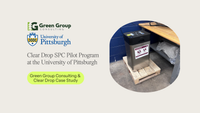
Initiated during the 2025-2026 academic school year, Green Group Consulting conducted the first Clear Drop Soft Plastic Compactor (SPC) flexible film recycling pilot program at the University of Pittsburgh. Green Group collected data on SPC usage and output to develop this preliminary case study on the use of the Clear Drop SPC in university systems.
Background
Flexible plastic film and other soft plastics are considered hard-to-recycle materials because they cannot be sorted or consolidated without specialized equipment that most materials' recovery facilities (MRFs) do not have. This limitation arises because, when conveyed at the MRFs alongside rigid recyclables, the film wraps around rotating shafts and pulleys, creating tangles that twist into “ropes” requiring manual removal. Flexible plastic film obstructs the sorting system as tangles occur. There is also the issue of small plastic pieces such as pouch size packages that don’t convey well through any recycling system and find their way to the landfill, or worse, the environment.
These challenges are particularly significant for entities and jurisdictions that must meet recycling targets. In states such as California and Oregon, where new Extended Producer Responsibility (EPR) laws mandate recycling goals for hard-to-recycle materials, solutions that increase diversion are critical.
Universities and hospitals are especially well suited to test these solutions. As self-contained ecosystems, they generate a high volume of flexible film waste, maintain existing recycling infrastructure that a pilot can plug into and typically operate under institutional sustainability goals that call for increasing recycling rates and reducing waste-to-landfill. Green Group and Clear Drop identified this combination of characteristics as ideal for piloting a diversion solution: the Clear Drop Soft Plastic Compactor.
Clear Drop
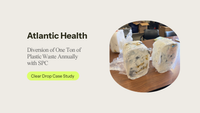
The Clear Drop Soft Plastic Compactor uses compression and heat to condense high-density and lowdensity polyethylene (HDPE, LDPE), polypropylene (PP) and expanded polyethylene (EPE)1 into lightweight blocks that can be more easily transported and recycled.
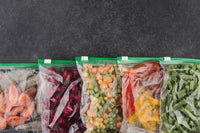
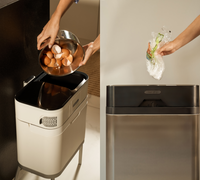
As a smaller, consumer-targeted unit, it is effective at diverting common household flexible films, such as plastic wrap and shopping bags; that would otherwise be discarded. Small items, like the much-maligned PP straw, also work well in the SPC.

Figure 1: Clear Drop SPC
In individual form, these flexible films become tangled in sortation equipment or removed for landfill. Once condensed into block form, however, they convey as a single rigid item that can be transported without additional wrapping. In principle, they can then be sorted like any other rigid PE or PP plastics collected through curbside programs.

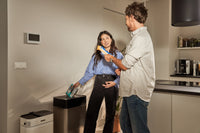
Figure 2: Feeding material into SPC unit
We will refer to these collectively as “soft plastic” or “flexible film”
Green Group Consulting
Green Group Consulting conducted the pilot program on behalf of Clear Drop to evaluate the operational realities of deploying the SPC in real-world settings. The firm’s experience in plastics and recycling made it well suited to design such a program. As Clear Drop’s recycling industry-expert, Green Group was already familiar with the company’s goals and products.
Green Group has established connections with research institutions across the country and, in the course of its work, has gained insight into the recycling needs of non-residential entities, particularly university and healthcare systems. Green Group identified the University of Pittsburgh as a prime candidate for launching the pilot program because of their commitment to sustainability and expressed interest in solutions for reducing laboratory single-use plastic packaging waste.
The University of Pittsburgh
The University of Pittsburgh enrolls approximately 35,000 students and is one of the largest employers in the state of Pennsylvania. As a sustainability-focused campus, it maintains 61 sustainability goals, one of which is to reduce landfilled materials by 25% by 2030.
With 150 active research centers and institutes, and over 2,000 active lab spaces, the University produces a substantial volume of single-use plastic waste, including flexible film and soft plastics. This post-consumer waste was previously sent directly to landfill. Beyond laboratories, single-use plastics are found across campus, including in bookstores, cafeterias, and student residence halls. The University has partnered with other organizations to divert laboratory waste from landfill. This program offered an expansion to that initiative in addition to the opportunity to capture consumer flexible films across other campus locations.
Pilot Program Objectives and Design
The overall objective of the pilot program was to test the SPC units in real-world settings. This included collecting data on the types of materials fed into the units, how different groups and locations use them, the quantities of material generated, and how block and bale quantities and composition compare across locations.
The first step was to establish the process and infrastructure for collection.
Green Group worked with the sustainability director and surplus property management to integrate the SPC program into the University’s existing recycling programs. Because the surplus team already made weekly rounds collecting and delivering items such as desks, bookshelves, and chairs, the SPC collection was readily incorporated into their existing routine.
For collection, the University provided the pallet and gaylord, and Clear Drop provided a label for the gaylord to clearly define its contents. Once created, the blocks were stacked at each location for weekly collection by the Surplus Property team and consolidated in a warehouse using the specially marked gaylord. The University of Pittsburgh then coordinated with a collection team for final delivery to a verified recycling partner.
The next step was to establish suitable testing locations across the university campus. Green Group worked with the University of Pittsburgh sustainability office to identify ideal locations for consumer flexible film collection.
The SPC accepts HDPE, LDPE, (PP), and EPE. Common consumer items include plastic mailer bags, shopping bags, stretch wrap, freezer and zip-lock bags, and some food wrappers. Because cleaner material is preferable for reprocessors, ideal locations generate a high volume of single-use flexible film packaging.
Locations were selected using the following criteria:
- High output of primarily LDPE, HDPE and/or PP film and flexible plastic
- Material is small enough to fit in SPC (not warehouse pallet wrap, etc.)
- Minimum walkthrough traffic with limited or no public access
- Staff members available to champion the effort and monitor the units
- Users can be trained
An established team lead to coordinate collection and pickup

Figure 4: SPC at the University Store
Because the health and sciences departments generate a high proportion of clean, single-use packaging, Green Group recommended priority placement in laboratories and stockrooms. Five initial SPC units were installed across campus in October. Two more were added in April 2026 and one in June. Two additional units will be delivered in August as the program expands.
The initial placement was in Biomedical Science Towers 2, Clapp Hall Laboratory, Dietrich School Scientific Stockroom, Pitt Surplus, and the Public Health Building. Faculty and staff at each location volunteered to champion and run the program, with limited to no student access. This limited untrained user error.
SITE LOCATIONS
- Athletic Equipment Room
- BioScience Towers
- Clapp Hall
- Dietrich School Scientific Stockroom
- Pitt Surplus
- Public Health
- University Store
Figure 3: University of Pittsburgh Campus SPC Locations

The majority of selected sites are all receiving and/or stockroom locations and process all packages shipped to their buildings. Public Health is unique in that the entire building technically has access to the basement recycling collection bin, but only one staff member oversees running and making blocks. Clapp Hall is championed by two professors making blocks from teaching labs. The SPC in the Biomedical Science Tower 2 is being fed by multiple labs, but again only one person has access to the machine.
Green Group met with University of Pittsburgh staff to conduct a one-on-one onboarding session and to review the testing protocol. The Clear Drop team provided an onboarding packet that included a quickstart guide, manual and FAQ. Clear Drop also supplied signage for above and around the SPC, along with instructional stickers, including a QR code, on the top of each unit.

Figure 5: Clear Drop Signage
Composition Assessment Methodology
Green Group established a quarterly quality review process and collected a sample of two blocks per location in February, May and July 2026. Test blocks are randomly selected from each location and each block evaluated by composition, weight and formation.
The primary materials in each block were graded for quality (cleanliness and correct resin type) on an A – F scale prior to weighing. Block formation was also graded on an A - F scale. The higher the content of LDPE, HDPE and PP in the block without non-plastic contamination, metallized film and minimal unpopped bubble wrap the better. The “average” of the two A - F scale points added to the average weight multiplied by the number of blocks collected achieved the ranking.
Results
From the start of the trial in October 2025 through May 2026, 117 blocks were produced and reported. At an average of 3 lb per block, this represents 351 lb of soft plastic diverted from landfill. If a single laboratory averages 20 blocks, or 60 lb of recycled plastic, over six months, and the University operates 2,000 laboratories, the institution could potentially divert 240,000 lb, or 120 tons, of plastic each year. The individual results for four of the initial five locations are summarized in Table 1.
The most observed materials fed into the SPC were LDPE envelopes, bags, and film packaging from deliveries and store purchases. This accounted for approximately two-thirds of total block composition. The next most common category was outer food-storage packaging, such as bread bags and zip-lock bags, followed by bubble wrap and HDPE grocery bags.
Discussion
Over the course of the trial, preliminary findings and supporting data for the study’s hypotheses have emerged.
The results to date indicate that the SPC unit is easy to use once operators are trained in proper usage. Only one issue was reported (a software malfunction) which was promptly resolved when Clear Drop delivered a replacement unit. Green Group also received qualitative feedback from users, summarized in our recommendations.
Green Group hypothesized that a smaller, consistent group, one without the semester-to-semester turnover of a rotating student population, supported by a team lead who can train users and a steady flow of materials would perform best. This hypothesis appears to be supported by the scores from the Biomedical Science Towers and the Dietrich School Scientific Stockroom.
Table 1: Summary of Results by Location
|
Location |
Total Blocks Collected |
Characteristics |
Average Weight (lbs) |
Average Ranking |
|
Biomedical Science Towers |
29 |
Monolayer packaging |
2.97 |
A |
|
Dietrich School Scientific Stockroom |
49 |
Bubble wrap (LDPE) |
2.69 |
B+ |
|
Pitt Surplus |
10 |
Bubble wrap (LDPE) |
3.51 |
B |
|
Public Health Clinic |
25 |
Big bubble wrap (LDPE) |
2.67 |
C+ |
The study would be enhanced by running a chemical analysis of blocks from different sources. For this phase of the study, chemical testing was not included. Additional data on weight, material input, and material quality will further inform decision-making. Likewise, additional locations paired with more consistent usage tracking would clarify which sites are best suited for the SPC, both in terms of output and from a training and operator perspective.
The ideal long-term scenario would deploy SPC units across all university consumer-generated and laboratory waste streams, with the resulting blocks baled alongside warehouse flexible films. Economically, handling un-densified quantities of small film is impractical, as collecting and transporting it (even with possible sortation) is more expensive.
Green Group solicited user feedback and received the following suggestions for improving the machine:
- Wider aperture for feeding
- Carry handles integrated into the housing
- Button or button press combination to manually run a compacting cycle to gauge fullness
- Failing the last suggestion, some way to more reliably check fullness
- When adding plastic in bulk by opening the lid, it is difficult to close the lid and keep all plastic tucked in safely if the unit is more than half full
- Some sort of semi-firm spatula-like tool to clean bits of plastic from the inside of the hopper
Limitations of Pilot
While the sample size is reasonable for a trial in the early stages, it is not a truly randomized trial.
Therefore, the scope of this trial is limited in nature. The number of sites may limit generalizations that can be made to predict success on various trial characteristics.
Expanded research such as chemical analysis and block characterization statistics were not included and can be conducted in further phases of the study to finalize conclusions.
As there were selected sites full deployment across all waste streams hasn't been tested, assumptions made need larger assessment to confirm.
Hardware recommendations regarding data and usability need to be considered and retested if a further version of unit is developed.
Green Group suggests standardized data collection, expansion to more/diverse sites, implementation of hardware fixes, and to pilot larger-scale deployment.
Conclusion
Any effective recycling program depends on three critical components: (1) effective education/training, (2) consistent collection infrastructure, and (3) a reliable processor and end market.
The most straightforward component of this pilot was the initial outreach and education on how to use the SPC unit. The unit is easy to use, and once installed, problems are rarely encountered. With wider implementation of the unit, there will be greater need for education in uncontrolled environments.
Securing a consistent collection infrastructure was also straightforward. The University of Pittsburgh proved an excellent partner in this regard, and Green Group worked with its team to integrate pickup and drop-off into the University’s existing infrastructure.
Securing a consistent collection infrastructure was also straightforward. The University of Pittsburgh proved an excellent partner in this regard, and Green Group worked with its team to integrate pickup and drop-off into the University’s existing infrastructure.
The most significant near-term challenge is securing end markets for a start-up program. Film recyclers prefer to receive full truckloads (35,000–42,000 lb.), which Clear Drop could accommodate once the machines become commonplace. MRFs would most likely be willing to accept the blocks curbside if they have a viable customer base. Film that ends up at a MRF today is typically landfilled because it has historically been too contaminated and difficult for U.S. processors to handle; consequently, the blocks currently have no natural home at a MRF.
Green Group anticipates that, as more SPC units are adopted, the infrastructure for recycling blocks will scale accordingly.
This pilot study indicates that the SPC unit supports EPR compliance, more tailored studies can expound on this to determine further impact for responsible producers. Green Group looks forward to continuing its work with Clear Drop and the University of Pittsburgh to collect valuable design feedback for future iterations and expand testing and infrastructure, diverting even more flexible film from landfill.
Acknowledgements and Information
Special thanks to our partners at the University of Pittsburgh for participating in this case study.
Interested in bringing a flexible film recycling pilot to your campus or community, or other recycling topics?
Reach out to greengroupconsulting.com or business@onecleardrop.com.
Learn more about living a Zero Trash ® Lifestyle with Clear Drop at onecleardrop.com.