Cardboard sign reading "Save the Earth" with a paper globe and hand cutout on green background, representing Global Recycling Day

Global Recycling Day: The Reality of Recycling and How You Can Help Improve the Stats

Alena Hileuskaya
Cardboard sign reading "Save the Earth" with a paper globe and hand cutout on green background, representing Global Recycling Day
Navigation

March 18 is Global Recycling Day, an international initiative created by the Global Recycling Foundation to highlight the importance of recycling and using sustainable resources.

Global Recycling Day emphasizes a simple concept: Recyclable materials should be treated as valuable resources rather than waste. Recycling helps conserve natural resources, reduce pollution, and support a more sustainable economy.

However, global research shows that most waste produced worldwide is still not recycled. Let's take a closer look at the data — and how individual households can actually make a difference.

Global Waste & Recycling Statistics

Here are some interesting — or, rather, shocking — stats about waste and recycling, globally and stateside:

2.24B

tonnes of municipal solid waste generated worldwide every year, according to the World Bank

+70%

projected increase in global waste production by 2050 if current trends continue (World Bank)

~19%

of municipal waste worldwide is actually recycled — the rest ends up in landfills or worse (World Bank)

~9%

of plastic waste worldwide is recycled — ever, according to the OECD Global Plastics Outlook

~32%

national recycling rate in the United States, per the EPA

~24%

of U.S. landfill material is food waste — the single largest category (EPA)

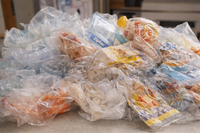
Compressed bales of plastic bottles stacked at a recycling facility, showing the scale of plastic waste collected for processing

Surprising Recycling Facts You Probably Didn't Know

Did you know?

  • Recycling aluminum saves up to 95% of the energy required to produce it from raw ore — making it one of the most impactful materials to recycle correctly. (EPA)
  • Recycling one ton of paper saves about 17 trees and roughly 7,000 gallons of water. (EPA)
  • Plastic can only be recycled a limited number of times before its quality degrades enough to make it unusable — which is why reducing plastic use matters too, not just recycling it. (Our World in Data)
  • Globally, less than 10% of all plastic ever produced has been recycled. Most has ended up in landfills, in the environment, or been incinerated. (Our World in Data)

Plastic Recycling Is a Global Challenge

Of these stats, one area that stands out is plastic waste, which remains a significant environmental issue. According to the OECD Global Plastics Outlook, plastic production has more than doubled since 2000 and now exceeds 400 million tonnes annually. Even with an increase in recycling initiatives worldwide, the majority of plastic waste is still not recycled, and most of it ends up in landfills. Mismanagement is a big part of the issue, with around 22% of plastic waste leaking into ecosystems or waterways.

Key takeaway Globally, less than 10% of all plastic ever produced has been recycled. The gap between production and recovery is enormous — and growing.

Recycling in the United States

Since Clear Drop products are primarily used in the United States, we wanted to look a little closer at the country's recycling data.

According to the Environmental Protection Agency (EPA), Americans generated approximately 292 million tons of municipal solid waste in 2018. While the U.S. recycling rate is about 32%, only around 9% of plastic is recycled. Food waste is another issue: it's the largest category of landfill waste, representing roughly 24% of landfill material.

Person sorting plastic containers and bottles into a labeled recycling bin at home, demonstrating household plastic waste separation

Household Waste That's Hardest to Recycle

Some types of household waste consistently create problems for recycling systems — and are the ones most likely to end up in the trash by default:

Waste Type Why It's Difficult Environmental Impact
Organic waste (food scraps) Difficult to store without odor; often mixed with general trash Produces methane emissions when decomposing in landfills
Soft plastics (bags, wrappers, films) Rarely accepted in curbside programs; wraps around sorting machinery Frequently sent to landfills or leaks into the environment
Mixed packaging Multiple materials bonded together in one product Almost impossible to separate for recycling — usually landfilled

All of these materials require separate collection or preparation before recycling, which is why many people struggle to manage them effectively.

Why Household Recycling Matters and What You Can Do

Recycling systems often fail because recyclable materials become contaminated before reaching recycling facilities. In general, reducing landfill waste requires better sorting before materials enter recycling systems. This means waste separation in individual homes and businesses can significantly improve recycling efficiency.

Here are a few small changes you can make at home:

  • Separate organic waste from general trash
  • Rinse containers before placing them in recycling bins
  • Keep flexible plastics separate from other recyclables
  • Create simple systems for sorting waste in your kitchen

While such behavioral changes at home can have a measurable environmental impact, it's often easier said than done. We understand that some types of household waste are kind of a pain to deal with, including:

  • Organic waste. Food scraps are difficult to store (think: odors, flies, and lack of space) and often just end up in the general trash. However, when organic waste decomposes in landfills it produces harmful methane emissions.
  • Soft plastics. Bags, wrappers, films, and other common packaging plastics are rarely accepted by most curbside recycling programs, meaning most of it is sent to landfills.
  • Mixed packaging. When multiple materials are combined in one package, it can be difficult to separate each part for recycling. The end result: all of it usually ends up in the trash.
Why this matters Even motivated people stop participating when the process feels messy, uncertain, or inconvenient. Reducing that friction is the key to better recycling outcomes.

How Clear Drop Helps Simplify Household Recycling

Do you want to recycle more but struggle with the practical side of sorting and storing? At Clear Drop, we call this pre-recycling, and we focus on two of the most challenging household waste streams: organic waste and soft plastics.

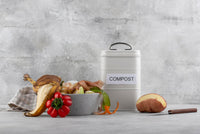
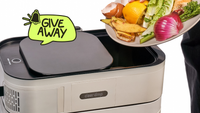
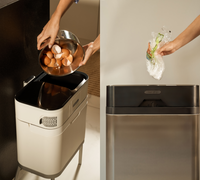
Clear Drop's Organics Collector (OC) helps you store food scraps cleanly and without odor, making organic waste separation easy — so it actually happens, instead of ending up in the general trash.

Clear Drop's Soft Plastic Compactor (SPC) helps you collect, store, and properly recycle flexible plastics, films, packaging, and other soft plastics that are often not accepted by most city recycling programs.

By addressing two of the most difficult waste streams, these solutions help households build a practical pre-recycling system at home — one that actually works in real life.

How To Celebrate Global Recycling Day — Every Day!

Global Recycling Day is just one more reminder that recycling can make a huge environmental impact, especially when it becomes a daily habit practiced by millions of households.

While governments and industries work to improve recycling infrastructure, you can help make a big difference now by introducing a few small changes at home. Add in a few practical tools — like Clear Drop's Organics Collector and Soft Plastic Compactor — and recycling not only becomes easier and more effective, but also kind of fun (we think!).

Turn your household waste into measurable impact

Learn how Clear Drop's tools help households tackle the two hardest waste streams: organic waste and soft plastics.

 Explore the Organics Collector

Latest posts All posts

Global Recycling Day: The Reality of  Recycling and How You Can Help Improve the Stats

Global Recycling Day: The Reality of Recycling and How You Can Help Improve the Stats

March 18 is Global Recycling Day, an international initiative created by the Global Recycling F...
Soft Plastic Recycling Myths That Stop People from Taking Action

Soft Plastic Recycling Myths That Stop People from Taking Action

Soft plastic recycling myths that stop people from taking action Soft plastic recycling can be ...
How ZeroTrash Initiatives Improve Workplace Culture and Attract Eco-Conscious Talent

How ZeroTrash Initiatives Improve Workplace Culture and Attract Eco-Conscious Talent

Plus, A 6-Step Approach to Implementing ZeroTrash Adoption Sustainability is no longer a side ini...
Mandatory Organic Waste Separation in New York: How To Comply Without Odors, Messes, or Fines

Mandatory Organic Waste Separation in New York: How To Comply Without Odors, Messes, or Fines

Have you been hearing more about sorting your trash lately?. Over the past couple of years, New ...
UCSF Health's Mission Bay Hospital Achieves Guaranteed Recycling of Pharmacy Soft Plastic Waste with Clear Drop SPC

UCSF Health's Mission Bay Hospital Achieves Guaranteed Recycling of Pharmacy Soft Plastic Waste with Clear Drop SPC

Healthcare facilities generate massive amounts of plastic waste daily, and California's ambitiou...
How To Compost Eggshells and Vegetable Scraps the Right Way: Faster, Nutrient-Rich Composting & Zero-Waste Kitchen Tips

How To Compost Eggshells and Vegetable Scraps the Right Way: Faster, Nutrient-Rich Composting & Zero-Waste Kitchen Tips

In many homes, food scraps make up around 25% to 30% of household waste. When sent to landfills, ...
Soft Plastic Compactor vs. Curbside Recycling: The Real Difference

Soft Plastic Compactor vs. Curbside Recycling: The Real Difference

Most people assume recycling works when something goes into the blue bin. But for soft...
How Your Household Can Save Up to $240 a Year on Trash Costs

How Your Household Can Save Up to $240 a Year on Trash Costs

Household trash bills are rarely questioned. Most people accept them as a fixed cost, just like...
How ZeroTrash® AI Helps You Identify Soft Plastics Correctly

How ZeroTrash® AI Helps You Identify Soft Plastics Correctly

ZeroTrash® AI is designed to take the guesswork out of everyday waste decisions. Using a camer...
Why CES 2026 Shifted the Conversation Around Household Waste

Why CES 2026 Shifted the Conversation Around Household Waste

CES has always been a place for bold ideas and ambitious visions. But this year, we noticed a sub...
How to Compost in an Apartment (Without Annoying Your Neighbors or Your Landlord)

How to Compost in an Apartment (Without Annoying Your Neighbors or Your Landlord)

More than one-third of U.S. household waste is organic and could be composted instead of decompo...
Post-Holiday Waste Reset: Starting 2026 With a Clean, ZeroTrash® Kitchen

Post-Holiday Waste Reset: Starting 2026 With a Clean, ZeroTrash® Kitchen

The holidays may bring plenty of celebration — but they can also leave a big mess, between a clut...
From Trash to Treasure: Real Products Made From Recycled Soft Plastics (and How Clear Drop Makes It Happen)

From Trash to Treasure: Real Products Made From Recycled Soft Plastics (and How Clear Drop Makes It Happen)

Fun fact: Soft plastics aren’t “unrecyclable.” They’ve just been collected the wrong way for over...
Holiday Composting Guide 2025: How to Reduce Waste at Christmas & New Year Events

Holiday Composting Guide 2025: How to Reduce Waste at Christmas & New Year Events

The holidays bring plenty of food, cheer, and …. waste? With all those extra food scraps, packagi...
How Much Food Americans Waste and What You Can Do

How Much Food Americans Waste and What You Can Do

Key Takeaways Americans waste 30%-40% of their total food supply each year (USDA, 2024). In 2...
How the Shaw Institute Successfully Started to Recycle Laboratory Soft Plastic Waste for the First Time with SPC

How the Shaw Institute Successfully Started to Recycle Laboratory Soft Plastic Waste for the First Time with SPC

The Shaw Institute in Blue Hill, Maine, is a respected nonprofit research organization studying t...
10 Soft Plastics You Didn’t Know You Could Recycle at Home

10 Soft Plastics You Didn’t Know You Could Recycle at Home

Key Takeaways Only 1% of U.S. households have access to curbside film recycling. Home devices l...
How Clear Drop’s Soft Plastic Compactor (SPC) Recycling System Works | Clear Drop

How Clear Drop’s Soft Plastic Compactor (SPC) Recycling System Works | Clear Drop

At Clear Drop, we’re redefining what responsible soft plastic recycling looks like.Our Soft Plast...
How Geekdom sparked early wins in soft plastic recovery with the Clear Drop's SPC

How Geekdom sparked early wins in soft plastic recovery with the Clear Drop's SPC

Geekdom is a cornerstone of San Antonio’s startup and innovation ecosystem. Spread across four fl...
How Trinity University advanced soft plastic recycling with the SPC

How Trinity University advanced soft plastic recycling with the SPC

Flexible plastic waste is one of the most persistent challenges on college campuses. From snack w...
From soft plastic to microplastic: what to know

From soft plastic to microplastic: what to know

Soft plastic packaging surrounds almost every product we buy — bags, wrappers, film, shipping pac...
Survey reveals trash sparks more fights than childcare, and why recycling Is at the heart of It

Survey reveals trash sparks more fights than childcare, and why recycling Is at the heart of It

Trash duties are the most underestimated part of modern household life—yet they’re one of the big...
How one office building pilot became a model for smarter soft plastic waste reduction

How one office building pilot became a model for smarter soft plastic waste reduction

Commercial buildings generate a large share of soft plastic waste — from deliveries, shipments, ...
Official rules: Clear Drop OC pre-order giveaway

Official rules: Clear Drop OC pre-order giveaway

The drawing was heldWINNER SELECTION VIDEO1. SPONSOR The Clear Drop Pre-Order Giveaway (the “Give...
Fixing the broken recycling system: why Clear Drop® exists

Fixing the broken recycling system: why Clear Drop® exists

The global recycling system is struggling to keep up with the waste we generate. Most soft pla...
Getting started with soft plastic waste collection at home

Getting started with soft plastic waste collection at home

Flexible packaging makes everyday life easier, but most soft plastics still end up in landfills b...
How Eduardo's Bridal & Tuxedo reduced soft plastic waste volume by 90% with the SPC

How Eduardo's Bridal & Tuxedo reduced soft plastic waste volume by 90% with the SPC

Garment retail businesses rely heavily on flexible plastic packaging to protect inventory. But on...
Clear Drop: how we’re revolutionizing home waste management

Clear Drop: how we’re revolutionizing home waste management

Most household waste still ends up in landfills, not because people do not want to recycle, but b...
Why business recycling matters: a key to corporate sustainability

Why business recycling matters: a key to corporate sustainability

Corporate sustainability is now a critical business priority. Both employees and customers expect...
Tackling plastic in the healthcare industry: challenges and solutions

Tackling plastic in the healthcare industry: challenges and solutions

U.S. healthcare produces more than 5 million tons of waste every year, and plastics account for a...
Composting: electric vs. professional or traditional options

Composting: electric vs. professional or traditional options

In the United States, food scraps make up a significant share of household waste, yet only about ...
Soft plastic recycling: key challenges and solutions

Soft plastic recycling: key challenges and solutions

Soft plastics like grocery bags, bubble wrap, and packaging film make up a growing share of U.S. ...
All posts

FAQs

In 2018, the Global Recycling Foundation kicked off the first Global Recycling Day. Celebrated every year on March 18,  this international environmental initiative  helps raise awareness about the importance of recycling and sustainable resource management.

Research by the World Bank shows that only about 19% of municipal solid waste is recycled worldwide. A large share of global waste still ends up in landfills or is improperly managed.

Studies indicate that only around 9% of plastic waste worldwide is recycled, while the majority is landfilled, incinerated, or mismanaged.

Recycling systems often struggle because of several factors, such as:

  • Contamination of recycling streams (e.g. dirty plastics or mixed materials)
  • Improper waste sorting
  • Lack of recycling infrastructure
  • Complex packaging materials

These issues often cause recyclable materials to be rejected and sent to landfills.

Two of the most difficult types of waste to sort, store, and recycle include organic waste (food scraps) and soft plastics (bags and packaging films). 

These materials often require separate collection systems to be recycled properly, and they can be difficult to store in a clean and tidy way at home.

You can improve your household recycling system by:

  • Separating organic waste from general trash
  • Rinsing containers before recycling
  • Keeping flexible (soft) plastics separate
  • Creating simple waste-sorting systems in your kitchen, like with Clear Drop’s odor-free Organics Collector and space-saving Soft Plastic Compactor