Household trash bills are rarely questioned. Most people accept them as a fixed cost, just like any other utility. But in reality, a significant part of what households pay for waste services is driven by volume, pickup frequency, and contamination.
This article breaks down how trash bills are calculated, how sorting mistakes increase costs, and how tools like Clear Drop’s ZeroTrash® AI and Soft Plastic Compactor (SPC) can realistically reduce waste-related expenses.
- Trash service pricing varies widely by city, county, and provider.
- Not all households will see the same savings.
- The example below is an illustrative model, not a guarantee.
The goal of this article is not to promise savings, but to explain the financial logic behind waste reduction and why reducing volume and mistakes can translate into lower costs over time.
Average Household Waste and Trash Service Costs
The average American household generates several pounds of waste per day. Municipal and private trash services typically charge based on bin size, pickup frequency, and additional fees for overflow or contamination.
Many households pay roughly $20 to $35 per month, or $240–$420 per year, for basic trash service before any overage fees.
Where Household Trash Costs Come From
Most trash bills are not tied to weight. They are driven by space and logistics. Key cost drivers include:
- Size of the trash bin
- How often it’s collected
- Contamination penalties
- Inefficiencies caused by lightweight but bulky materials (especially plastics)
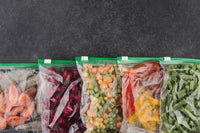
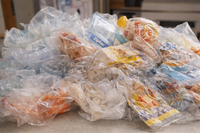
Soft plastics are a major contributor to increased costs because they take up significant volume while adding very little weight.

How ZeroTrash® AI Helps Reduce Sorting Mistakes
Sorting mistakes increase costs in two ways:
- Recyclable materials end up in trash, increasing total volume.
- Contaminated recycling loads can trigger penalties or rejected pickups.
ZeroTrash® AI helps households make better decisions at the moment waste is generated. By scanning packaging and identifying whether it qualifies as soft plastic, you can avoid defaulting to “just throwing it away.”
Fewer sorting mistakes means less trash volume, cleaner recycling streams, and fewer unexpected service issues.
How the Soft Plastic Compactor (SPC) Reduces Waste Volume
Soft plastics are particularly problematic in your trash because they are lightweight, flexible, and extremely space-inefficient when loose.
The Soft Plastic Compactor (SPC) addresses this issue by compressing soft plastics into dense, uniform forms. This allows households to fit more waste into the same bin, reduce overflow, and avoid upsizing trash containers.
Volume reduction is where most financial impact occurs.

A Cost-Saving Calculation (Illustrative Model)
Below is a simplified, conservative example of how a household can save on trash costs.
Assumptions
| Input | Illustrative value |
|---|---|
| Current trash cost | $30/month ($360/year) |
| Soft plastics share of bin volume | ~20% to 30% |
| Common issue | Occasional overflow, overage fees, or bin upsizing due to volume |
| With ZeroTrash® AI + SPC | Soft plastic volume reduced by up to 80% via compaction; overall trash volume reduced by up to 25% |
| Outcome | Avoid larger bin or extra pickups |
Illustrative annual impact
By avoiding a bin upgrade and overage fees of roughly $10 to $20 monthly, the household can expect to save around $120 to $240 per year.
These numbers don’t require perfection, only consistency.
What These Savings Depend On
Actual savings depend on local pricing structures, household size, packaging habits, and how consistently the Clear Drop tools are used.
In general, the biggest gains are typically seen in:
- Households with frequent deliveries
- Families with high consumption of packaged foods
- Pet owners
- Areas with strict volume-based pricing
Getting Started With ZeroTrash® AI and the SPC
Good news: getting started doesn’t require any major changes to your lifestyle, only in how you handle your waste.
Follow these four quick steps:
- Scan packaging with ZeroTrash® AI.
- Separate accepted soft plastics.
- Compact them using the SPC.
- Store compacted materials cleanly and efficiently.
Over time, reduced volume becomes noticeable, both in the bin and on your bill.
Your Small Changes Can Make a Measurable Impact
Saving money on trash is about addressing a few common inefficiencies, most notably wasted space. It doesn’t require any dramatic lifestyle shifts, especially when using Clear Drop’s efficient tools.
By combining better identification with better preparation, households can reduce trash volume, lower service costs, and make waste decisions that are both financially and environmentally sound.