Key Takeaways
- Americans waste 30%-40% of their total food supply each year (USDA, 2024).
- In 2019, the U.S. generated 66 million tons of wasted food, with more than half ending up in landfills (EPA, 2023).
- The average household loses ≈ $1,500 per year on food that is never eaten (NRDC, 2022).
- Food waste produces methane, a greenhouse gas that is 28x more potent than CO₂ (EPA, 2024).
- ClearDrop's Soft Plastic Compactor (SPC) and Organics Collector (OC) help reduce food waste and food-related soft plastics — one household at a time.
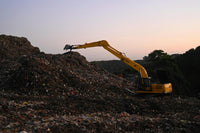
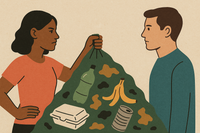
Millions of tons of perfectly edible food are thrown away in the United States every year. Add to that all the water, land, fertilizer, energy, and packaging required to produce it. When wasted food ends up in landfills, it decomposes and releases methane, a potent greenhouse gas.
The good news is that small, consistent changes at home can make a meaningful impact. Every household can reduce its environmental footprint with helpful tools, such as Clear Drop's Soft Plastic Compactor (SPC) for responsible soft plastic recycling, and the Organics Collector (OC) for clean food-scrap collection.
of the total U.S. food supply is wasted each year.
tons of wasted food were generated in the U.S. in 2019.
is the average annual value of food wasted by one household.
more potent than CO₂ is methane released from food waste in landfills.
The scale of food waste in America
According to the U.S. Department of Agriculture (USDA), Americans waste up to 40% of their total food supply annually (USDA, 2024).
- U.S. households and retailers generated 66 million tons of food waste.
- 35 million tons of food waste were landfilled.
- Food became the largest single category of landfill material (EPA, 2023).
What Americans waste most
Tempted by bulk deals and discounted offers, Americans often overbuy at the grocery store, which leads to rotting produce and expired foods, including:
- Fruits and vegetables
- Dairy
- Baked goods
- Leftovers
- Prepared meals
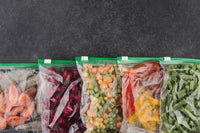
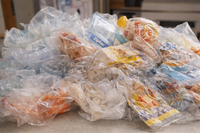
Remember that nearly all of these products come packaged in soft plastics, such as produce bags, bread bags, cereal liners, frozen-food bags, snack wrappers, and cling film.
To save on waste, these materials can be compacted and recycled using the Clear Drop SPC.
Environmental impact
When food ends up in landfills, it decomposes and generates methane, a gas that is 28x more potent than CO₂ (EPA, 2024).
Wasted food also wastes:
- 21% of all U.S. freshwater used in agriculture (WWF, 2023)
- 18% of U.S. cropland (Feeding America, 2023)
- Billions of units of packaging materials
- Significant transport and refrigeration energy
There are two easy ways you can lower your food waste footprint:
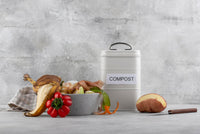
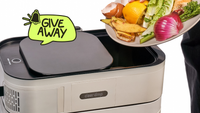
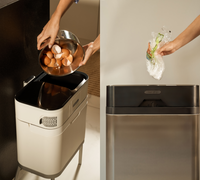
- Clear Drop's OC allows you to cleanly collect food scraps so they don't end up in landfills.
- Clear Drop's SPC allows you to effectively recycle soft-plastic packaging to be repurposed instead of tossed out.
Common reasons food gets wasted at home
A lack of planning and preparation often leads to extra food and packaging waste.
| Cause | Practical solution |
|---|---|
| Overbuying and poor planning | Create weekly meal plans and shop with a list. |
| Expiration date confusion | Understand “best by,” “use by,” and “sell by” labels (EPA Food Labeling Education). |
| Improper storage | Use airtight containers and humidity-controlled fridge drawers to keep food fresher longer. |
| Forgotten leftovers | Store leftovers in clear containers and rotate regularly. |
| Packaging accumulation | Rinse, dry, and compact food-related soft plastics using the SPC. |
Why reducing food waste matters
Reducing food waste has wide-reaching benefits.
Lowers emissions
Less food in landfills means less methane released and a measurable climate benefit.
Decreases packaging waste
When you toss out food, you're also tossing out its packaging, such as:
- Produce bags
- Bread bags
- Shrink wrap
- Snack wrappers
- Frozen-food bags
- Cling film
When you have an SPC, you can reduce this extra waste by easily compacting and recycling it.
Supports sustainable living
Clear Drop's mission is to help households reduce waste in all forms, starting with food scraps and soft plastics. Read more about our mission and products in our educational guides.
Simple ways to reduce food waste
-
Build meal plans and shopping lists
Prevent overbuying before it starts. -
Store food properly
Use the right containers and fridge zones to extend freshness. -
Learn date-label meanings
Do not throw food away too early because of label confusion. -
Freeze leftovers
Save food before it spoils. -
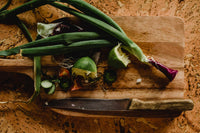
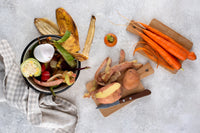
Reuse vegetable scraps
Or collect them for further composting via the Organics Collector. -
Keep products visible
Use clear labeling in your fridge and cabinets. -
Recycle soft-plastic food packaging
Use the SPC for bread bags, snack wrappers, produce bags, and more.
How Clear Drop supports sustainable living
Clear Drop provides practical tools for reducing household waste, including:
Soft Plastic Compactor (SPC)
With the SPC, bread bags, produce bags, snack wrappers, cling film, cereal liners, and frozen-food bags can be properly compacted for recycling.
Organics Collector (OC)
With the OC, collect your food scraps without the fuss, mess, or smells.
Clear Drop Blog
With the Clear Drop Blog, learn more about reducing food and plastic waste and building a cleaner, more sustainable lifestyle.
Be a leader in better waste management
Reduce food waste, recycle smarter, and build a sustainable home with Clear Drop's:
- Soft Plastic Compactor (SPC) to reduce soft-plastic waste
- Organics Collector (OC) to compost cleanly and effectively
- Educational Blog to learn more about how to live a ZeroTrash lifestyle
Explore the full Clear Drop system
From food-scrap collection to soft-plastic recycling, Clear Drop helps households reduce waste with practical tools and education.
Visit Clear Drop