In many homes, food scraps make up around 25% to 30% of household waste. When sent to landfills, organic waste breaks down without oxygen and produces methane, a powerful greenhouse gas. Composting, on the other hand, transforms those same scraps into nutrient-rich material that improves soil health and supports plant growth.
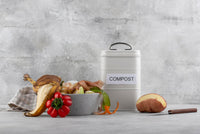
Two of the easiest and most valuable items to compost are eggshells and vegetable scraps. Of course, storing these scraps can be stinky and messy, but with the right kitchen tool — such as Clear Drop’s Organics Collector (OC) — you can make composting a simple, clean, and odor-free habit.
Can you compost eggshells and vegetable scraps?
Yes — and they’re some of the best materials to compost.
- Vegetable scraps are rich in nitrogen and decompose quickly.
- Eggshells add calcium, which supports plant structure and soil balance.
Backyard composting is one of the most eco-friendly ways to reduce food waste and return nutrients to the soil. But before it gets there, your compost needs to be properly collected and stored.
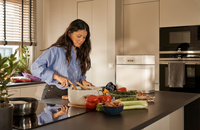
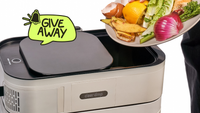
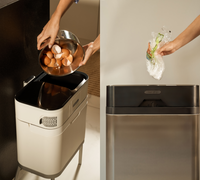
That’s where the Organics Collector (OC) from Clear Drop can be a valuable addition to your kitchen. This countertop compost container is designed to store kitchen scraps for up to one week, odor-free, thanks to its activated charcoal filter, ozonator, and fans. The OC makes daily compost collection easy, even in small kitchens and spaces.
Eggshells: calcium-rich soil booster
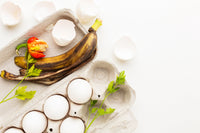
Instead of throwing them away, crushed eggshells can be part of a balanced compost that naturally enriches your soil. Eggshells are made of about 95% calcium carbonate, a mineral that plays a key role in plant health.
Calcium helps:
- Strengthen plant cell walls
- Support root development
- Improve nutrient absorption
- Reduce the risk of blossom-end rot in tomatoes and peppers
Vegetable scraps: nitrogen-rich compost fuel
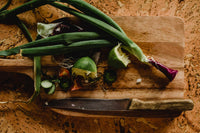
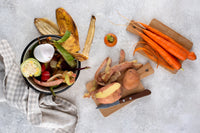
Vegetable peels and trimmings are rich in nitrogen, which feeds beneficial microbes. The best vegetable scraps include:
- Carrot peels
- Onion skins
- Celery ends
- Leafy greens
- Broccoli stems
5 smart ways to reuse vegetable scraps before composting
Before vegetable scraps reach your compost bin, you can still get plenty of use out of them. Here are a few easy ideas for reusing your scraps.
1. Homemade vegetable broth
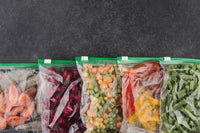
Simmer carrot peels, onion skins, celery ends, and herb stems in water for 30–60 minutes. Strain and store or freeze to use as broth.
2. Crispy peel chips
Toss potato or beet peels with oil and salt and bake at 375°F for 15–20 minutes for a delicious, healthy snack.
3. Compost tea
Soak veggie scraps in water for 3–5 days to create a diluted liquid fertilizer for your plants.
4. Garden mulch
Spread larger plant scraps around garden beds to help retain moisture and suppress weeds.
5. Natural dyes
Onion skins and beet peels can be used to create natural dye for fabrics and crafts.
Once you’re done with your scraps, you can store them neatly and hygienically in the OC before composting.
When it’s better to compost right away
If scraps are wilted, very soft, or starting to smell, it’s best to compost them as soon as possible. Prompt composting reduces odors in your home and prevents methane production that occurs when food waste ends up in landfills.
If you have an OC, be sure to replace your charcoal filter every 3 months for continued odor control and optimal performance.
Start your zero-waste kitchen system
Composting eggshells and vegetable scraps is one of the easiest ways to reduce food waste and return nutrients to the soil.
You can easily turn your kitchen waste into garden nutrients instead of landfill methane. With a tool like the OC, composting can become a clean, simple — and even odor-free — habit.