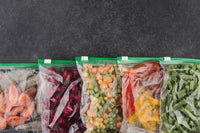
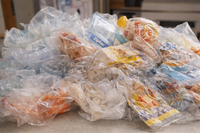
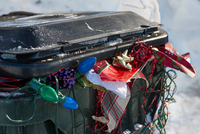
Most people assume recycling works when something goes into the blue bin. But for soft plastics — items like grocery bags, mailers, bread bags, and bubble wrap — that assumption is almost always wrong.
According to the EPA, Americans recycle under 10% of all plastic waste. Soft films are among the least recovered materials, largely because curbside systems were never designed to process them.
However, soft plastics are recyclable. They’re just collected inefficiently.
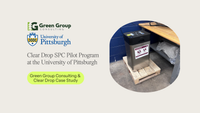
Clear Drop’s Soft Plastic Compactor (SPC) fixes this failure point. Here’s how.
What Curbside Recycling Does — and Doesn’t
Curbside recycling works well for bottles, cans, and rigid containers (PET #1 and HDPE #2). But soft plastics behave differently. They:
- Wrap around sorting machinery
- Cross-contaminate paper fiber
- Degrade the value of the recycling stream
- Are often landfilled, even when placed in a bin correctly
Municipal data from New York City, Los Angeles, and San Francisco show that most U.S. curbside programs do not include plastic film in household collection. On top of that, curbside programs experience approximately 17% contamination, driven by improperly sorted materials, including film.
This isn’t a failure of recycling but a mismatch between system design and material behavior.
Accepted Curbside Materials
- Bottles (PET #1, HDPE #2)
- Rigid containers (#5 in some cities)
- Paper, cardboard, aluminum, steel
Commonly Rejected Curbside Materials
- Grocery and retail bags
- Bread bags, bubble wrap, poly film
- Mailers and stretch wrap
- Snack and multilayer packaging
So, how can you make sure your soft plastics actually get recycled? Let us introduce you to the Clear Drop Soft Plastic Compactor (SPC).

How the Clear Drop SPC Works
Unlike curbside collection, which mixes materials, the SPC collects only soft plastics, compressing them into a dense format optimized for recycling.
How SPC Processes Material
- Clean, dry soft plastics are placed into the unit.
- Material is compressed into a compact block.
- Blocks are shipped directly to one of Clear Drop’s recycling partners.
- Plastic becomes post-consumer recycled resin for new products.
This process bypasses the bottleneck that prevents curbside collection from recovering film and other soft plastics.
In short, the SPC ensures that recycling happens.
SPC vs. Curbside: A Measurable Difference
| Feature | Clear Drop SPC | Curbside recycling |
|---|---|---|
| Soft plastics accepted |
Yes
Films, bags, wraps, mailers
|
Rarely
Mostly rejected
|
| Sorting required | None: single feedstream | Required: expensive, error-prone |
| Contamination risk | Low: clean, sealed | Higher: mixed waste stream |
| Material density | High: compressed blocks | Very low: fluffy, voluminous film |
| End-market quality | Pellet-ready feedstock | Downgraded, often landfilled |
| Storage efficiency | Up to one month | Overflows quickly |
| Outcome certainty | High: sent directly to recyclers | Low: soft film recycling not guaranteed |
The difference is not the polymer. It’s the pathway from your kitchen to the recycler.
Which Is Better for the Environment?
Using post-consumer recycled resin significantly lowers environmental impact compared to virgin production, according to lifecycle analyses from the Association of Plastic Recyclers. This means that any solution that delivers clean, single-stream LDPE (low-density polyethylene) generates real circular value, unlike mixed curbside systems that lose soft plastic through contamination.
It’s a simple but powerful concept: Recycling only matters when the material actually gets recycled. The SPC helps make this a reality while keeping more plastics out of landfills.
Upgrade to a Recycling Process That Works
If you want your soft plastics to become new products — not waste — your local curbside program can’t always guarantee it.
Clear Drop’s SPC can, by making soft plastic collection and recycling practical, traceable, and scalable.
Stop guessing and start recycling with certainty. Invest in a Clear Drop SPC today.