Garment retail businesses rely heavily on flexible plastic packaging to protect inventory. But once gowns and tuxedos are unwrapped, that plastic becomes costly, bulky waste. Eduardo’s Bridal & Tuxedo, a family-owned formalwear retailer in San Antonio, partnered with Clear Drop to turn a previously ignored waste stream into a meaningful sustainability win. With the Soft Plastic Compactor (SPC), they now reduce soft plastic volume by nearly 90% and send compacted blocks into real recycling streams instead of landfills.
Challenging soft plastic packaging waste
Eduardo’s Bridal & Tuxedo has served customers for more than 35 years – from wedding gowns to tuxedos and quinceañera dresses. However, every rental garment arrives wrapped in soft plastic film: shipping wrap, protective covers, dry-cleaning bags, accessory packaging.
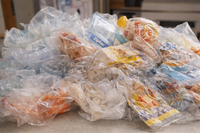
Previously, this lightweight but bulky material was bagged and sent to landfill. Access to soft plastic recycling in the region was limited, and traditional recycling haulers did not accept film plastics. The result: overflowing bins, higher waste removal costs, and a missed opportunity to support sustainability goals valued by customers and employees, as well as to participate in structured business recycling programs.

Solution
Clear Drop installed the SPC directly in the back-room storage area, where plastic waste is generated. Staff received quick onboarding with simple signage so the workflow required no habit change.
Soft plastics are now collected in one place and compacted into dense blocks using the SPC’s patented surface-softening technology. These space-saving blocks are stored cleanly, picked up monthly, and processed by Clear Drop’s recycling partners – ensuring the waste remains in a circular economy.

“It was easy to get the team onboard. We generate so much plastic packaging just unboxing dresses. It was great to finally have something to do with it besides toss it.” — Laura D., store manager.

The Soft Plastic Compactor (SPC) quickly became part of the daily routine, turning loose plastic into tidy, labeled blocks that fit seamlessly into existing back-of-house processes.
Soft Plastic Compactor use case
During the two-month pilot, the team collected garment wrap, shrink film from shipments, and dry-cleaning bags. Instead of piling up loose in trash bags, these materials became stackable, labeled SPC blocks ready for real recycling.
- No disruption to busy fitting-room workflow
- No additional storage needs for bulky waste
- Clear visibility of sustainability in action for staff and customers
“It’s small, quiet, and honestly kind of satisfying to use. Makes us feel like we’re part of the solution, not just the problem.” — Sylvia B., sales manager.

Results
Eduardo’s Bridal & Tuxedo reduced soft plastic waste volume by approximately 90%, freeing valuable back-room space and lowering waste handling costs.
The success of this pilot has led the business to consider expanding the SPC to its second location, along with customer-facing messaging that highlights their sustainability efforts. Their case shows that even a traditionally waste-intensive service business can make measurable progress with simple, scalable technology like the Soft Plastic Compactor (SPC).

Bring Waste Reduction to Your Business
See how the SPC can simplify soft plastic management and support your corporate sustainability goals.
Learn more for business
Explore SPC for your operations
Frequently Asked Questions
How much waste volume can the SPC reduce?
On average, businesses see up to a 90% reduction in soft plastic volume depending on monthly usage and the types of packaging handled.
What types of plastics can the SPC process?
The SPC processes most soft film plastics, including garment bags, shipping wrap, bubble wrap, plastic mailers, and packaging film. PVC and PS are excluded and should not be placed in the device.
How does pickup or recycling work for businesses?
Compacted blocks are stored on-site and collected based on a program tailored to each location, ensuring all recyclable soft plastics enter the correct processing stream through Clear Drop’s recycling partners.
Does the SPC require changes in workflow?
No. The SPC integrates easily into typical back-of-house processes and requires minimal staff time, so teams can keep focusing on customers while improving sustainability performance.