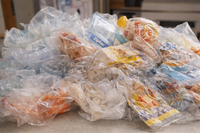
oft plastic packaging including grocery bags bread bags and plastic film collected for recycling

Soft Plastic Recycling Myths That Stop People from Taking Action

Alena Hileuskaya
oft plastic packaging including grocery bags bread bags and plastic film collected for recycling
Navigation

Soft plastic recycling myths that stop people from taking action

Soft plastic recycling can be a real head-scratcher sometimes. Ever stood over your trash can with a bread bag in hand, feeling the anxiety build up because you’re unsure where it belongs? It happens to the best of us.

Unfortunately, such confusion often leads to inaction, which inevitably fills up the landfills.

But soft plastic recycling doesn’t need to be such a mystery. This guide breaks down the most common myths about soft plastics with real data, industry reports, and practical solutions that ensure your plastic gets properly recycled.

Why Soft Plastic Recycling Feels So Confusing

“Soft plastics” is not a single material. The term includes:

  • Grocery and produce bags
  • Bread bags
  • Stretch wrap from water cases
  • Shipping air pillows
  • Overwrap on paper products
  • Multi-layer snack pouches

Some of these are recyclable. Others are not. And many look identical.

Most U.S. curbside recycling systems were never designed to handle film and flexible packaging. According to The Recycling Partnership and plastic film recyclers, thin film can wrap around sorting machinery at material recovery facilities (MRFs), forcing shutdowns and contaminating other materials.

This is not a consumer failure, but a system limitation that’s compounded by mixed messaging and different rules for different cities.

Key takeaway Soft plastics are not one simple category. That is exactly why people get confused and why clear sorting guidance matters.

Why Proper Soft Plastic Recycling Matters More Than Ever

Flexible plastic packaging is one of the fastest-growing segments of the packaging market, largely driven by:

  • E-commerce growth
  • Lightweight shipping materials
  • Convenience packaging
  • Food preservation needs

At the same time, plastic recycling rates remain low. According to the U.S. Environmental Protection Agency (EPA), the United States generated 35.7 million tons of plastic waste in 2018. Only 3.09 million tons were recycled, which equals a recycling rate of 8.7%.

More recent independent analyses suggest that the effective recycling rate for plastics may be closer to 5% once exports and contamination are factored in. Soft plastics are a large part of that gap.

Top Soft Plastic Recycling Myths Debunked

Myth 1: Soft Plastics Can’t Be Recycled at All

Reality: Many soft plastics are recyclable — just not curbside.

Most curbside programs in the U.S. do not accept plastic film. However, many polyethylene-based films (#2 HDPE and #4 LDPE) qualify for store drop-off programs. Items often accepted in these programs include:

  • Grocery bags
  • Produce bags
  • Bread bags
  • Stretch wrap
  • Newspaper sleeves
  • Overwrap on paper towels or toilet paper
  • Certain labeled plastic mailers

Companies like NexTrex collect film materials from grocery stores across the U.S. and process them into composite decking. Trex reports diverting billions of pounds of plastic film from landfills through its program.

What to know: Soft plastics aren’t “non-recyclable.” They just require the correct collection stream.

Myth 2: Sorting Soft Plastics Is Too Complicated

Reality: It feels overwhelming — until you simplify the rules.

You don’t need to memorize dozens of material codes or worry about being 100% perfect. Instead, focus on these core principles:

  • Don’t place film in curbside bins unless your local program explicitly allows it.
  • Look for “store drop-off” labels on packaging.
  • Know that stretchy, single-layer polyethylene films are typically accepted.
  • Set aside crinkly, shiny, multi-layer snack packaging, which is usually not accepted.
Usually Accepted
(Store Drop-Off)
Usually Not Accepted
Grocery bags Chip bags
Bread bags Candy wrappers
Stretch wrap Metallic pouches
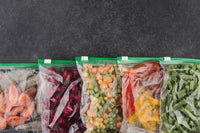
Newspaper sleeves Frozen food bags (multi-layer)

Myth 3: One Household Won’t Make a Difference

Reality: Scale begins with consistency.

A broken system can lead people to believe that their own actions don’t matter. But recycling markets depend on volume and material quality. Simply put, companies invest where supply is predictable.

Cleaner streams attract buyers who then create economic incentives that build infrastructure. With reduced friction, more households will consistently separate soft plastics correctly, creating measurable feedstock and a major impact.

Myth 4: Soft Plastics Are Always Too Contaminated to Recycle

Reality: Contamination is preventable.

Most film recycling programs require materials to be clean, dry, and free of residue. This is because oil, crumbs, and moisture can degrade material quality and potentially cause entire batches to be rejected.

Curbside mixing increases contamination risk because film becomes tangled with wet recyclables. A simple rinse and air dry can dramatically improve recycling viability. Such small preparation steps make large systemic differences.

What Actually Works: Clear Sorting and Compaction

If soft plastic recycling is going to work at scale, it must meet three conditions:

  1. Clarity when sorting: People need immediate answers about what belongs where.
  2. Clean, contained storage: Without an easy storage solution, people don’t want to deal with loose, messy plastic.
  3. Defined downstream pathway: People want to know where their materials go, with a guarantee that they won’t end up in a landfill.

How Clear Drop’s ZeroTrash® AI and Soft Plastic Compactor (SPC) Support Effective Recycling

The biggest psychological barrier in recycling is doubt.

Clear Drop’s system is designed to remove that uncertainty. This starts with ZeroTrash® AI, which allows users to scan or upload a photo of an item and receive a clear answer on how to recycle it within seconds. Next, is a proper storage solution. This is where the SPC comes into play.

Clear Drop’s Soft Plastic Compactor (SPC): Changing the Collection Equation

Loose film is lightweight, difficult to transport, and prone to contamination. Compacting it changes all that. By compressing household soft plastics into dense, contained blocks, the SPC helps:

  • Reduce contamination risk
  • Create more efficient shipping volume
  • Produce consistent, recoverable feedstock

The soft plastic blocks created by the SPC are sent to verified recycling partners for processing into reusable raw materials. Instead of hoping film makes it through a curbside system, this approach ensures a defined pathway from household to recycler.

What You Can Do Today To Ensure Proper Recycling

Most people want to recycle correctly but stop because rules are unclear, messaging is inconsistent, and infrastructure is often unreliable. However, small shifts in how you approach recycling can make a big difference in the long run.

Here are a few things you can do right now:

  • Separate soft plastics from curbside recyclables.
  • Keep them clean and dry.
  • Take advantage of store drop-off or mail-back programs.
  • Use decision tools like ZeroTrash® AI to remove uncertainty.

These small changes will reduce landfill volume and increase recoverable material streams.

Why this matters Even motivated people stop participating when the process feels messy, uncertain, or inconvenient.

Ready to Take Action?

Reducing soft plastic waste doesn’t require perfection — just clarity and the right tools.

Try ZeroTrash® AI to simplify your sorting decisions and consider investing in a Soft Plastic Compactor (SPC) for easier storage and a streamlined recycling process.

Turn your soft plastic waste into measurable impact

Learn how the Soft Plastic Compactor (SPC) helps households store, compact, and send soft plastics to verified recycling partners.

Learn more about the SPC


Latest posts All posts

Soft Plastic Recycling Myths That Stop People from Taking Action

Soft Plastic Recycling Myths That Stop People from Taking Action

Soft plastic recycling myths that stop people from taking action Soft plastic recycling can be ...
How ZeroTrash Initiatives Improve Workplace Culture and Attract Eco-Conscious Talent

How ZeroTrash Initiatives Improve Workplace Culture and Attract Eco-Conscious Talent

Plus, A 6-Step Approach to Implementing ZeroTrash Adoption Sustainability is no longer a side ini...
Mandatory Organic Waste Separation in New York: How To Comply Without Odors, Messes, or Fines

Mandatory Organic Waste Separation in New York: How To Comply Without Odors, Messes, or Fines

Have you been hearing more about sorting your trash lately?. Over the past couple of years, New ...
UCSF Health's Mission Bay Hospital Achieves Guaranteed Recycling of Pharmacy Soft Plastic Waste with Clear Drop SPC

UCSF Health's Mission Bay Hospital Achieves Guaranteed Recycling of Pharmacy Soft Plastic Waste with Clear Drop SPC

Healthcare facilities generate massive amounts of plastic waste daily, and California's ambitiou...
How To Compost Eggshells and Vegetable Scraps the Right Way: Faster, Nutrient-Rich Composting & Zero-Waste Kitchen Tips

How To Compost Eggshells and Vegetable Scraps the Right Way: Faster, Nutrient-Rich Composting & Zero-Waste Kitchen Tips

In many homes, food scraps make up around 25% to 30% of household waste. When sent to landfills, ...
Soft Plastic Compactor vs. Curbside Recycling: The Real Difference

Soft Plastic Compactor vs. Curbside Recycling: The Real Difference

Most people assume recycling works when something goes into the blue bin. But for soft...
How Your Household Can Save Up to $240 a Year on Trash Costs

How Your Household Can Save Up to $240 a Year on Trash Costs

Household trash bills are rarely questioned. Most people accept them as a fixed cost, just like...
How ZeroTrash® AI Helps You Identify Soft Plastics Correctly

How ZeroTrash® AI Helps You Identify Soft Plastics Correctly

ZeroTrash® AI is designed to take the guesswork out of everyday waste decisions. Using a camer...
Why CES 2026 Shifted the Conversation Around Household Waste

Why CES 2026 Shifted the Conversation Around Household Waste

CES has always been a place for bold ideas and ambitious visions. But this year, we noticed a sub...
How to Compost in an Apartment (Without Annoying Your Neighbors or Your Landlord)

How to Compost in an Apartment (Without Annoying Your Neighbors or Your Landlord)

More than one-third of U.S. household waste is organic and could be composted instead of decompo...
Post-Holiday Waste Reset: Starting 2026 With a Clean, ZeroTrash® Kitchen

Post-Holiday Waste Reset: Starting 2026 With a Clean, ZeroTrash® Kitchen

The holidays may bring plenty of celebration — but they can also leave a big mess, between a clut...
From Trash to Treasure: Real Products Made From Recycled Soft Plastics (and How Clear Drop Makes It Happen)

From Trash to Treasure: Real Products Made From Recycled Soft Plastics (and How Clear Drop Makes It Happen)

Fun fact: Soft plastics aren’t “unrecyclable.” They’ve just been collected the wrong way for over...
Holiday Composting Guide 2025: How to Reduce Waste at Christmas & New Year Events

Holiday Composting Guide 2025: How to Reduce Waste at Christmas & New Year Events

The holidays bring plenty of food, cheer, and …. waste? With all those extra food scraps, packagi...
How Much Food Americans Waste and What You Can Do

How Much Food Americans Waste and What You Can Do

Key Takeaways Americans waste 30%-40% of their total food supply each year (USDA, 2024). In 2...
How the Shaw Institute Successfully Started to Recycle Laboratory Soft Plastic Waste for the First Time with SPC

How the Shaw Institute Successfully Started to Recycle Laboratory Soft Plastic Waste for the First Time with SPC

The Shaw Institute in Blue Hill, Maine, is a respected nonprofit research organization studying t...
10 Soft Plastics You Didn’t Know You Could Recycle at Home

10 Soft Plastics You Didn’t Know You Could Recycle at Home

Key Takeaways Only 1% of U.S. households have access to curbside film recycling. Home devices l...
How Clear Drop’s Soft Plastic Compactor (SPC) Recycling System Works | Clear Drop

How Clear Drop’s Soft Plastic Compactor (SPC) Recycling System Works | Clear Drop

At Clear Drop, we’re redefining what responsible soft plastic recycling looks like.Our Soft Plast...
How Geekdom sparked early wins in soft plastic recovery with the Clear Drop's SPC

How Geekdom sparked early wins in soft plastic recovery with the Clear Drop's SPC

Geekdom is a cornerstone of San Antonio’s startup and innovation ecosystem. Spread across four fl...
How Trinity University advanced soft plastic recycling with the SPC

How Trinity University advanced soft plastic recycling with the SPC
Flexible plastic waste is one of the most persistent challenges on college campuses. From snack w...
From soft plastic to microplastic: what to know

From soft plastic to microplastic: what to know

Soft plastic packaging surrounds almost every product we buy — bags, wrappers, film, shipping pac...
Survey reveals trash sparks more fights than childcare, and why recycling Is at the heart of It

Survey reveals trash sparks more fights than childcare, and why recycling Is at the heart of It

Trash duties are the most underestimated part of modern household life—yet they’re one of the big...
How one office building pilot became a model for smarter soft plastic waste reduction

How one office building pilot became a model for smarter soft plastic waste reduction

Commercial buildings generate a large share of soft plastic waste — from deliveries, shipments, ...
Official rules: Clear Drop OC pre-order giveaway

Official rules: Clear Drop OC pre-order giveaway

The drawing was heldWINNER SELECTION VIDEO1. SPONSOR The Clear Drop Pre-Order Giveaway (the “Give...
Fixing the broken recycling system: why Clear Drop® exists

Fixing the broken recycling system: why Clear Drop® exists

The global recycling system is struggling to keep up with the waste we generate. Most soft pla...
Getting started with soft plastic waste collection at home

Getting started with soft plastic waste collection at home

Flexible packaging makes everyday life easier, but most soft plastics still end up in landfills b...
How Eduardo's Bridal & Tuxedo reduced soft plastic waste volume by 90% with the SPC
How Eduardo's Bridal & Tuxedo reduced soft plastic waste volume by 90% with the SPC

Garment retail businesses rely heavily on flexible plastic packaging to protect inventory. But on...
Clear Drop: how we’re revolutionizing home waste management

Clear Drop: how we’re revolutionizing home waste management

Most household waste still ends up in landfills, not because people do not want to recycle, but b...
Why business recycling matters: a key to corporate sustainability

Why business recycling matters: a key to corporate sustainability

Corporate sustainability is now a critical business priority. Both employees and customers expect...
Tackling plastic in the healthcare industry: challenges and solutions

Tackling plastic in the healthcare industry: challenges and solutions

U.S. healthcare produces more than 5 million tons of waste every year, and plastics account for a...
Composting: electric vs. professional or traditional options

Composting: electric vs. professional or traditional options

In the United States, food scraps make up a significant share of household waste, yet only about ...
Soft plastic recycling: key challenges and solutions

Soft plastic recycling: key challenges and solutions

Soft plastics like grocery bags, bubble wrap, and packaging film make up a growing share of U.S. ...
All posts

FAQs