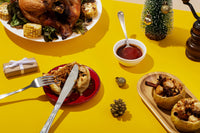
You're already full but looking down at a half-eaten plate. You pause. The compost bin is right there, but everything you've read says cooked food doesn't go in. So you scrape it into the trash — again. That moment of doubt is one of the most common friction points in household food waste separation, and it ends up costing more than most people realize.
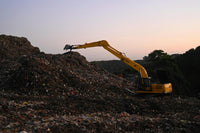
According to the U.S. Environmental Protection Agency (EPA), food is the single largest category of material sent to U.S. landfills, accounting for nearly 24% of municipal solid waste. A significant portion of that is cooked food.
So, what's the truth? Can you compost cooked food? The short answer: it depends on your composting system. Keep reading to find out more.
of U.S. landfill waste is food — making it the single largest category, per the EPA
tons of food waste generated in the U.S. annually — most of it never had to go to the landfill
barrier to composting is odor and inconvenience — not lack of motivation or access
more potent than CO₂: how the EPA rates methane from landfill food waste over a 100-year period
Why Most Composting Guides Say No to Cooked Food
The "no cooked food" rule is everywhere — city composting pages, gardening forums, sustainability blogs. While it's accurate for the systems those guides are describing, the rule is actually far more nuanced than it first appears.

The Backyard Compost Problem
Traditional outdoor composting relies on a specific balance of airflow, moisture, carbon-rich materials, and microbial activity. That balance is harder to maintain than it sounds. Foods with oil, sauce, dairy residue, or added moisture disrupt it.
Here's what typically happens when cooked scraps go into a backyard pile:
- Decomposition accelerates unevenly, creating wet, compacted layers with no airflow.
- Odors develop quickly as anaerobic bacteria take over.
- Pests move in. Rats, raccoons, and flies pick up on the smell long before you do.
- The pile stops composting and starts rotting.
"I set up a backyard bin and added some leftover stir fry. Within three days it smelled like something died in there. My neighbor complained. I gave up entirely."
Reddit user, r/compostingThat experience is not unusual — it's one of the most common stories in composting communities. But the failure comes from the system used, not from the food itself.
Pests, Pathogens, and Why Temperature Matters
The other concern with cooked food in compost is pathogens. Cooked food can contain oils, proteins, and moisture that, at the wrong temperatures, create conditions where harmful bacteria can persist.
The USDA notes that industrial and municipal composting facilities operate at sustained high temperatures (131°F to 160°F) that break down pathogens and significantly reduce pest attraction. Backyard piles rarely reach or maintain those temperatures.
That temperature gap is the actual source of the "no cooked food" rule. Commercial composting infrastructure was designed to handle exactly what home systems can't.
The rule people hear: "Never compost cooked food."
What it actually means: "Never put cooked food in a traditional backyard pile."
What it leaves out: Municipal and commercial organics systems work differently.
What "Cooked" Actually Means for Composting
Cooked food is a broad category. Leftover plain rice is not the same as a half-eaten lasagna drowning in meat sauce, and the composting implications are completely different.
When people ask "can I compost cooked food," they're usually picturing one of a few scenarios:
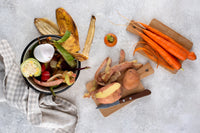
- A small bowl of leftover pasta with olive oil
- Rice from the bottom of the pot
- Roasted vegetables from dinner
- A piece of bread going stale on the counter
- The last bit of scrambled eggs no one finished
In the right system, most of those items are completely appropriate for food scrap collection. The bigger issue sits between the plate and the compost bin — and that gap is where most household composting breaks down.
"I want to do the right thing, but every time I try to compost, my kitchen smells terrible within two days. I live in a small apartment. I just can't deal with it."
Comment thread, r/ZeroWaste"Fruit flies. That's all I have to say. Tried it twice. Both times, fruit flies everywhere. Never again."
Comment thread, r/compostThese comments don't come from people who don't care about composting. They're people who tried but hit a wall that standard advice didn't prepare them for.
What You Can and Can't Compost
Here's a practical breakdown by food type across three different composting contexts.
| Food Type | Backyard Compost | Municipal Organics | Organics Collector (OC) |
|---|---|---|---|
| Raw fruit & vegetables | Yes | Yes | Yes |
| Coffee grounds & filters | Yes | Yes | Yes |
| Eggshells | Yes | Yes | Yes |
| Bread & grains | Sometimes | Usually yes | Yes |
| Cooked rice & pasta | Often discouraged | Commonly accepted | Yes |
| Cooked vegetables | Sometimes | Usually yes | Yes |
| Leftover meals (plain) | Often discouraged | Depends on program | Yes |
| Oily foods | Limited | Depends on facility | Small amounts manageable |
| Meat & dairy | Usually discouraged | Sometimes accepted | Depends on local pathway |
| Liquids & soups | No | Usually no | Avoid excess liquid |
Municipal organics programs vary significantly by city. Always check your local program's accepted materials list before adding unfamiliar items to your organics bin.

How the Organics Collector Changes the Equation
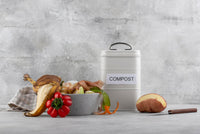
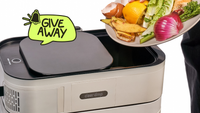
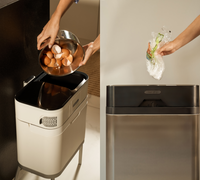
The Clear Drop Organics Collector (OC) is not a composter. It doesn't turn food scraps into finished compost inside your kitchen, and it's not trying to.
The OC is a food scrap collection and storage system designed to bridge the gap between your plate and an approved organics disposal stream — whether that's a municipal curbside bin, community composting site, or outdoor home compost system. That distinction changes almost everything about which foods you can separate.
The smells, flies, and slime people associate with composting cooked food are problems that occur during extended, unmanaged decomposition. The OC is built around preventing exactly that during indoor storage.
"I always thought composting was for people with backyards. I'm in a third-floor apartment. I genuinely didn't think it was an option for me."
Clear Drop customer reviewWhat the OC addresses directly:
- Odor accumulation: Food scraps stay contained to avoid the airflow-moisture spiral that makes open bins smell.
- Moisture buildup: Wet scraps don't pool at the bottom or leak onto counters.
- Fruit fly attraction: A sealed lid cuts off the conditions that bring flies in.
- Daily trip fatigue: Scraps can be collected over time (up to one week) rather than taken outside every night.
For apartment households, these considerations remove the biggest barriers to consistent food waste separation. If you want to correctly divert your food waste but can only find systems built for a backyard, the OC can be a gamechanger.
The OC doesn't change composting science. It changes the indoor storage experience — which is what determines whether households stick with food scrap separation long term.
What To Do With the Things That Don't Go In
Even with the OC and a good municipal organics program, some items still shouldn't go into your food scrap collection. Contamination in organics bins is a real problem that can cause entire loads to be rejected — meaning they'll end up in the landfill anyway.
As a general rule, avoid adding:
- Large quantities of cooking oil or grease
- Excessive liquids (soups, sauces in large amounts)
- Large bones that won't break down
- Packaging of any kind, including compostable-labeled bags (unless your program specifically accepts them)
- Anything coated in plastic or foil
If you're unsure about a specific item, the EPA's composting guide and your local municipality's organics program page are the most reliable references.
Food waste in landfills produces methane — a greenhouse gas the EPA identifies as more than 25 times more potent than carbon dioxide over a 100-year period. Diverting food scraps from landfill is one of the highest-impact actions you can take at the individual level.
Consistency matters more than perfection. Composting most food scraps, most of the time, has far more impact than achieving a flawless system occasionally.
The Real Barrier Was Never the Food
Most people stop composting because the experience is too often unpleasant. The smell hits them when they open the cabinet, flies show up, the bin leaks, and eventually it feels like more trouble than it's worth.
These are all solvable problems — and they're exactly the ones the OC was built around.
That leftover pasta, rice, roasted vegetables, and bread? All of it can realistically be part of a household food waste routine. It just needs the right collection system to get there — and it's possible to do so without the odors or the mess.
See What the OC Accepts
The Clear Drop Organics Collector helps households collect and store food scraps — including many common cooked leftovers — without the odor, flies, or daily outdoor trips that make traditional composting impractical for most kitchens.
Explore the Organics Collector →