CES has always been a place for bold ideas and ambitious visions. But this year, we noticed a subtle yet important change in how household waste was discussed.
The conversations were no longer centered on experimental prototypes or distant sustainability promises. Instead, they focused on complete, workable systems that could realistically fit into daily life. The questions were practical and specific: How does this work at home? What happens next? Where does the material actually go?
We at Clear Drop experienced this shift directly through in-depth discussions at our booth and across meetings. People were both curious and analytical. They wanted to understand the full path, from a decision made in the kitchen to a verified recycling or composting outcome.
To us, it felt like the beginnings of a quiet yet powerful turning point, where household waste management stops being treated as an abstract challenge and starts actually being addressed with integrated, solvable systems.
Recognition at CES 2026: Why It Matters
At CES 2026, Clear Drop received two notable recognitions:
- Best of CES 2026 — Sustainability
-
Best in Show 2026 — The Kitch
These acknowledgments reflect growing industry recognition that soft plastic waste is a serious, unresolved challenge, and that addressing it requires complete systems rather than isolated efforts.
This recognition helps shift the attention toward practical, household-level solutions that can scale.

Media Interest and Industry Conversations
Coverage from outlets including CNET, Engadget, Lifehacker, Mashable, Morning Brew, Plastics News, Waste360, housedigest, the kitchn and others focused less on novelty and innovation and more on feasibility and reliability. Conversations centered on real-world implementation, scalability, costs, verification, and ensuring that materials don’t end up in landfills.

What the Market Is Finally Ready To Acknowledge
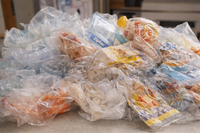
Soft plastic waste has long existed in a gray zone of recycling. Grocery bags, wrappers, films, and flexible packaging often fall outside curbside programs, clog sorting equipment, or get rejected entirely. While collection efforts exist on paper, end-to-end processing rarely follows through in practice.
This gap is often framed as a user problem: People are confused or choose to simply not participate Now, however, more people are recognizing that this issue is structural, not behavioral.
Consumer fatigue with vague green messaging has accelerated this realization. People are increasingly skeptical of initiatives that rely on perfect sorting behavior or municipal overhauls that may never come. The market is now ready for solutions that close the loop — systems that work within real household constraints and deliver reliable outcomes without requiring constant effort or guesswork.
From Promises to Systems: What Resonated Most at CES
It wasn’t any single piece of technology that stood out most at CES 2026, but the interest in systems that removed uncertainty.
People gravitated toward solutions that provided clarity across the entire мwaste management process, from identifying what to throw out where, how to sort it all at home, and how to ensure that materials would be processed and recycled as intended.
This end-to-end logic directly addresses what many experience as “guessing fatigue” — the frustration of never being quite sure whether something is recyclable, compostable, or destined for the landfill.
When the flow is transparent and verifiable, people start to feel like their efforts are no longer just aspirational, but actually making a difference. The best part is, when the system is simplified and streamlined, those efforts don’t require any extra work.

A Complete Household Waste System in Practice
Clear Drop’s system is designed around how people actually interact with waste at home. It consists of three interconnected components that work together to simplify decisions, reduce friction, and enable real recycling and composting outcomes.
ZeroTrash® AI: Offering clarity at the first decision point
Sorting decisions usually happen in seconds, often under uncertainty. ZeroTrash® AI helps users identify the material they’re discarding and how it should be handled. You simply scan the packaging to learn how to dispose of it properly.
With ZeroTrash® AI, you can remove ambiguity, reduce mental load, and prevent errors before they happen.

Soft Plastic Compactor (SPC): Making recycling physically possible
Soft plastics are lightweight but voluminous, making them difficult to store and transport. The Soft Plastic Compactor (SPC) addresses this obstacle by compressing bags, wrappers, and films into dense, uniform bricks using controlled heat and pressure. A month’s worth of household soft plastic waste can be reduced to a compact block about the size of a shoebox.
This process dramatically reduces volume, eliminates mess and odors, and prepares materials in a form that verified recycling partners can actually process. The SPC is designed for everyday household use and is already being adopted by small businesses that are turning an unmanageable waste stream into a stable, shippable resource.

Organics Collector (OC): Separating food waste cleanly
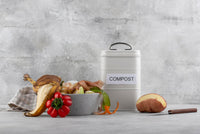
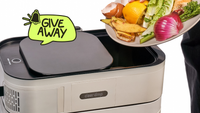
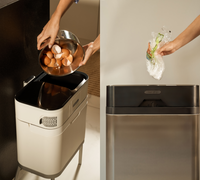
Food waste presents its own challenges, including odors, pests, and hygiene concerns. The Organics Collector (OC) enables clean, consistent separation of food scraps, keeping organics out of the general trash stream. By controlling smells and leaks, it removes one of the biggest psychological barriers to daily composting and supports cleaner downstream processing.
Together, these components form a user-centered loop that involves clear identification and effective preparation to achieve verifiable results.

CES in Context: A Broader Industry Shift
Several CES sessions reinforced this direction. In discussions led by Corie Barry (CEO of Best Buy) and Michael Kassan (CEO of 3C Ventures), a clear theme emerged: Modern systems are no longer about transactions or channels, but long-term relationships built on trust.
In this model, technology works best when it fades into the background, quietly enabling confidence, consistency, and ease.
This philosophy closely aligns with Clear Drop’s approach to waste. We believe in building infrastructure that supports daily habits without demanding constant attention or heroic effort.
What This Signals for the Future of Circular Living
Circular living shouldn’t solely rely on individual discipline. As CES 2026 made clear, the future lies in systems that handle complexity behind the scenes, reduce decision fatigue, and support people where they already are.
When tools are designed around real behavior and frustrations — such as time constraints, uncertainty, and limited attention — sustainable habits become repeatable rather than exceptional. Real change comes with consistency.

Moving Forward Without the Hype
CES 2026 marked a meaningful milestone for us at Clear Drop, but it’s hardly an endpoint. The work ahead — learning from our users, refining our products, and scaling what already works — will be subtler but just as meaningful.
Clear Drop will continue to focus on workable systems that actually follow through on their promises. The conversation around household waste is evolving — and so are the tools that support it.
Now we keep going. Thank you for being a part of our journey.