Plus, A 6-Step Approach to Implementing ZeroTrash Adoption
Sustainability is no longer a side initiative managed quietly by facilities teams. It's a cultural signal.
In today's workforce — especially among Millennials and Gen Z — environmental responsibility influences where people choose to work, how long they stay, and how deeply they engage. ZeroTrash initiatives, including pre-recycling systems and soft plastic diversion programs, are emerging as powerful tools not just for waste reduction — but for strengthening workplace culture and attracting purpose-driven talent.
Here's how.
"ESG used to live in the boardroom. Now it lives in the break room. The shift we're seeing is that employees at every level want to feel that their employer is a force for good — not just profitable, but responsible. The organizations that understand this aren't just building better sustainability programs. They're building better cultures, and ultimately, better businesses." — Ivan Arbouzov, Founder & CEO, Clear Drop
The Workforce Has Changed. Has Your Workplace Kept Up?
A generation ago, a company's sustainability efforts rarely entered into a candidate's decision calculus. Today, they sit near the top.
Among employed adults surveyed by Deloitte Consumer Center in March 2023 for its global State of the Consumer survey, 69% said they want their companies to invest in sustainability efforts, including reducing carbon, using renewable energy, and reducing waste.
Additionally, according to Deloitte's 2025 Gen Z and Millennial Survey, 70% of younger workers say a company's environmental credentials are important when evaluating an employer. Nearly 15% have already left a job due to concerns about sustainability, and around 40% report rejecting job offers because a company's values did not align with their own. Perhaps most striking, nearly half of respondents say they have actively pressured their employers to take more meaningful action on environmental issues.
Environmental stewardship consistently ranks among the top issues they care about. And critically, they can tell the difference between a company that genuinely walks the talk and one that simply checks a box on a CSR report.
ZeroTrash initiatives — comprehensive programs designed to eliminate landfill-bound waste at the source — are becoming one of the clearest, most visible signals a company can send. Unlike solar panels on a distant rooftop or carbon offsets buried in a footnote, a ZeroTrash program plays out in the everyday experience of every employee.
That visibility is what makes it powerful.
What "ZeroTrash" Actually Means in Practice
ZeroTrash isn't just about recycling. It's a systems-level commitment to rethinking how waste is generated, captured, and redirected before it ever reaches a landfill — and it represents one of the most effective waste reduction strategies available to businesses today.
In practice, it typically includes:
Pre-Recycling Systems — Choosing products and packaging upstream to minimize what needs to be disposed of in the first place. This might mean switching to compostable serviceware in a cafeteria, opting for bulk dispensers over single-use packaging, or partnering with vendors who take back their own materials.
Soft Plastic Diversion Programs — One of the most overlooked waste streams in commercial recycling. Film plastics — plastic bags, wrap, pouches, shrink wrap — are notoriously difficult to recycle through conventional waste hauling services. Soft plastic diversion programs create dedicated collection pathways that route these materials to appropriate processors, keeping them out of landfills and the broader waste stream. Purpose-built tools like the Clear Drop Soft Plastic Compactor (SPC) are making this more practical for workplaces of all sizes — compressing loose film plastics into dense, shippable blocks that go directly to certified U.S. recycling facilities, with no sorting burden on employees. Learn more about soft plastic recycling challenges and solutions.

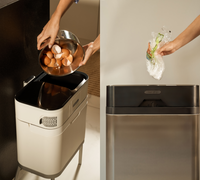
Composting and Organics Diversion — Separating food scraps and organic materials from general waste dramatically reduces methane emissions from landfills. In workplace settings — break rooms, cafeterias, communal kitchens — this is often where landfill diversion efforts visibly stall, because food waste collection done poorly means odors, insects, and employee frustration. The Clear Drop Organics Collector (OC) addresses this directly, slowing microorganism growth and controlling odors so that organics diversion becomes something people actually want to participate in rather than avoid.
Zero-to-Landfill Tracking — Measuring and reporting on waste diversion rates, giving employees and leadership a real, quantifiable picture of impact. For organizations serious about landfill reduction, this data becomes the backbone of ESG reporting and sustainability communications.
Together, these systems create a workplace where sustainability isn't aspirational — it's operational.
Why It Matters for Culture
Culture is built from the accumulation of small signals. What gets celebrated. What gets resourced. What gets done even when no one is watching.
When employees walk into a break room and see clearly labeled stations for compost, soft plastics, recycling, and landfill — and when those stations are actually maintained and working — they receive a clear message: this organization takes its values seriously enough to operationalize them.
That message has downstream effects that go far beyond waste management for businesses.
Shared purpose drives engagement. Employees who feel connected to a meaningful organizational mission are more productive, more loyal, and more likely to act as ambassadors for the company. ZeroTrash initiatives give teams something tangible to rally around — a visible, participatory sustainability effort they're a part of every single day.
Visible action builds trust. One of the biggest drivers of employee disengagement is the perception that leadership talks about values without living them. A ZeroTrash program is hard to fake. The bins are either there or they're not. The diversion rates either go up or they don't. That operational transparency builds exactly the kind of institutional trust that retention depends on.
Collective participation creates community. Sustainability programs that invite employee participation — waste audits, green team challenges, department-level diversion competitions — give people a reason to collaborate across silos. That cross-functional engagement strengthens relationships and improves the social fabric of the organization.
The Talent Acquisition Angle
Recruiting is increasingly a values conversation. Candidates research companies before they apply. They read Glassdoor reviews that mention sustainability. They look for ESG reports. They ask pointed questions in interviews about environmental commitments.
A robust ZeroTrash initiative gives HR and recruiting teams something concrete to point to — not a vague "we care about the planet" statement, but a specific, documented commercial recycling and waste diversion program with measurable outcomes.
Consider the competitive advantage this creates:
In high-demand talent markets, two otherwise equivalent offers may come down to cultural fit and values alignment. A company that can demonstrate a genuine, operational commitment to sustainability — one that employees interact with daily — has a meaningful edge over one that cannot.
For early-career candidates, this matters even more. Gen Z in particular applies a values filter early in their job search, and they're quick to identify greenwashing. A ZeroTrash initiative with real data behind it passes that test.
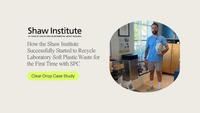
"For a research organization like ours, credibility is everything. The people considering working with us, joining our team, or supporting our mission in Blue Hill want to see that we operate with integrity at every level. Diverting the soft plastics our laboratory generates away from landfill is one of the most concrete ways we can demonstrate that our environmental values aren't confined to our research — they're built into how we run our organization. And that's why we implemented usage of the Clear Drop Soft Plastic Compactor in our day to day operations."— Dr. Charles Rolsky, Executive Director & Lead Research Scientist, Shaw Institute

Like they have at the Shaw Institute, when implemented correctly, commercial recycling programs deliver clear, quantifiable returns:
- The Shaw Institute achieved 94% diversion of laboratory-generated soft plastic waste using dedicated compaction technology. Read the full Shaw Institute case study.
- An office of 120 employees reduced landfill hauling frequency by 68% within four months.
In specialized sectors — tech, professional services, consumer goods, life sciences — where competition for talent is fierce and candidates have leverage, sustainability credentials are rapidly becoming a baseline expectation rather than a differentiator. Organizations that get ahead of this now will be better positioned than those who treat it as optional.
The Business Case Beyond Talent
While the culture and talent story is compelling on its own, ZeroTrash initiatives also generate hard business value that strengthens the ROI case for leadership:
Operational cost savings. Waste management for businesses is not cheap. Diverting materials from general waste streams — particularly through composting and soft plastic programs — directly reduces hauling volumes and the associated costs. Many organizations that commit to zero-to-landfill targets find they recover a meaningful portion of program costs through waste reduction alone.
Supply chain and vendor alignment. As corporate procurement increasingly screens for ESG credentials, having a documented ZeroTrash program positions your company favorably with customers and partners who have their own sustainability commitments to meet.
Risk mitigation. Regulatory pressure around waste, packaging, and carbon emissions is tightening across industries and geographies. Organizations that build commercial recycling and waste diversion practices now are ahead of compliance requirements that are likely coming regardless.
Brand and reputation. Employees talk. So do clients, investors, and the communities where you operate. A ZeroTrash commitment — particularly one that reaches zero-to-landfill milestones — generates the kind of authentic storytelling that earned media and manufactured marketing cannot replicate. And the halo effect extends beyond the workforce: sustainability credentials are increasingly influencing customer purchasing decisions too. (We explore this in depth in our next post — "How Sustainable Practices Help Attract and Retain Business Customers & Partners.")
Getting Started: 6 Steps to Creating ZeroTrash Adoption
The most common barrier to ZeroTrash adoption isn't will — it's knowing where to begin. The good news is that most successful waste reduction strategies start smaller than organizations expect and build momentum from there.
1. Launch with People, Not Just Policy. A zero waste program that arrives as a memo and without a champion(s) to lead it will underperform. The infrastructure matters, but so does the human activation layer around it.
2. Audit First. Understand what you're generating before trying to divert it. A waste audit — even an informal one — will quickly reveal which materials represent your highest-volume, highest-impact streams. For most commercial operations, that's food waste, soft plastics, and corrugated cardboard.
3. Build the Infrastructure. The right bins, placed in the right locations, with clear labeling and employee education, are the backbone of any ZeroTrash program. This sounds basic because it is — and it's also where most programs succeed or fail. Contaminated waste streams undermine diversion rates and increase costs.
4. Partner Strategically. Soft plastic diversion in particular requires the right processing partner. Not all waste haulers can handle film plastics. Finding a partner with the appropriate downstream relationships is critical to actually achieving landfill diversion rather than just collecting materials with nowhere to send them.
5. Measure and Track Results. Track diversion rates from the start. Set goals. Share results with employees. Celebrate milestones. The data is what turns a sustainability initiative into a cultural moment — and what gives your recruiting team something to talk about.
6. Evolve Toward Zero. ZeroTrash is a trajectory, not a switch. Organizations that treat it as a continuous improvement program — reducing landfill waste quarter over quarter — build more durable programs and more authentic sustainability narratives than those chasing a one-time certification.
Download an infographic version of this guide.
Build A Culture Worth Belonging To
The companies winning the war for talent in the next decade will not be the ones with the flashiest perks or the most competitive salaries alone. They'll be the ones that have built cultures worth belonging to — cultures where organizational values are visible in daily operations, not just annual reports.
ZeroTrash initiatives represent exactly that kind of operational values expression. They reduce waste. They reduce costs. They signal commitment to the employees you're trying to retain and the candidates you're trying to attract. And they give everyone in the organization something real to participate in together.
That's not a facilities initiative. That's a talent strategy.
Interested in implementing a ZeroTrash program at your organization? The right partner can help you audit your current waste streams, design the right diversion infrastructure, and connect you with processing networks for even the most challenging materials — including soft plastics. The journey to zero starts with knowing where you are.