Corporate sustainability is now a critical business priority. Both employees and customers expect companies to take action on waste reduction and environmental responsibility — and business recycling is at the center of it.
While many focus on carbon reduction, improving how businesses handle soft plastics — which are not recyclable curbside — is essential for achieving measurable sustainability results and supporting long-term ESG goals.
of job candidates say that environmental practices are important in choosing an employer (PwC)
of consumers have a more positive image of a company that supports environmental issues (Forbes)
of consumers are willing to pay more for products from companies committed to positive environmental impact (Nielsen)
of the American waste stream is recyclable — yet only about 30% is actually recycled (EPA)
How Sustainability Strengthens Employer Brand and Customer Loyalty
Business sustainability practices are essential to attract top talent. A PwC study found that 68% of job candidates say environmental practices are important in choosing an employer. A Deloitte study found that two-thirds of employees globally don't believe their employers are doing enough to address climate change.
On the customer side, Forbes reports that 87% of consumers have a more positive image of a company that supports environmental issues. According to Nielsen, 55% of consumers are willing to pay more for products from companies committed to positive environmental impact — and about half said they had purchased a sustainable product in the last four weeks.
Sustainability influences hiring, partnerships, and company image — making it a business development asset, not just a values statement.
Business Recycling as a Core Pillar of ESG
As companies strive to meet ESG goals, business recycling and waste stream management programs — including how they handle soft plastic waste — are becoming essential. According to EPA data, 75% of the American waste stream is recyclable, but only about 30% of it is recycled. Businesses produce about 25% of all the world's waste every year, and business recycling rates tend to be lower than residential.
The Challenge of Rising Soft Plastic Waste
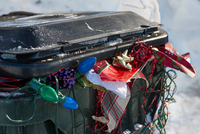
More than 95% of plastics generated in the U.S. end up in a landfill or are incinerated. Per capita plastic waste generation has increased by 263% since 1980 — while recycling rates decline.
Soft plastic recycling rates remain well below 10%. Soft plastics disrupt sorting operations when co-mingled with other recyclables and require a separate solution — like a compacting device — to prepare them for proper recycling.
Real-World Business Recycling Programs
Companies across industries are already acting:
- Corporate: Apple has committed to becoming carbon neutral for corporate operations and aspires to divert over 74% of its waste from landfills through recycling and reuse programs.
- Healthcare: University of Michigan Health completed a plastics recycling program at Mott Children's Hospital — collecting operating room plastic over 6 months and diverting 2.64 tons from landfills. The program is now permanent and expanding.
- Higher Education: Virginia Tech, University of Richmond, and Arizona State University are among many colleges collecting and recycling soft plastics including air pillows, bread bags, bubble wrap, and shrink wrap.
How to Set Up a Recycling Program for Your Business
1. Conduct a waste audit. Identify the types and quantities of waste your company produces. This reveals opportunities and the resources needed to address them.
2. Separate recyclables. Collect each waste type separately: plastics, organics, glass, metal, cardboard, paper, and electronics.

3. Educate employees. Employee engagement is crucial. Create educational programs, provide easy access to bins, and give clear instructions on what goes where.
4. Set clear goals. Define specific targets — such as diverting 50% of waste from landfills. Track progress and share results with your team regularly.
5. Collaborate with certified recycling facilities. Partner with local recycling centers capable of processing the specific materials you collect.
6. Invest in technology. Emerging innovations are enabling a more convenient and circular approach to workplace recycling — from app-based training to compacting devices for soft plastics.
How to Improve Soft Plastic Recycling in the Workplace
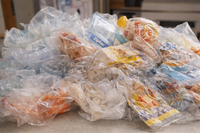
Soft plastics — film wrap, delivery packaging, snack bags — make up a significant portion of office waste but cannot be recycled curbside.
Collect soft plastics separately from other recyclables. Keep them clean and dry. Compact them to reduce bulk and avoid landfill overflow. Partner with recycling services capable of processing soft plastics.
Smart solutions for efficient plastic waste management
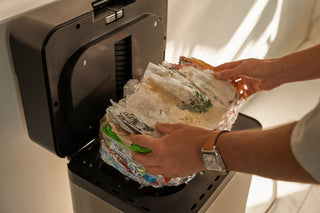
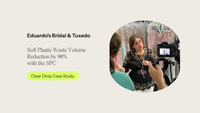
The Clear Drop® Soft Plastic Compactor (SPC) compresses bags, films, and packaging into dense 12×8×4-inch blocks. This prevents contamination, reduces storage needs, and prepares materials for recycling rather than landfill. Compacted blocks are then processed at a dedicated recycling facility — giving your plastics a second life and ensuring the efficiency of your recycling program.

As businesses continue to implement sustainable practices, the focus on diverting plastic waste from landfills becomes increasingly important. Through innovative technology, employee engagement, and organized programs, companies can reduce waste, meet diversion goals, and strengthen their corporate sustainability story.
Empower your business recycling program
The Clear Drop® Soft Plastic Compactor transforms bulky packaging into compact 12×8×4-inch blocks — ready for recycling, not landfill.
Learn more about the SPC →