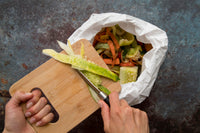
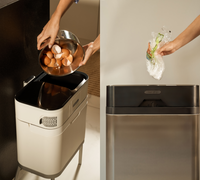
Food leftovers, vegetables peels prepared fod composting

Composting: electric vs. professional or traditional options

Alena Hileuskaya
Food leftovers, vegetables peels prepared fod composting
Navigation

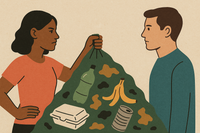
In the United States, food scraps make up a significant share of household waste — yet only about 5% of organic waste is composted. As electric composters gain popularity, many homeowners believe they are creating usable compost. Environmental experts argue otherwise.

This guide explains the differences between electric composting, true professional composting, and new home-friendly technologies that actually support a circular system and help reduce methane emissions from landfills.

5%

of the annual 66.2 million tons of food waste in the U.S. is composted — the rest goes to landfill

70–90%

volume reduction from electric composters — but the output is not true compost

160°F+

temperature used in electric composters — killing bacteria needed for real soil enrichment

30–40%

moisture reduction with the Clear Drop OC — preserving organic matter for real composting

How Electric Composters Work

Electric composters use heat, grinding, and aeration to dehydrate and grind organic waste. They reach temperatures of around 160°F or above 212°F depending on the model — eliminating bacteria and pathogens in the process. The result is a dry powder or chunky fibrous material with 70–90% less volume than the original waste.

That sounds convenient for keeping a kitchen odor-free and pest-free. But fully dehydrated and ground material is not compost — real compost requires microbial decomposition and active compost bacteria to benefit soil.

The composting misconception

"Right from the moment I saw the first unit, I questioned the 'composting' aspect. How can they compost so quickly when composting is a very slow process?"

— Robert Pavlis, chemist, gardener, and author at GardenMyths.com

The U.S. Environmental Protection Agency describes the output from these devices as a "dehydrated food waste byproduct" — not compost. This material is not biologically stable and often requires further decomposition before it can be safely used in soil. Applying it directly to plants may not deliver the intended benefits and could potentially harm plant health due to incomplete decomposition and high salt content.

Organic matter — the basis of real composting
What the tests show

Some environmentalist tests challenge electric composter claims, showing that the final material can be detrimental to plant growth and does not reliably eliminate odors — which can attract pests. Freshly ground material may also contain concentrated salts that create nutrient imbalances in garden beds.

In cities where composting options are limited, electric composters do provide a practical way to separate food scraps from general trash. But since they don't produce real compost, meaningful progress requires a professional approach and municipal system participation.

Professional Composting: How It Actually Works

Unlike electric devices that grind and dry organic waste without microbial action, professional composting systems rely on natural decomposition to produce true compost.

Healthy soil produced through professional composting
Feature Electric Composter Professional Composting
Process Heat + grinding + aeration Aerobic microbial decomposition
Output Dehydrated food waste byproduct True nutrient-rich compost
Soil benefit Limited or potentially harmful Improves soil health and structure
Waste types accepted Limited to certain organics Includes bioplastics, bones, and more
Time to output Hours Weeks to months

Professional composting, as understood by the US Composting Council, involves large-scale, controlled processes that handle significant volumes of organic waste under strictly managed conditions — aerobic decomposition with oxygen, controlled temperature, humidity and airflow, and the use of microorganisms with mechanical turning or forced aeration.

A Better Home Alternative: The Organics Collector

For households where traditional composting isn't an option and coping with flies, leaks, and odors feels like a mission, there's a middle path.

Organic waste collection at home — a cleaner approach

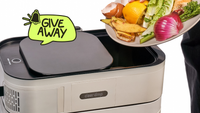
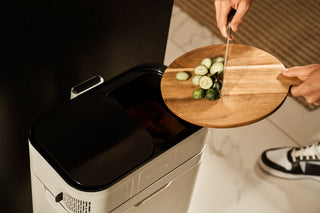
Clear Drop's Organics Collector (OC) was designed specifically to solve the challenge of convenient household organic waste management — without full dehydration. It uses a combination of three technologies: drying without heating, aeration, and ozone treatment.

Drying reduces moisture content by only 30–40%, preserving the essential organic matter so it can still be effectively composted in industrial facilities or a community pit. Aeration saturates the waste mass with air. Ozonation provides regular treatment with limited, safe doses of ozone. A carbon filter ensures all outgoing air is cleaned of odors.

Clear Drop Organics Collector — organic waste ready for real composting
The key difference

Electric composters destroy the organic value of food scraps. The OC stabilizes them — keeping waste compostable, reducing odors and leaks, and making it ready for the municipal or professional composting systems that actually close the loop.

Real sustainability lies in supporting systems that return nutrients to the earth through natural decomposition. Whether through municipal composting services or home methods rooted in biology, the smarter path nurtures soil — not just simplifies disposal.

Practical Steps for Cleaner Organics Collection at Home

  1. Keep food scraps separate from plastic packaging and other trash.
  2. Store organics in a sealed container to prevent mess and odors.
  3. Limit moisture and airflow exposure to slow decomposition and avoid pests.
  4. Use a home appliance that stabilizes food scraps without destroying their organic value.
  5. Deliver properly stored organics to municipal or professional composting programs where true composting occurs.

Cleaner kitchen. Better composting.

The Clear Drop® Organics Collector stabilizes food scraps using drying without heating, aeration, and ozone treatment — keeping them ready for true composting.

Learn more about the Organics Collector →
Learn more about the OC food collection technology

Explore OC

Latest posts All posts

How Sustainable Practices Help Attract and Retain Business Customers

How Sustainable Practices Help Attract and Retain Business Customers

"Our clients' clients are holding them accountable for sustainability, and that pressure trave...
Why Your Kitchen Compost Bin Still Smells and What Actually Fixes It

Why Your Kitchen Compost Bin Still Smells and What Actually Fixes It

"I tried bins with filters before. They still had fruit flies and odor — I was already thinkin...
What is an Organics Collector? (And Why It’s Not a Composter)

What is an Organics Collector? (And Why It’s Not a Composter)

What Is an Organics Collector? (And Why It's Not a Composter) A quick search for a "composter a...
Global Recycling Day: The Reality of  Recycling and How You Can Help Improve the Stats

Global Recycling Day: The Reality of Recycling and How You Can Help Improve the Stats

March 18 is Global Recycling Day, an international initiative created by the Global Recycling F...
Soft Plastic Recycling Myths That Stop People from Taking Action

Soft Plastic Recycling Myths That Stop People from Taking Action

Soft plastic recycling myths that stop people from taking action Soft plastic recycling can be ...
How ZeroTrash Initiatives Improve Workplace Culture and Attract Eco-Conscious Talent

How ZeroTrash Initiatives Improve Workplace Culture and Attract Eco-Conscious Talent

Plus, A 6-Step Approach to Implementing ZeroTrash Adoption Sustainability is no longer a side ini...
Mandatory Organic Waste Separation in New York: How To Comply Without Odors, Messes, or Fines

Mandatory Organic Waste Separation in New York: How To Comply Without Odors, Messes, or Fines

Over the past couple of years, New York City has steadily changed how residential waste is ...
UCSF Health's Mission Bay Hospital Achieves Guaranteed Recycling of Pharmacy Soft Plastic Waste with Clear Drop SPC

UCSF Health's Mission Bay Hospital Achieves Guaranteed Recycling of Pharmacy Soft Plastic Waste with Clear Drop SPC

Healthcare facilities generate massive amounts of plastic waste daily, and California's ambitiou...
How To Compost Eggshells and Vegetable Scraps the Right Way: Faster, Nutrient-Rich Composting & Zero-Waste Kitchen Tips

How To Compost Eggshells and Vegetable Scraps the Right Way: Faster, Nutrient-Rich Composting & Zero-Waste Kitchen Tips

In many homes, food scraps make up around 25% to 30% of household waste. When sent to landfills, ...
Soft Plastic Compactor vs. Curbside Recycling: The Real Difference

Soft Plastic Compactor vs. Curbside Recycling: The Real Difference

Most people assume recycling works when something goes into the blue bin. But for soft...
How Your Household Can Save Up to $240 a Year on Trash Costs

How Your Household Can Save Up to $240 a Year on Trash Costs

Household trash bills are rarely questioned. Most people accept them as a fixed cost, just like...
How ZeroTrash® AI Helps You Identify Soft Plastics Correctly

How ZeroTrash® AI Helps You Identify Soft Plastics Correctly

ZeroTrash® AI is designed to take the guesswork out of everyday waste decisions. Using a camer...
Why CES 2026 Shifted the Conversation Around Household Waste

Why CES 2026 Shifted the Conversation Around Household Waste

CES has always been a place for bold ideas and ambitious visions. But this year, we noticed a sub...
How to Compost in an Apartment (Without Annoying Your Neighbors or Your Landlord)

How to Compost in an Apartment (Without Annoying Your Neighbors or Your Landlord)

Many people still believe composting requires a yard. In reality, modern indoor composting work...
Post-Holiday Waste Reset: Starting 2026 With a Clean, ZeroTrash® Kitchen

Post-Holiday Waste Reset: Starting 2026 With a Clean, ZeroTrash® Kitchen

The holidays may bring plenty of celebration — but they can also leave a big mess, between a clut...
From Trash to Treasure: Real Products Made From Recycled Soft Plastics (and How Clear Drop Makes It Happen)

From Trash to Treasure: Real Products Made From Recycled Soft Plastics (and How Clear Drop Makes It Happen)

Fun fact: Soft plastics aren’t “unrecyclable.” They’ve just been collected the wrong way for over...
Holiday Composting Guide 2025: How to Reduce Waste at Christmas & New Year Events

Holiday Composting Guide 2025: How to Reduce Waste at Christmas & New Year Events

The holidays bring plenty of food, cheer, and …. waste? With all those extra food scraps, packagi...
How Much Food Americans Waste and What You Can Do

How Much Food Americans Waste and What You Can Do

Key Takeaways Americans waste 30%-40% of their total food supply each year ...
How the Shaw Institute Successfully Started to Recycle Laboratory Soft Plastic Waste for the First Time with SPC

How the Shaw Institute Successfully Started to Recycle Laboratory Soft Plastic Waste for the First Time with SPC

The Shaw Institute in Blue Hill, Maine, is a respected nonprofit research organization studying t...
10 Soft Plastics You Didn’t Know You Could Recycle at Home

10 Soft Plastics You Didn’t Know You Could Recycle at Home

Key Takeaways Only 1% of U.S. households have access to curbside film recycling. Home devices l...
How Clear Drop’s Soft Plastic Compactor (SPC) Recycling System Works | Clear Drop

How Clear Drop’s Soft Plastic Compactor (SPC) Recycling System Works | Clear Drop

At Clear Drop, we're redefining what responsible soft plastic recycling looks like. Our Sof...
How Geekdom sparked early wins in soft plastic recovery with the Clear Drop's SPC

How Geekdom sparked early wins in soft plastic recovery with the Clear Drop's SPC

Geekdom is a cornerstone of San Antonio’s startup and innovation ecosystem. Spread across four fl...
How Trinity University advanced soft plastic recycling with the SPC

How Trinity University advanced soft plastic recycling with the SPC

Flexible plastic waste is one of the most persistent challenges on college campuses. From snack w...
From soft plastic to microplastic: what to know

From soft plastic to microplastic: what to know

Soft plastic packaging surrounds almost every product we buy — bags, wrappers, film, shippi...
Survey reveals trash sparks more fights than childcare, and why recycling Is at the heart of It

Survey reveals trash sparks more fights than childcare, and why recycling Is at the heart of It

Trash duties are the most underestimated part of modern household life—yet they’re one of the big...
How one office building pilot became a model for smarter soft plastic waste reduction

How one office building pilot became a model for smarter soft plastic waste reduction

Commercial buildings generate a large share of soft plastic waste — from deliveries, shipments, ...
Official rules: Clear Drop OC pre-order giveaway

Official rules: Clear Drop OC pre-order giveaway

The drawing was heldWINNER SELECTION VIDEO1. SPONSOR The Clear Drop Pre-Order Giveaway (the “Give...
Fixing the broken recycling system: why Clear Drop® exists

Fixing the broken recycling system: why Clear Drop® exists

The global recycling system is struggling to keep up with the waste we generate. Most soft pla...
Getting started with soft plastic waste collection at home

Getting started with soft plastic waste collection at home

Flexible packaging makes everyday life easier, but most soft plastics still end up in landf...
How Eduardo's Bridal & Tuxedo reduced soft plastic waste volume by 90% with the SPC

How Eduardo's Bridal & Tuxedo reduced soft plastic waste volume by 90% with the SPC

Garment retail businesses rely heavily on flexible plastic packaging to protect inventory. But on...
Clear Drop: how we’re revolutionizing home waste management

Clear Drop: how we’re revolutionizing home waste management

Most household waste still ends up in landfills, not because people do not want to recycle, but b...
Why business recycling matters: a key to corporate sustainability

Why business recycling matters: a key to corporate sustainability

Corporate sustainability is now a critical business priority. Both employees and customers expect...
Tackling plastic in the healthcare industry: challenges and solutions

Tackling plastic in the healthcare industry: challenges and solutions

U.S. healthcare produces more than 5 million tons of waste every year, and plastics account for...
Composting: electric vs. professional or traditional options

Composting: electric vs. professional or traditional options

In the United States, food scraps make up a significant share of household waste — yet only...
Soft plastic recycling: key challenges and solutions

Soft plastic recycling: key challenges and solutions

Soft plastics like grocery bags, bubble wrap, and packaging film make up a growing share of...
All posts

FAQs

No. The product they create is usually a dehydrated food waste byproduct without the microbial activity needed for composting. It still requires decomposition before being applied to soil.

Industrial facilities process organics under controlled conditions with microorganisms and aeration, creating nutrient-rich compost that improves soil health and reduces methane emissions.

Use certified collection programs, community composting, or home appliances that stabilize food scraps while keeping them compostable.

Yes. Odors attract pests and lead to contamination. A sealed, aerated solution prevents this and makes waste collection more consistent.