ZeroTrash® Revolution Blog Blog
Explore articles on recycling, waste management and sustainable habits by category
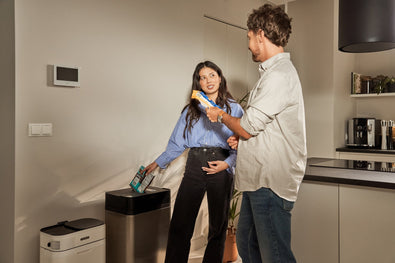

Why Your Kitchen Compost Bin Still Smells and W...
"I tried bins with filters before. They still had fruit flies and odor — I was already thinking about buying something else." — Lauren, customer and five-year composter If that...
Why Your Kitchen Compost Bin Still Smells and What Actually Fixes It
"I tried bins with filters before. They still had fruit flies and odor — I was already thinking about buying something else." — Lauren, customer and five-year composter If that sounds familiar, you're not alone. You bought the bin with the charcoal filter. Maybe even the fancy one with the bamboo lid. But it still smells, and the fruit flies are still hanging around. Now it just sits under the sink, leaving you feeling a tinge of guilt every time you open the cabinet. The short answer Yes, kitchen compost bins smell, and it isn't because you're doing something wrong. Food scraps are mostly water, and the moment they sit in a sealed bin they start breaking down without oxygen, which produces the rotten-egg and sour odors you notice. Carbon filters only mask it, and fruit flies follow the same moisture. The lasting fix is removing moisture at the source, not sealing it in tighter. So, what's the deal? Keep reading to understand what's happening, why this system will never fully work, and how you can actually deal with your organic waste without the odors, fruit flies, and frustration. Do Compost Bins Smell? Yes, and Here's Why If you're wondering whether a kitchen compost bin is supposed to smell, the honest answer is that almost all of them do without the right conditions. A compost bin smells because the food scraps inside are wet organic matter, and wet organic matter breaks down fast in a closed container. The root of the problem is really quite simple: it's moisture. Moisture Is the Problem Food scraps are wet organic matter, meaning they contain mostly water — even meat and fish. Consider what you're actually putting in the bin: Food type Water content Fruits (berries, citrus, melons) 85%–95% Vegetables (cucumbers, lettuce, tomatoes) 90%–96% Cooked grains and pasta 60%–70% Meat and fish scraps 65%–80% The moment those scraps go into a sealed container, you've created near-perfect conditions for anaerobic decomposition: a warm environment low in airflow. Within hours, bacteria begin breaking down the waste. Some bacterial populations even double every 20 minutes under favorable conditions. Most of the byproducts of that process are what you're actually smelling: Hydrogen sulfide emits that rotten egg smell. Ammonia gives off a sharp, acrid odor. If you've searched what ammonia smells like, it's that stinging, cleaning-product sharpness at the back of your nose. Volatile fatty acids offer up sour, rancid notes. Methane, while odorless, is also a sign of active anaerobic breakdown. According to waste composition research, over 50% of household food scraps are highly biodegradable within 24–48 hours, meaning the smell can start to build almost immediately. The key insight The sealed container isn't protecting your kitchen from the smell. It's incubating it. This is the same reason why most Americans generate so much food waste that ends up in landfills rather than being composted: The experience of dealing with it at home is genuinely unpleasant. Why Activated Carbon Filters Only Mask the Smell Activated carbon filters are the industry's standard answer. They're in nearly every "odor-free" kitchen composter on the market, and they do work — for a while. Carbon traps airborne odor molecules, which reduces smell in the short term. But it doesn't stop decomposition, control moisture, or prevent fruit flies. And once the filter saturates — usually within a few weeks — it stops working entirely. Here's what actually happens once you close the lid: Food waste releases odor compounds as bacteria multiply. The filter absorbs some of them, temporarily. Moisture continues accumulating inside the bin. Bacterial activity intensifies with no change in conditions. Odor production outpaces what the filter can handle. The bin smells again, now with a saturated filter that needs replacing. You replace the filter and restart the cycle. Lauren experienced this directly. She tried multiple lidded bins with carbon filters before discovering Clear Drop's Organics Collector (OC). The filters didn't stop the fruit flies or prevent the smell from returning. They just delayed them. Why Your Compost Bin Smells and Has Flies If your compost bin both smells and has fruit flies, the two problems share one cause: moist, fermenting food waste. The odor is the chemistry of decomposition, and the flies are biology responding to that same material. Fix the moisture and you address both at once. Fruit flies aren't your fault! Here's what makes them so persistent: They can detect fermenting organic material from several meters away. They lay eggs directly on moist food waste. Eggs hatch within 24–30 hours. A single female can lay up to 500 eggs over her lifetime. Residual moisture and micro-particles in a "clean" bin are enough to restart the cycle. By the time you notice one fruit fly near your bin, the cycle is already underway. Cleaning the bin breaks the current generation, but as long as there's warm, moist organic material inside, new flies will arrive within days. Worth knowing No anti-odor filter can stop this. Fruit flies are responding to the biological activity happening inside the container, which exists because moisture does. This is the same biological dynamic that drives larger food waste and composting challenges at every scale. How to Keep a Compost Bin From Smelling: Common Mistakes Most people troubleshoot their compost bin by doing more of what already isn't working. If you've been trying to keep your compost bin from smelling and nothing sticks, it's likely one of these. Here's what typically backfires and why: What people try Why it doesn't work Sealing the lid more tightly Creates more anaerobic conditions, intensifying bacterial activity Adding dry materials (cardboard, paper) Rarely offsets the daily moisture input from fresh scraps Emptying more frequently Odor forms within hours — faster than most emptying schedules Using compostable bags Traps moisture against the waste, accelerating decomposition Storing the bin under the sink Sits in the warmest, least-ventilated spot — ideal for bacteria and flies Rinsing with baking soda Neutralizes existing odor briefly; doesn't prevent new formation Lauren eventually moved her OC to the laundry room near the back door. Not because the device required it, but because it made her existing composting habit more natural. What Actually Works: Removing Moisture at the Source If moisture drives bacterial growth, and bacterial growth produces odor, the solution is clear: Reduce moisture before decomposition accelerates. This is standard practice in industrial organic waste processing. Large-scale systems routinely reduce moisture content by 50%–70% before further handling — and the effect is dramatic. Research shows that reducing moisture from the over 90% found in fresh scraps to industrial targets of 50%–60% can greatly lower bacterial activity and odor production. Less moisture means slower microbial activity, which means significantly less odor. 90%+ water content in fresh food scraps — the primary driver of odor and bacterial growth 50–70% moisture reduction achieved by industrial organic waste systems before further handling 24–48h how quickly over 50% of household food scraps begin to biodegrade — and smell 500 eggs a single fruit fly can lay over her lifetime — triggered by moist organic material In a home setting, typical kitchen compost bins don't address moisture at all. They hold whatever you put in them and wait. This is true whether you're using a basic countertop bin or a more advanced indoor compost machine. If the design doesn't actively manage moisture, the odor problem remains. This gap between what industrial systems do and what home products offer is part of what Clear Drop is working to close — by applying the logic of professional waste management to everyday household use and making valuable technology to reduce food waste in the kitchen. How the Organics Collector Solves This Differently The Organics Collector (OC) is neither a compost bin nor a standard electric composter. It's a collection system designed around what actually causes the main frustrations with composting. Here's how it compares to what most people have tried: Feature Standard bin + filter Electric composter Organics Collector Addresses moisture ✗ Partially ✓ Prevents odor at source ✗ ✗ ✓ Controls fruit flies ✗ ✗ ✓ Requires filter replacement Regular Sometimes ✗ Needs daily emptying Often No No Works in summer heat Poorly Variable ✓ Works without bags Yes Yes Yes Rather than sealing moisture inside and hoping a filter catches the odor in time, the OC actively reduces moisture content and limits the conditions that allow bacterial activity to take hold. The result: No sludge or sticky residue building up inside No sulfur or ammonia smell when you open the lid No fruit fly infestations restarting every week No filter replacements when carbon saturates No daily emptying just to keep things manageable "The fan and filter system actually works. None of the others did." — Lauren, OC customer and five-year composter She uses no compostable bags, washes the device directly after emptying, and reports no issues with odor or pests. For a household that has composted for over five years and takes waste reduction seriously, that's a meaningful shift. Most kitchen composter improvements tend to be incremental, like using better seals or thicker filters. The OC addresses a different question entirely: What if you can manage organic waste without creating an odorous environment to begin with? If you're also managing soft plastic waste in your kitchen, the Soft Plastic Compactor works alongside the OC. Together, they cover the two waste streams that most households struggle to manage. Learn more about how Clear Drop's full approach to home waste works here. Ready to fix the real problem? The Organics Collector addresses moisture at the source — no more odors, no more fruit flies, no more frustration. Shop the Organics Collector →

What is an Organics Collector? (And Why It’s No...
What Is an Organics Collector? (And Why It's Not a Composter) A quick search for a "composter appliance" or "smart compost bin" may just leave you with more questions. Your...
What is an Organics Collector? (And Why It’s Not a Composter)
What Is an Organics Collector? (And Why It's Not a Composter) A quick search for a "composter appliance" or "smart compost bin" may just leave you with more questions. Your search will likely pull up dozens of products, all promising the same thing but all doing something slightly different. But here's what most product pages don't tell you upfront: An organics collector and a composter are fundamentally different tools. If you opt for the latter, you may end up with a device that doesn't fit your lifestyle, a kitchen that still smells, and a habit that doesn't stick. To find the best organic waste solution for you, keep reading to learn more about the key differences between a composter and an organics collector. The Problem With Calling Everything a "Composter" People that search for an indoor food waste solution, typically end up comparing grinders, dehydrators, fermentation units, and collection bins as if they were all interchangeable. They're not. While "composter appliance" has become a catch-all term for these products, each type of device solves a different problem at a different stage of the waste cycle. Even people who've been diligently managing their organic waste for years run into this confusion. One of our customers — Kris, an eco-conscious tech professional from Oregon — had no idea this product category existed before stumbling across it. He'd been using a sealed mixing bowl for years and only started researching alternatives when he saw the phrase "composter appliance" for the first time. Another customer, Lauren, had been composting in her backyard for over five years and tried multiple indoor collectors with filters. They all failed: fruit flies, persistent odors, and leaking bags were all too common. She didn't realize the core issue was the type of product she was choosing. What a Composter Actually Does A true electric composter is a processing machine. Its job is to transform food scraps into something smaller and drier, typically through heat, grinding, or fermentation. Depending on the type, it will: Reduce waste volume by 60%–90% Produce a dry, powder-like output Run in cycles that can last several hours Use anywhere from 0.5 to 1.5 kWh per cycle The catch That output is rarely finished compost. Instead, it's pre-compost material — useful as a soil amendment if you have a garden and the patience to let it finish breaking down, but not something you can apply directly as compost. Electric composters are also noisy during cycles, use significant energy, require regular maintenance, and often emit unpleasant odors. They can work well if you're someone with outdoor garden space who wants to close the loop completely at home. But for everyone else, they're often the wrong tool. What the Organics Collector Does Instead An organics collector solves a completely different problem — one that most of us can relate to. The real bottleneck in food waste management isn't processing, but storage. Most people end up not separating their organic waste, not because they don't care, but because storing it is genuinely unpleasant. Food scraps smell, attract fruit flies, cause leaks, and require regular emptying. The Clear Drop Organics Collector (OC) addresses every one of these frustrations. Instead of trying to process waste, it focuses on storing it cleanly by using active airflow, a charcoal filter, and a sliding sealed lid to eliminate odor and pests. You can store organic waste in the OC for up to one week before disposing of it through your city's organic pick-up, a community composting program, or your own backyard pile. Your browser does not support the video tag. With the OC, enjoy eco-conscious composting with: No odors, even without liners No fruit flies, even in the summer Less frequent emptying A counter-friendly bin that stays clean "The fan and filter actually worked. No flies, no smell, no mess. That had never been true for any product I'd used before." — Lauren, OC customer, 5+ years composting "It just makes composting easier — it's an upgrade from a simple trash bin." — Kris, OC customer, Oregon ► See how the Organics Collector works → Organics Collector vs. Electric Composter vs. Regular Bin Your decision really comes down to your set-up. If you have a garden and want to produce usable material at home, an electric composter may be the right fit. However, if you buy an electric composter expecting a clean, low-effort kitchen solution, you'll only end up with extra noise, heat, and a maintenance schedule. On the other hand, if you buy a basic sealed bin to keep odors out you'll likely get fruit flies within a week. If you want a clean, odor-free, low-maintenance way to separate organic waste, the Organics Collector is exactly what you're looking for — especially if you have limited counter space. With the OC, separating your food scraps becomes a habit as easy as tossing away any other type of trash. Feature Organics Collector Electric Composter Regular Bin Purpose Store & manage waste cleanly Process waste into dry material Temporary disposal Odor control High (filters + airflow) Medium Low Energy use Minimal High (0.5–1.5 kWh/cycle) None Output Raw organic waste for collection Dry pre-compost material Mixed waste Best for Apartments, cities, households with collection access Home gardeners, self-contained processing Basic use Maintenance Low Medium–high Low Pest control Yes Sometimes No Noise Quiet fan Cycles can be loud None The Environmental Impact When it comes to choosing a kitchen compost bin vs Organics Collector, the environmental impact can be significant. According to the U.S. EPA, food waste makes up around 24% of all material sent to a landfill, and is responsible for 58% of fugitive (unintentional) methane emissions from municipal solid waste landfills. Methane is up to 80 times more potent than CO₂ over a 20-year period. This means keeping food waste out of landfills is one of the fastest ways to reduce household greenhouse gas emissions. This is possible to do — one household at a time. 24% of all landfill material is food waste, according to the U.S. EPA. 58% of fugitive methane emissions from landfills come from food waste. 80x more potent than CO₂ is methane over a 20-year period. 1 household at a time — that's how change starts. Who the Organics Collector Is For The OC was designed for people who want to dispose of their food waste in the most earth-friendly way — but with a solution that actually fits into their everyday life. The OC is best for: People in apartments or homes with limited counter space Households that rely on municipal organic waste pick-up Anyone who's tried and abandoned other solutions because of odor or pests Environmentally conscious users who want convenience "I think for those who are conscious about the environment, this is actually something you can do to make a difference." — Kris, OC customer The OC can help you make sure food waste never ends up in a landfill. OC customer Kris doesn't garden. He relies on his city's organic waste pick-up every two weeks. With the OC, he's easily made separating organics a frictionless (and odor-less!) habit. If you're also looking for an easy solution to collect and manage soft plastic at home, check out Clear Drop's Soft Plastic Compactor, which pairs perfectly with the OC as part of a complete household waste system. Ready to make composting effortless? The Organics Collector is designed for real kitchens and real lives — no smell, no fruit flies, no daily frustration. Discover the Organics Collector →

Global Recycling Day: The Reality of Recycling...
March 18 is Global Recycling Day, an international initiative created by the Global Recycling Foundation to highlight the importance of recycling and using sustainable resources. Global Recycling Day emphasizes a...
Global Recycling Day: The Reality of Recycling and How You Can Help Improve the Stats
March 18 is Global Recycling Day, an international initiative created by the Global Recycling Foundation to highlight the importance of recycling and using sustainable resources. Global Recycling Day emphasizes a simple concept: Recyclable materials should be treated as valuable resources rather than waste. Recycling helps conserve natural resources, reduce pollution, and support a more sustainable economy. However, global research shows that most waste produced worldwide is still not recycled. Let's take a closer look at the data — and how individual households can actually make a difference. Global Waste & Recycling Statistics Here are some interesting — or, rather, shocking — stats about waste and recycling, globally and stateside: 2.24B tonnes of municipal solid waste generated worldwide every year, according to the World Bank +70% projected increase in global waste production by 2050 if current trends continue (World Bank) ~19% of municipal waste worldwide is actually recycled — the rest ends up in landfills or worse (World Bank) ~9% of plastic waste worldwide is recycled — ever, according to the OECD Global Plastics Outlook ~32% national recycling rate in the United States, per the EPA ~24% of U.S. landfill material is food waste — the single largest category (EPA) Surprising Recycling Facts You Probably Didn't Know Did you know? Recycling aluminum saves up to 95% of the energy required to produce it from raw ore — making it one of the most impactful materials to recycle correctly. (EPA) Recycling one ton of paper saves about 17 trees and roughly 7,000 gallons of water. (EPA) Plastic can only be recycled a limited number of times before its quality degrades enough to make it unusable — which is why reducing plastic use matters too, not just recycling it. (Our World in Data) Globally, less than 10% of all plastic ever produced has been recycled. Most has ended up in landfills, in the environment, or been incinerated. (Our World in Data) Plastic Recycling Is a Global Challenge Of these stats, one area that stands out is plastic waste, which remains a significant environmental issue. According to the OECD Global Plastics Outlook, plastic production has more than doubled since 2000 and now exceeds 400 million tonnes annually. Even with an increase in recycling initiatives worldwide, the majority of plastic waste is still not recycled, and most of it ends up in landfills. Mismanagement is a big part of the issue, with around 22% of plastic waste leaking into ecosystems or waterways. Key takeaway Globally, less than 10% of all plastic ever produced has been recycled. The gap between production and recovery is enormous — and growing. Recycling in the United States Since Clear Drop products are primarily used in the United States, we wanted to look a little closer at the country's recycling data. According to the Environmental Protection Agency (EPA), Americans generated approximately 292 million tons of municipal solid waste in 2018. While the U.S. recycling rate is about 32%, only around 9% of plastic is recycled. Food waste is another issue: it's the largest category of landfill waste, representing roughly 24% of landfill material. Household Waste That's Hardest to Recycle Some types of household waste consistently create problems for recycling systems — and are the ones most likely to end up in the trash by default: Waste Type Why It's Difficult Environmental Impact Organic waste (food scraps) Difficult to store without odor; often mixed with general trash Produces methane emissions when decomposing in landfills Soft plastics (bags, wrappers, films) Rarely accepted in curbside programs; wraps around sorting machinery Frequently sent to landfills or leaks into the environment Mixed packaging Multiple materials bonded together in one product Almost impossible to separate for recycling — usually landfilled All of these materials require separate collection or preparation before recycling, which is why many people struggle to manage them effectively. Why Household Recycling Matters and What You Can Do Recycling systems often fail because recyclable materials become contaminated before reaching recycling facilities. In general, reducing landfill waste requires better sorting before materials enter recycling systems. This means waste separation in individual homes and businesses can significantly improve recycling efficiency. Here are a few small changes you can make at home: Separate organic waste from general trash Rinse containers before placing them in recycling bins Keep flexible plastics separate from other recyclables Create simple systems for sorting waste in your kitchen While such behavioral changes at home can have a measurable environmental impact, it's often easier said than done. We understand that some types of household waste are kind of a pain to deal with, including: Organic waste. Food scraps are difficult to store (think: odors, flies, and lack of space) and often just end up in the general trash. However, when organic waste decomposes in landfills it produces harmful methane emissions. Soft plastics. Bags, wrappers, films, and other common packaging plastics are rarely accepted by most curbside recycling programs, meaning most of it is sent to landfills. Mixed packaging. When multiple materials are combined in one package, it can be difficult to separate each part for recycling. The end result: all of it usually ends up in the trash. Why this matters Even motivated people stop participating when the process feels messy, uncertain, or inconvenient. Reducing that friction is the key to better recycling outcomes. How Clear Drop Helps Simplify Household Recycling Do you want to recycle more but struggle with the practical side of sorting and storing? At Clear Drop, we call this pre-recycling, and we focus on two of the most challenging household waste streams: organic waste and soft plastics. Clear Drop's Organics Collector (OC) helps you store food scraps cleanly and without odor, making organic waste separation easy — so it actually happens, instead of ending up in the general trash. Clear Drop's Soft Plastic Compactor (SPC) helps you collect, store, and properly recycle flexible plastics, films, packaging, and other soft plastics that are often not accepted by most city recycling programs. By addressing two of the most difficult waste streams, these solutions help households build a practical pre-recycling system at home — one that actually works in real life. How To Celebrate Global Recycling Day — Every Day! Global Recycling Day is just one more reminder that recycling can make a huge environmental impact, especially when it becomes a daily habit practiced by millions of households. While governments and industries work to improve recycling infrastructure, you can help make a big difference now by introducing a few small changes at home. Add in a few practical tools — like Clear Drop's Organics Collector and Soft Plastic Compactor — and recycling not only becomes easier and more effective, but also kind of fun (we think!). Turn your household waste into measurable impact Learn how Clear Drop's tools help households tackle the two hardest waste streams: organic waste and soft plastics. Explore the Organics Collector

Mandatory Organic Waste Separation in New York:...
Over the past couple of years, New York City has steadily changed how residential waste is handled — and one of the biggest shifts is now unavoidable: separating organic waste...
Mandatory Organic Waste Separation in New York: How To Comply Without Odors, Messes, or Fines
Over the past couple of years, New York City has steadily changed how residential waste is handled — and one of the biggest shifts is now unavoidable: separating organic waste from regular garbage is mandatory. Most New Yorkers didn't find out through a headline. Instead, they got a notice from building management, a warning sticker on trash bags, or a flyer under the door. If you're not in NYC, take note: this may be coming to your community soon — if it hasn't already. 1/3 of NYC's residential waste stream is organic material — over one million tons of food waste alone each year 2024 the year mandatory organic waste separation became citywide across all five boroughs $300 maximum fine for repeat violations in buildings with 9+ units within a 12-month period 1 week how long food scraps can be stored in the Clear Drop OC without odors or leaks What the New York Organic Waste Law Requires NYC's mandatory organic waste separation applies to all residential buildings across the five boroughs — from single-family homes to large apartment complexes. Under the current rules, residents must separate organic materials from regular trash and place them in designated containers for curbside collection. Enforcement is handled by the Department of Sanitation (DSNY). Non-compliance can now result in fines for building owners and managers. What Counts as Organic Waste? Organic waste includes materials that come from plants or animals and naturally break down over time. Food scraps Fruit and vegetable peels Leftover cooked food Pasta, rice, and bread Meat and bones Dairy products Eggshells Coffee grounds Food-soiled paper Used napkins and paper towels Uncoated, greasy pizza boxes Paper plates with food residue Yard waste Leaves, flowers, grass clippings, small branches What does NOT count as organic waste Plastic packaging, metal cans, glass bottles, and coated paper products still belong in a recycling bin or regular garbage — not your compost container. How to Separate Organic Waste Organic waste must be placed in a labeled container with a secure lid — no larger than 55 gallons — and set out for collection on your regular recycling day. Containers can be lined with clear plastic bags, paper bags, or certified compostable liners, as long as the liner stays inside the bin. Who must comply — and who gets fined The rule applies to every residential building in New York City, regardless of size or neighborhood. Residents are responsible for separating food scraps correctly at home. Landlords and building managers are responsible for providing labeled bins, maintaining them, and setting them out for collection. DSNY enforcement targets buildings rather than individual tenants. Building size 1st violation 2nd violation 3rd violation 1–8 units $25 $50 $100 9+ units $100 $200 up to $300 Why New York Made This Mandatory Organic material makes up roughly one-third of NYC's residential waste stream — over one million tons of food waste alone. When organic waste ends up in landfills, it decomposes without oxygen and releases methane, a greenhouse gas significantly more potent than carbon dioxide. By separating organics, the city can process them into compost or renewable energy instead. NYC is following in the footsteps of San Francisco — which implemented mandatory composting back in 2009 — and Seattle. Diverting even part of the volume reduces landfill pressure, lowers transportation costs, and supports the city's broader Zero Waste goals. The bigger picture The law is less about lifestyle change and more about infrastructure. The city is counting on each resident to help keep waste systems functional at the scale New York generates trash every day. What Actually Frustrates Residents — and How to Fix It Daily execution is where most people struggle, especially in small apartments. Odors are the most common complaint — food scraps can start smelling within a day or two, particularly in warmer months. Fruit flies follow. Leaks from wet food waste create messes at the bottom of containers. And many NYC kitchens simply weren't designed with an extra waste stream in mind. Practical tips for storing food scraps at home Avoid open containers or basic plastic buckets without a seal — these let odors escape and moisture build up. Instead, use a small kitchen container around one gallon in size with an airtight lid. Line it with compostable bags or paper to make emptying and cleaning easier. Another option: freeze your food scraps. Keeping peels, leftovers, and trimmings in the freezer slows decomposition completely, eliminating smells and leaks until collection day — though this may not work well with a crowded freezer. The Most Practical Solution for Small Apartments Clear Drop's Organics Collector (OC) was designed specifically for indoor use. The compact device is built with odor-blocking seals and leak-resistant materials — so if you're regularly dealing with meat, dairy, or other odorous waste, you won't have to worry about smells, leaks, or frequent trips to your building's compost bin. Food scraps can be stored in the OC for up to one week. Whatever your preferred method, the key is finding a routine that fits naturally into your daily life. Store food scraps for up to a week — without the smell The Clear Drop® Organics Collector is built for NYC apartments: odor-blocking, leak-resistant, and compact enough to fit any kitchen. See the Organics Collector →

How To Compost Eggshells and Vegetable Scraps t...
In many homes, food scraps make up around 25% to 30% of household waste. When sent to landfills, organic waste breaks down without oxygen and produces methane, a powerful greenhouse...
How To Compost Eggshells and Vegetable Scraps the Right Way: Faster, Nutrient-Rich Composting & Zero-Waste Kitchen Tips
In many homes, food scraps make up around 25% to 30% of household waste. When sent to landfills, organic waste breaks down without oxygen and produces methane, a powerful greenhouse gas. Composting, on the other hand, transforms those same scraps into nutrient-rich material that improves soil health and supports plant growth. Two of the easiest and most valuable items to compost are eggshells and vegetable scraps. Of course, storing these scraps can be stinky and messy, but with the right kitchen tool — such as Clear Drop’s Organics Collector (OC) — you can make composting a simple, clean, and odor-free habit. Can you compost eggshells and vegetable scraps? Yes — and they’re some of the best materials to compost. Vegetable scraps are rich in nitrogen and decompose quickly. Eggshells add calcium, which supports plant structure and soil balance. Backyard composting is one of the most eco-friendly ways to reduce food waste and return nutrients to the soil. But before it gets there, your compost needs to be properly collected and stored. That’s where the Organics Collector (OC) from Clear Drop can be a valuable addition to your kitchen. This countertop compost container is designed to store kitchen scraps for up to one week, odor-free, thanks to its activated charcoal filter, ozonator, and fans. The OC makes daily compost collection easy, even in small kitchens and spaces. Eggshells: calcium-rich soil booster Instead of throwing them away, crushed eggshells can be part of a balanced compost that naturally enriches your soil. Eggshells are made of about 95% calcium carbonate, a mineral that plays a key role in plant health. Calcium helps: Strengthen plant cell walls Support root development Improve nutrient absorption Reduce the risk of blossom-end rot in tomatoes and peppers Vegetable scraps: nitrogen-rich compost fuel Vegetable peels and trimmings are rich in nitrogen, which feeds beneficial microbes. The best vegetable scraps include: Carrot peels Onion skins Celery ends Leafy greens Broccoli stems 5 smart ways to reuse vegetable scraps before composting Before vegetable scraps reach your compost bin, you can still get plenty of use out of them. Here are a few easy ideas for reusing your scraps. 1. Homemade vegetable broth Simmer carrot peels, onion skins, celery ends, and herb stems in water for 30–60 minutes. Strain and store or freeze to use as broth. 2. Crispy peel chips Toss potato or beet peels with oil and salt and bake at 375°F for 15–20 minutes for a delicious, healthy snack. 3. Compost tea Soak veggie scraps in water for 3–5 days to create a diluted liquid fertilizer for your plants. 4. Garden mulch Spread larger plant scraps around garden beds to help retain moisture and suppress weeds. 5. Natural dyes Onion skins and beet peels can be used to create natural dye for fabrics and crafts. Once you’re done with your scraps, you can store them neatly and hygienically in the OC before composting. When it’s better to compost right away If scraps are wilted, very soft, or starting to smell, it’s best to compost them as soon as possible. Prompt composting reduces odors in your home and prevents methane production that occurs when food waste ends up in landfills. If you have an OC, be sure to replace your charcoal filter every 3 months for continued odor control and optimal performance. Start your zero-waste kitchen system Composting eggshells and vegetable scraps is one of the easiest ways to reduce food waste and return nutrients to the soil. You can easily turn your kitchen waste into garden nutrients instead of landfill methane. With a tool like the OC, composting can become a clean, simple — and even odor-free — habit.