ZeroTrash® Revolution Blog Blog
Explore articles on recycling, waste management and sustainable habits by category

How ZeroTrash® AI Helps You Identify Soft Plast...
ZeroTrash® AI is designed to take the guesswork out of everyday waste decisions. Using a camera-based interface, the app analyzes packaging to help you determine whether an item is a...
How ZeroTrash® AI Helps You Identify Soft Plastics Correctly
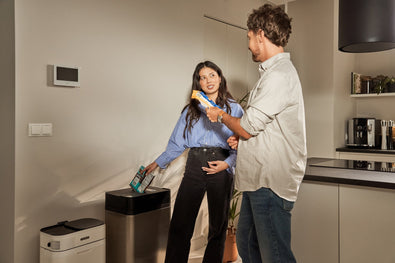
ZeroTrash® AI is designed to take the guesswork out of everyday waste decisions. Using a camera-based interface, the app analyzes packaging to help you determine whether an item is a soft plastic, fits accepted resin types, and is suitable for soft plastic compaction. Instead of relying on symbols or vague recycling rules, you can quickly figure out what an item is and how to properly discard it. Receiving this type of immediate, item-specific feedback can significantly improve trash sorting and reduce contamination in the recycling process. How much soft plastic do we end up throwing away by mistake? Probably much more than you think. Keep reading to learn how to properly sort your plastics and keep them out of landfills. 15 Common Soft Plastics People Throw Away by Mistake Below are some of the most commonly mis-sorted soft plastic items found in household waste streams. 1. Chip Bags and Snack Wrappers Often assumed to be unrecyclable due to their shiny appearance, many snack wrappers contain layers of soft plastic that can be compacted when accepted by downstream processors. 2. Cheese and Deli Packaging Flexible cheese sleeves and deli wrap films are frequently discarded, even though they belong in the soft plastic category once emptied and cleaned. 3. Frozen Food Bags Frozen vegetable and fruit bags are a major source of soft plastic waste and are commonly thrown away because they look “too thick” to recycle. 4. Bread Bags One of the most recyclable soft plastic items, bread bags are still among the most frequently trashed. 5. Produce Bags Lightweight produce bags are often forgotten or knotted and discarded, despite being a core soft plastic. 6. Cereal Box Liners The plastic liners inside cereal boxes are rarely recognized as recyclable soft plastics. 7. Takeout and Delivery Packaging From inner wraps to plastic liners inside delivery bags, many of these materials are soft plastics hidden in plain sight. 8. Bubble Wrap Often reused, but just as often trashed, bubble wrap is a recyclable soft plastic when properly compacted. 9. Plastic Film from Paper Products The plastic wrap around paper towels, toilet paper, and tissues is a common soft plastic item people overlook. 10. Dry Cleaning Bags Large, thin plastic films from dry cleaning are frequently misidentified and discarded. 11. Pet Food Bags Many pet food bags include soft plastic layers that people assume are non-recyclable. 12. Plastic Overwrap from Multipacks Shrink-style overwraps around multi-item products are rarely sorted correctly. 13. Shrink Wrap Clear or tinted shrink films are widely used in retail packaging and commonly trashed. 14. Packaging from Online Orders Mailer liners, air pillows, and inner plastic films from packaging add up quickly. 15. Soft Plastic Pouches Stand-up pouches and refill packs are increasingly common and often thrown away due to their shape and structure. Why Proper Sorting and Compaction Matter for Recycling Soft plastics are lightweight and easily contaminated. When incorrectly sorted, they can jam recycling equipment, lower material recovery rates, and increase processing costs. According to research from materials recovery organizations, pre-sorted, compacted soft plastics have a significantly higher chance of being successfully recycled into secondary products. Correct sorting at the household level directly improves the economics and feasibility of recycling downstream. Environmental Impact of Correct Soft Plastic Recycling at Home Soft plastics that are handled correctly can reduce landfill volume, decrease plastic leakage into ecosystems, and lower the demand for virgin plastic production. One of the most immediate ways you can reduce your plastic footprint is by improving your household’s plastic collection, especially for flexible packaging. Small, consistent actions at home scale into meaningful environmental outcomes. So, how can you ensure your plastic gets recycled properly? First, scan the item using ZeroTrash® AI, then add it to your Clear Drop Soft Plastic Compactor (SPC). How To Get Started With ZeroTrash® AI and the Soft Plastic Compactor (SPC) Getting started is intentionally simple. Use ZeroTrash® AI to scan everyday packaging, and follow the app’s guidance for sorting. Once an item is identified as a suitable soft plastic, the next step is proper preparation. What the SPC helps households do Compress soft plastics into dense, manageable forms Reduce storage volume Keep materials clean and consolidated Prepare plastics for real recycling pathways Compaction is critical because loose soft plastics are difficult to handle, transport, and process at scale. Together, ZeroTrash® AI and the SPC form a practical system for reducing soft plastic waste confusion at home. Making Soft Plastic Recycling Simple and Clear Soft plastic recycling doesn’t fail because people don’t care — it’s because the system is too often unclear. By combining clear identification (ZeroTrash® AI) with practical preparation (SPC), you can finally make informed decisions without memorizing rules or second-guessing every package. The result is not about perfection but making real, tangible progress.

Why CES 2026 Shifted the Conversation Around Ho...
CES has always been a place for bold ideas and ambitious visions. But this year, we noticed a subtle yet important change in how household waste was discussed. The conversations...
Why CES 2026 Shifted the Conversation Around Household Waste
CES has always been a place for bold ideas and ambitious visions. But this year, we noticed a subtle yet important change in how household waste was discussed. The conversations were no longer centered on experimental prototypes or distant sustainability promises. Instead, they focused on complete, workable systems that could realistically fit into daily life. The questions were practical and specific: How does this work at home? What happens next? Where does the material actually go? We at Clear Drop experienced this shift directly through in-depth discussions at our booth and across meetings. People were both curious and analytical. They wanted to understand the full path, from a decision made in the kitchen to a verified recycling or composting outcome. To us, it felt like the beginnings of a quiet yet powerful turning point, where household waste management stops being treated as an abstract challenge and starts actually being addressed with integrated, solvable systems. Recognition at CES 2026: Why It Matters At CES 2026, Clear Drop received two notable recognitions: Best of CES 2026 — Sustainability Best in Show 2026 — The Kitch These acknowledgments reflect growing industry recognition that soft plastic waste is a serious, unresolved challenge, and that addressing it requires complete systems rather than isolated efforts. This recognition helps shift the attention toward practical, household-level solutions that can scale. Media Interest and Industry Conversations Coverage from outlets including CNET, Engadget, Lifehacker, Mashable, Morning Brew, Plastics News, Waste360, housedigest, the kitchn and others focused less on novelty and innovation and more on feasibility and reliability. Conversations centered on real-world implementation, scalability, costs, verification, and ensuring that materials don’t end up in landfills. What the Market Is Finally Ready To Acknowledge Soft plastic waste has long existed in a gray zone of recycling. Grocery bags, wrappers, films, and flexible packaging often fall outside curbside programs, clog sorting equipment, or get rejected entirely. While collection efforts exist on paper, end-to-end processing rarely follows through in practice. This gap is often framed as a user problem: People are confused or choose to simply not participate Now, however, more people are recognizing that this issue is structural, not behavioral. Consumer fatigue with vague green messaging has accelerated this realization. People are increasingly skeptical of initiatives that rely on perfect sorting behavior or municipal overhauls that may never come. The market is now ready for solutions that close the loop — systems that work within real household constraints and deliver reliable outcomes without requiring constant effort or guesswork. From Promises to Systems: What Resonated Most at CES It wasn’t any single piece of technology that stood out most at CES 2026, but the interest in systems that removed uncertainty. People gravitated toward solutions that provided clarity across the entire мwaste management process, from identifying what to throw out where, how to sort it all at home, and how to ensure that materials would be processed and recycled as intended. This end-to-end logic directly addresses what many experience as “guessing fatigue” — the frustration of never being quite sure whether something is recyclable, compostable, or destined for the landfill. When the flow is transparent and verifiable, people start to feel like their efforts are no longer just aspirational, but actually making a difference. The best part is, when the system is simplified and streamlined, those efforts don’t require any extra work. A Complete Household Waste System in Practice Clear Drop’s system is designed around how people actually interact with waste at home. It consists of three interconnected components that work together to simplify decisions, reduce friction, and enable real recycling and composting outcomes. ZeroTrash® AI: Offering clarity at the first decision point Sorting decisions usually happen in seconds, often under uncertainty. ZeroTrash® AI helps users identify the material they’re discarding and how it should be handled. You simply scan the packaging to learn how to dispose of it properly. With ZeroTrash® AI, you can remove ambiguity, reduce mental load, and prevent errors before they happen. Soft Plastic Compactor (SPC): Making recycling physically possible Soft plastics are lightweight but voluminous, making them difficult to store and transport. The Soft Plastic Compactor (SPC) addresses this obstacle by compressing bags, wrappers, and films into dense, uniform bricks using controlled heat and pressure. A month’s worth of household soft plastic waste can be reduced to a compact block about the size of a shoebox. This process dramatically reduces volume, eliminates mess and odors, and prepares materials in a form that verified recycling partners can actually process. The SPC is designed for everyday household use and is already being adopted by small businesses that are turning an unmanageable waste stream into a stable, shippable resource. Organics Collector (OC): Separating food waste cleanly Food waste presents its own challenges, including odors, pests, and hygiene concerns. The Organics Collector (OC) enables clean, consistent separation of food scraps, keeping organics out of the general trash stream. By controlling smells and leaks, it removes one of the biggest psychological barriers to daily composting and supports cleaner downstream processing. Together, these components form a user-centered loop that involves clear identification and effective preparation to achieve verifiable results. CES in Context: A Broader Industry Shift Several CES sessions reinforced this direction. In discussions led by Corie Barry (CEO of Best Buy) and Michael Kassan (CEO of 3C Ventures), a clear theme emerged: Modern systems are no longer about transactions or channels, but long-term relationships built on trust. In this model, technology works best when it fades into the background, quietly enabling confidence, consistency, and ease. This philosophy closely aligns with Clear Drop’s approach to waste. We believe in building infrastructure that supports daily habits without demanding constant attention or heroic effort. What This Signals for the Future of Circular Living Circular living shouldn’t solely rely on individual discipline. As CES 2026 made clear, the future lies in systems that handle complexity behind the scenes, reduce decision fatigue, and support people where they already are. When tools are designed around real behavior and frustrations — such as time constraints, uncertainty, and limited attention — sustainable habits become repeatable rather than exceptional. Real change comes with consistency. Moving Forward Without the Hype CES 2026 marked a meaningful milestone for us at Clear Drop, but it’s hardly an endpoint. The work ahead — learning from our users, refining our products, and scaling what already works — will be subtler but just as meaningful. Clear Drop will continue to focus on workable systems that actually follow through on their promises. The conversation around household waste is evolving — and so are the tools that support it. Now we keep going. Thank you for being a part of our journey.

How the Shaw Institute Successfully Started to ...
The Shaw Institute in Blue Hill, Maine, is a respected nonprofit research organization studying the impact of contaminants, including PFAS chemicals and microplastics — on human and environmental health. Their...
How the Shaw Institute Successfully Started to Recycle Laboratory Soft Plastic Waste for the First Time with SPC
The Shaw Institute in Blue Hill, Maine, is a respected nonprofit research organization studying the impact of contaminants, including PFAS chemicals and microplastics — on human and environmental health. Their work is regularly published in leading scientific journals and covered by international media. The institute also operates an Environmental Education Center (EEC) featuring aquariums, marine mammal skeletons, and hands-on ocean exploration exhibits. Like most laboratories, the Shaw Institute generates significant quantities of clean polyethylene (PE) and polypropylene (PP) soft plastic waste from daily research operations — including packaging from lab tools, sampling supplies, and delivery materials. According to the U.S. EPA, most municipal programs do not accept soft plastics, meaning nearly all of this material historically went to landfills. To address this challenge, the Shaw Institute became one of the first research laboratories in the U.S. to pilot the Clear Drop Soft Plastic Compactor (SPC) — an on-site, lab-friendly solution designed specifically for soft plastic recycling. UNEP research highlights how important innovations like this are for managing flexible plastics responsibly. Why the Shaw Institute Chose the Clear Drop SPC Before implementing the SPC, staff had no practical way to recycle common laboratory soft plastics, including: polyethylene baggies and protective films bubble wrap and cushioning packaging sterile wrap and supply pouches other clean PE and PP packaging from lab operations “We were looking for proven technology that could help us deal with the soft plastic problem in our lab and beyond,” explains Dr. Charlie Rolsky, Executive Director and Lead Research Scientist. “We're excited to pilot Clear Drop’s SPC device as part of our 2025 internal sustainability efforts. It offers a much-needed solution for improving our ability to recycle the soft plastic waste generated by our lab work.” The Clear Drop SPC was selected because it: compresses clean soft plastics into dense, stackable blocks ready for certified recyclers requires minimal space and no heat or chemicals works precisely with PE and PP waste produced in labs supports the institute’s mission to reduce plastic pollution and “practice what they preach” A detailed technical explanation of the device’s operation is available here. Implementation and First-Month Results The SPC was installed directly inside the laboratory — the primary source of soft plastic waste. Staff received training on cleaning, sorting, and feeding materials into the compactor. The installation required no facility modifications and integrated smoothly into daily workflows. In the first month alone: 6 dense blocks of clean soft plastic waste were compacted and prepared for recycling 5 staff members plus several volunteers became regular SPC users The device operated safely and consistently in an active research environment The SPC quickly became an effective tool for reducing landfill-bound laboratory plastics and improving internal sustainability practices. Expansion Beyond the Lab Although the initial goal was laboratory waste reduction, the pilot expanded naturally as staff recognized the device’s capabilities: Soft plastics from the Environmental Education Center (EEC) are now collected and processed Employees began bringing clean PE/PP soft plastics from home Once per week, the SPC is moved to a public EEC exhibit, where visitors can observe the compression process and learn about soft plastic circularity This turned the SPC into both a practical waste-management device and a hands-on educational resource, supporting the institute’s public outreach mission. Early Community Interest (Next-Phase Potential) Building on the success of the internal pilot, the Shaw Institute is now exploring the idea of serving as a temporary community drop-off point where local residents can bring clean soft plastics for guaranteed recycling. While still in planning, this potential expansion aligns naturally with visitor engagement and mirrors other pilot models implemented by Clear Drop. Key Benefits Realized by the Shaw Institute First-ever ability to recycle laboratory soft plastic waste on-site Significant progress toward near-zero-waste lab and facility operations Strong alignment between the institute’s research mission and daily sustainability practices A new educational tool demonstrating real-world soft plastic recycling Proven, low-maintenance technology suitable for research organizations of any size The Shaw Institute pilot demonstrates that even small scientific institutions can successfully implement soft plastic recycling programs with the right equipment. For laboratories seeking a reliable, lab-safe, ready-to-deploy solution, the Clear Drop SPC offers measurable results and immediate environmental impact. Explore the SPC here.
How Geekdom sparked early wins in soft plastic ...
Geekdom is a cornerstone of San Antonio’s startup and innovation ecosystem. Spread across four floors in a prominent downtown building, it houses approximately 40 startups and plays host to a...
How Geekdom sparked early wins in soft plastic recovery with the Clear Drop's SPC
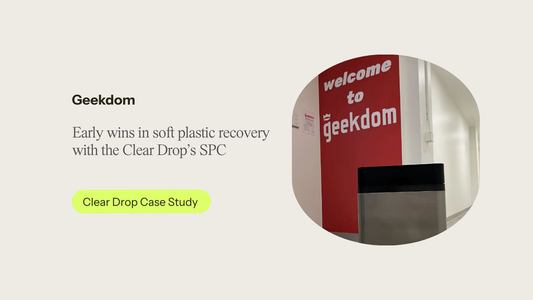
Geekdom is a cornerstone of San Antonio’s startup and innovation ecosystem. Spread across four floors in a prominent downtown building, it houses approximately 40 startups and plays host to a steady calendar of events: game jams, hackathons, seminars, and tech conferences. It’s the epicenter of the city’s entrepreneurial and venture community. Like many innovation hubs, Geekdom grapples with high volumes of everyday office & food packaging waste. Prior to the pilot, there was no structured process to recover or reduce this plastic waste stream. Pilot goals: Understand employee interest and engagement around soft plastic recycling Measure volume and speed of soft plastic accumulation Evaluate SPC’s role in supporting Geekdom’s broader sustainability and community values Approach Geekdom saw potential in the SPC’s ability to foster a shared community action around sustainability. The device was installed in a common area used by many different startup teams throughout the day, encouraging collaborative stewardship. The pilot was supported by custom signage near the kitchen/break room, table tents on community tables, and direct email outreach to all staff and tenants coordinated with Geekdom’s operations team. Geekdom staff even made their own signage :) Metrics: 1 SPC deployed 2 full soft plastic blocks created in under 2 months Employee participation was tracked qualitatively through conversations and visual observation Improvements are now in the works after receiving awesome critical feedback from staff on signage and the device’s instant recognizability as a recycling device. Materials inserted: Mailers and plastic wrappers from startup equipment Grocery bags, sandwich wrappers, and snack packaging from shared lunches Miscellaneous soft film plastics found around events “As someone who loves to recycle I want this in my home! It’s so easy to use, and gives me a way to recycle what is normally trash” - Julez Perez. Summary Geekdom views the SPC not just as a waste solution but as a community-building tool. In just two weeks, tenants filled a full block with soft plastics, demonstrating both engagement and the real waste footprint of a single floor. The operations team is now in deeper conversations with ClearDrop to potentially expand the pilot to multiple floors. Their slow-roll strategy allows for organic feedback and culture-based insights, helping refine messaging and product design while reinforcing Geekdom’s mission to lead in innovation and sustainability.

How Trinity University advanced soft plastic re...
Flexible plastic waste is one of the most persistent challenges on college campuses. From snack wrappers to shipping film used in media facilities, most soft plastics end up in landfills....
How Trinity University advanced soft plastic recycling with the SPC
Flexible plastic waste is one of the most persistent challenges on college campuses. From snack wrappers to shipping film used in media facilities, most soft plastics end up in landfills. Trinity University partnered with Clear Drop to pilot the Soft Plastic Compactor (SPC) inside the Richardson Communications Center — a space connecting academics, student media, and public programming — to test how a simple visibility shift could spark real sustainability participation. Trinity University, a nationally ranked liberal arts institution in San Antonio, Texas, enrolls approximately 2,600 students and maintains a student-to-faculty ratio of roughly 8:1. The university is known for its academic rigor, outstanding alumni outcomes, and architecturally significant campus. Trinity consistently ranks among the top liberal arts colleges in the country and holds the distinction of being the number one liberal arts university in Texas. Within the Dorothy A. and James W. Laurie Auditorium complex lies the Richardson Communications Center, home to the university’s Department of Communication and KRTU-FM (Jazz 91.7). KRTU is a premier jazz and alternative radio station serving the greater Southwest — a campus and community hub where media production, learning, and cultural programming intersect. Laurie Auditorium itself is a 2,700-seat venue that hosts a wide range of events, from academic lectures and commencement ceremonies to public performances, community discussions, and special guest visits. Its high visibility and diverse audience made it an ideal site to explore a new sustainability initiative. Project goals The goal of this pilot was to understand how the SPC performs in a high-traffic environment that brings together: Students in media and communication programs Faculty and staff working daily in shared spaces KRTU-FM hosts, volunteers, and production teams Visitors and community members attending events Guest speakers and partners engaged in cultural programming This allowed Trinity to evaluate not only the waste reduction impact but also communication strategies that make sustainability efforts feel accessible and rewarding. Soft Plastic Compactor solution The SPC was installed in the Communication Department break room — a location integrated into daily student and staff routines within the Laurie Auditorium complex. Clear, friendly instructions helped everyone quickly understand what types of plastics belong in the device and why this matters for recycling outcomes. Instead of soft plastics piling up in bins or heading to landfill, the SPC turned them into compact blocks ready for recycling through Clear Drop’s partner network. The device became a conversation starter, reinforcing that taking part in sustainability can be practical, fast, and even satisfying. “Seeing wrappers and film compact in seconds is cathartic — it normalizes sustainable behavior.” — Dr. Althea Delwiche, Professor & Dept. Chair SPC use case Primary location Shared Communication Department break room within the Laurie Auditorium complex. Key user groups Communication faculty and administrative staff Students and student media workers KRTU DJs, station employees, and volunteers Event guests and visiting speakers Common soft plastic inputs Snack wrappers and drink packaging Film wrap from studio and tech deliveries Mailers and protective packaging for radio operations Plastics from hospitality support for events This variety of inputs revealed the types of soft plastic generated in an interdisciplinary learning and production environment, while also showing how easily different user groups could adopt the SPC as part of their daily routines. Early outcomes Increased awareness of soft plastic recycling among students and staff Higher engagement from users who had never recycled soft plastics before More visible sustainability action in a shared, high-traffic space Successful testing of messaging and signage formats for wider roll-out The pilot showed how placing the SPC where people naturally interact — not hidden behind facility doors — drives adoption from day one. Findings and new collaboration perspectives This pilot demonstrated that the SPC can thrive in educational environments where media production, learning, and public interaction overlap. Trinity University continues evaluating broader expansion across campus departments. Clear Drop is exploring additional installations to support sustainability goals tied to student engagement, waste reduction, and campus innovation. Colleges play a key role in shaping habits that last a lifetime. By making soft plastic recycling easy and visible, Trinity is helping build those habits now — right at the source of waste generation. Bring Soft Plastic Recycling to Your Campus Clear Drop® partners with universities to reduce flexible plastic waste in student and staff spaces with measurable results. Contact our team to start a pilot at your campus: https://onecleardrop.com/pages/for-business