ZeroTrash® Revolution Blog Blog
Explore articles on recycling, waste management and sustainable habits by category
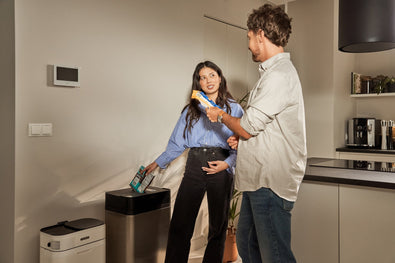

How Trinity University advanced soft plastic re...
Flexible plastic waste is one of the most persistent challenges on college campuses. From snack wrappers to shipping film used in media facilities, most soft plastics end up in landfills....
How Trinity University advanced soft plastic recycling with the SPC
Flexible plastic waste is one of the most persistent challenges on college campuses. From snack wrappers to shipping film used in media facilities, most soft plastics end up in landfills. Trinity University partnered with Clear Drop to pilot the Soft Plastic Compactor (SPC) inside the Richardson Communications Center — a space connecting academics, student media, and public programming — to test how a simple visibility shift could spark real sustainability participation. Trinity University, a nationally ranked liberal arts institution in San Antonio, Texas, enrolls approximately 2,600 students and maintains a student-to-faculty ratio of roughly 8:1. The university is known for its academic rigor, outstanding alumni outcomes, and architecturally significant campus. Trinity consistently ranks among the top liberal arts colleges in the country and holds the distinction of being the number one liberal arts university in Texas. Within the Dorothy A. and James W. Laurie Auditorium complex lies the Richardson Communications Center, home to the university’s Department of Communication and KRTU-FM (Jazz 91.7). KRTU is a premier jazz and alternative radio station serving the greater Southwest — a campus and community hub where media production, learning, and cultural programming intersect. Laurie Auditorium itself is a 2,700-seat venue that hosts a wide range of events, from academic lectures and commencement ceremonies to public performances, community discussions, and special guest visits. Its high visibility and diverse audience made it an ideal site to explore a new sustainability initiative. Project goals The goal of this pilot was to understand how the SPC performs in a high-traffic environment that brings together: Students in media and communication programs Faculty and staff working daily in shared spaces KRTU-FM hosts, volunteers, and production teams Visitors and community members attending events Guest speakers and partners engaged in cultural programming This allowed Trinity to evaluate not only the waste reduction impact but also communication strategies that make sustainability efforts feel accessible and rewarding. Soft Plastic Compactor solution The SPC was installed in the Communication Department break room — a location integrated into daily student and staff routines within the Laurie Auditorium complex. Clear, friendly instructions helped everyone quickly understand what types of plastics belong in the device and why this matters for recycling outcomes. Instead of soft plastics piling up in bins or heading to landfill, the SPC turned them into compact blocks ready for recycling through Clear Drop’s partner network. The device became a conversation starter, reinforcing that taking part in sustainability can be practical, fast, and even satisfying. “Seeing wrappers and film compact in seconds is cathartic — it normalizes sustainable behavior.” — Dr. Althea Delwiche, Professor & Dept. Chair SPC use case Primary location Shared Communication Department break room within the Laurie Auditorium complex. Key user groups Communication faculty and administrative staff Students and student media workers KRTU DJs, station employees, and volunteers Event guests and visiting speakers Common soft plastic inputs Snack wrappers and drink packaging Film wrap from studio and tech deliveries Mailers and protective packaging for radio operations Plastics from hospitality support for events This variety of inputs revealed the types of soft plastic generated in an interdisciplinary learning and production environment, while also showing how easily different user groups could adopt the SPC as part of their daily routines. Early outcomes Increased awareness of soft plastic recycling among students and staff Higher engagement from users who had never recycled soft plastics before More visible sustainability action in a shared, high-traffic space Successful testing of messaging and signage formats for wider roll-out The pilot showed how placing the SPC where people naturally interact — not hidden behind facility doors — drives adoption from day one. Findings and new collaboration perspectives This pilot demonstrated that the SPC can thrive in educational environments where media production, learning, and public interaction overlap. Trinity University continues evaluating broader expansion across campus departments. Clear Drop is exploring additional installations to support sustainability goals tied to student engagement, waste reduction, and campus innovation. Colleges play a key role in shaping habits that last a lifetime. By making soft plastic recycling easy and visible, Trinity is helping build those habits now — right at the source of waste generation. Bring Soft Plastic Recycling to Your Campus Clear Drop® partners with universities to reduce flexible plastic waste in student and staff spaces with measurable results. Contact our team to start a pilot at your campus: https://onecleardrop.com/pages/for-business

From soft plastic to microplastic: what to know
Soft plastic packaging surrounds almost every product we buy — bags, wrappers, film, shipping packaging. But when we throw it away, the story doesn't end. Most soft plastics are not...
From soft plastic to microplastic: what to know
Soft plastic packaging surrounds almost every product we buy — bags, wrappers, film, shipping packaging. But when we throw it away, the story doesn't end. Most soft plastics are not accepted in curbside recycling, so they break apart into invisible microplastics that move into air, soil, water — and even into the human body. 23× more microplastics in agricultural soils than in oceans — a largely invisible crisis Blood microplastics have been found in human blood, brain, lungs, placenta, and testicles 10K chemical additives may be present in plastics found in soil — most of them unregulated 90% reduction in soft plastic volume possible with compaction — slowing fragmentation before recycling How Soft Plastics Turn Into Microplastics Soft plastics break down due to a combination of UV radiation, abrasion, and weathering. These processes cause the polymer chains in plastics to degrade into smaller and smaller particles. UV Radiation Sunlight — particularly ultraviolet radiation — can break down the chemical bonds within plastic, causing it to become brittle and crack. This process, known as photodegradation, discolors plastic and reduces its mechanical strength. Interestingly, scientists from the UK and the University of Cape Town found that plastics of the same composition degrade at different rates depending on their color. Black, white, and silver colorants protect plastic from UV damage — other pigments do not. Abrasion Physical forces like wave action, wind, foot traffic, and contact with rough surfaces wear plastic down and break it into smaller pieces. This is especially evident in marine environments. Weathering Weathering combines UV radiation, temperature fluctuations, and environmental factors. It accelerates degradation and makes plastics more susceptible to fragmentation over time. Why compaction helps When stored as a dense block, soft plastics are less exposed to sunlight and physical abrasion — slowing early fragmentation and buying more time before recycling. Why This Matters: The Impact on Air, Soil, and Human Health Air pollution Nearly a dozen studies have documented airborne microplastic concentrations worldwide — meaning we breathe microplastics every day. Airborne microplastics include fibers, films, fragments, foam, granules, and spheres. Soft plastic particles may even influence cloud formation, contributing to climate change. Marine system pollution Microplastics enter oceans from wastewater, weathering, fragmentation, and fishing. They act as vectors for pollutants by adsorbing or releasing contaminants, which then harm marine organisms through inflammation, oxidative stress, endocrine disruption, and reproductive decline. Soil pollution Agricultural soils now hold 23 times more microplastics than oceans. Plastics in soil may contain up to 10,000 chemical additives — often unregulated — affecting soil health, plants, microbiota, and eventually human health. Health risks Microplastics have been found in human blood, brain, lungs, placenta, and more according to recent studies. They can trigger inflammation, oxidative stress, immune disruption, and cardiovascular risks. Microplastics were recently found in human testicles, potentially linked to declining sperm counts. Endocrine-disrupting chemicals in plastics — phthalates, BPA/BPS, and PFAS — are associated with hormone disruption and reproductive harm. The direct prevention step Because soft plastics degrade faster into smaller particles, reducing their exposure and fragmentation at home is one of the most immediate actions available today. Compacting soft plastics into secure blocks and sending them for proper recycling reduces the particles entering ecosystems — and human bodies. What You Can Do to Reduce Microplastic Formation You can't eliminate soft plastic overnight. But you can reduce the volume of microplastics created from the packaging you use. Collect soft plastics separately Don't toss soft plastics into general trash. Once mixed and compacted with other waste, they often end up in landfills or incineration — and eventually become microplastic pollution. Educate your circle Share facts, not fear. Encourage separate collection at home or at your workplace. Avoid soft plastic when you can Refill, reuse, or choose rigid or paper packaging — these materials are more recyclable and less likely to fragment. Don't burn or shred it Burning releases toxins. Shredding accelerates microplastic formation. Use a compaction system Compacting soft plastics reduces surface exposure and prevents early fragmentation. Clear Drop's Soft Plastic Compactor provides a full-cycle solution with real downstream recycling through certified partner facilities. As awareness grows, so does the ability to act. The journey from soft plastics to microplastics begins with everyday choices — and in those moments, prevention is possible. Make soft plastic disposal safer for the planet The Clear Drop® Soft Plastic Compactor turns bulky packaging into dense blocks — reducing surface exposure, slowing fragmentation, and making proper recycling easier. Learn more about the Soft Plastic Compactor →

Survey reveals trash sparks more fights than ch...
Trash duties are the most underestimated part of modern household life—yet they’re one of the biggest sources of conflict. According to a Clear Drop survey of 800 U.S. adults living...
Survey reveals trash sparks more fights than childcare, and why recycling Is at the heart of It
Trash duties are the most underestimated part of modern household life—yet they’re one of the biggest sources of conflict. According to a Clear Drop survey of 800 U.S. adults living with partners, 1 in 2 couples argue about trash and recycling more often than childcare decisions. This article explores how waste management affects relationships, why soft plastic recycling is especially stressful, and what practical home tools can help restore fairness and reduce guilt while improving sustainability. Trash duties spark more fights than childcare — 1 in 2 couples admit to arguing about trash, survey finds While big parenting decisions or figuring out what's for dinner can stir up conflict, the real flashpoint in modern relationships might be taking out the trash. According to a Clear Drop survey, 52% of couples have argued about trash duties — more than about childcare. While 30% of respondents said they don't argue about chores at all, the rest named garbage as one of the top 4 conflict triggers, right after cleaning, cooking, and laundry. Why waste management gets no recognition One reason for such contention? Trash and recycling are 6x less appreciated than cooking. We celebrate a home-cooked meal, but barely notice where the scraps go. We unwrap gifts with joy, then immediately forget about the packaging. Dealing with our trash is the final act of everything we consume, yet 72% of Americans say waste management doesn't feel like a valued task. Better systems reduce not only landfill waste but also stress at home. Gender roles in waste and recycling tasks According to the survey, 52% of respondents said the man usually takes out the trash — a rather visible chore. But behind that single action are numerous tedious tasks. At-home recycling involves sorting, rinsing, decoding triangle symbols, deciphering which plastics are accepted, which takeout containers are not, and whether a lid needs to come off a bottle. Key findings on household waste division: 52% of men typically handle trash removal 54% of women handle recycling sorting and preparation Women perform 1.5x more invisible waste management tasks In this way, recycling has become a mirror of domestic inequality: the visible gestures skew masculine, while the invisible tasks are seen as more feminine. Clear Drop solutions help rebalance invisible labor by simplifying preparation and recycling steps. Why women feel more recycling guilt than men The emotional weight of sustainability isn't shared equally, either. When asked if they'd ever felt guilty for throwing plastic in the trash without sorting it, 63% of respondents said yes. But the guilt also skewed sharply by gender: women are 1.5 times more likely than men to feel guilty about not recycling properly. This emotional burden is particularly heavy when it comes to soft plastic recycling, where clear disposal options are often unavailable through traditional curbside programs. Most people don't trust the recycling system Even for those who do the sorting, they don't have much faith in the system. Over half of Americans (58%) say they're not confident their recycling actually gets recycled. Women are even more skeptical: 62% of women doubt their recycling efforts make it through the system 54% of men share similar doubts It's a telling contradiction: The people doing more of the emotional and invisible labor are also the ones least convinced it matters. Their doubt has merit — in the U.S., only about 5% of plastic is successfully recycled. That’s why Clear Drop develops real soft plastic recycling solutions that connect household effort with proven downstream processing. Why soft plastics are a hidden source of household stress When asked which type of waste feels hardest to manage at home, hazardous items like batteries and electronics topped the list, accounting for nearly 25% of all answers. Food waste came close behind at 24% — both categories stood out as the most frequently mentioned trouble spots across households. Glass ranked third, with 17% of all answers. It's technically recyclable, but many cities have specific rules. People often wonder if they need to remove labels or if broken glass can be recycled or not. For 13% of respondents, soft plastics (including wrappers, bags, mailers, and film packaging) were most difficult to manage. Since most of these materials aren’t accepted by curbside programs or specialty drop-offs, they often end up in the trash. With no clear path for disposal, soft plastics have become one of the biggest blind spots in household waste. Clear Drop’s soft plastic compactor is designed to remove this blind spot by turning tricky-to-recycle packaging into dense blocks ready for real recycling. Paper and cardboard accounted for nearly 12% of answers, while cans and metal made up about 9.5%. In short, no category felt entirely frictionless, but hazardous and organic waste were flagged most often. Less arguing, more efficient recycling We live in homes that produce waste daily, yet most of us don’t know how to properly handle it, don’t believe our systems work, and don’t fully recognize the people who do the work anyway. While sustainability often feels like a personal responsibility, it’s also deeply social. It’s often shaped by how couples talk (or don’t talk) about fairness, trust, and what counts as “real work.” Talking openly about waste — who handles it, who gets thanked, and what happens after it leaves our hands — is a first step toward shifting both habits and norms. It also means being honest about the gaps in the system: how confusing rules, broken infrastructure, and low transparency erode trust. Clearer guidance, better tools, and public solutions that match the effort people already put into recycling are the missing pieces. Make Recycling a Source of Peace, Not Conflict Clear Drop’s home solutions simplify waste management and reduce invisible labor. Soft Plastic Compactor (SPC) compresses soft plastics into clean, compact 12×8×4-inch blocks that can be recycled through Clear Drop partners. Organics Collector keeps food scraps odor-free and ready for proper composting. See how Clear Drop creates a cleaner home and a cleaner world: https://onecleardrop.com/pages/for-business Frequently Asked Questions Why is household waste such a common conflict source? It’s daily, necessary, and rarely appreciated. When the work is invisible or unbalanced, tension builds quickly. Why are soft plastics so frustrating to recycle? Most curbside systems can’t handle them. They require extra steps—sorting, storing, mailing, or drop-off—which often fall on one person. How does the SPC reduce household stress? It eliminates sorting uncertainty and reduces storage volume up to 90%, making recycling simpler and more efficient. Does Clear Drop ensure plastics are truly recycled? Yes. Soft plastic blocks are sent directly to certified recycling partners and turned into new durable products.

How one office building pilot became a model fo...
Commercial buildings generate a large share of soft plastic waste — from deliveries, shipments, food packaging, and office supplies — most of which ends up in landfills. This case study...
How one office building pilot became a model for smarter soft plastic waste reduction
Commercial buildings generate a large share of soft plastic waste — from deliveries, shipments, food packaging, and office supplies — most of which ends up in landfills. This case study shows how one multi-tenant office building piloted the Soft Plastic Compactor (SPC) and proved that even a small shift in workplace waste handling can significantly reduce volume, improve recycling rates, and elevate ESG performance. In the heart of a major U.S. city, San Antonio, a 10-story commercial office building with up to 30 tenant companies took a step toward smarter sustainability. The building’s management sought an effective, hands-on solution to deal with soft plastic waste generated by significant traffic, regular deliveries, and daily office activity. Until recently, the entire building's soft plastic went straight into general waste bins and, inevitably, landfills. Recognizing this recycling gap, the management team agreed to test a new sustainable approach by piloting the Soft Plastic Compactor (SPC), a first-of-its-kind device designed specifically to deal with flexible plastics at the point of disposal. The goal: reducing waste and changing behavior Unlike other recycling efforts, soft plastics — such as mailers, wrappers, and packaging — are often overlooked. They’re lightweight, shapeless, and notoriously hard to recycle. Most commercial buildings lack the infrastructure to separate or reallocate these materials. This pilot focused not only on waste reduction but also on behavioral change — testing how a shared, high-traffic environment would respond to a new sustainability intervention. The experience also helped identify how to better communicate and position the Soft Plastic Compactor (SPC) within a commercial setting. “It’s great to finally see a solution targeting the soft plastic waste we all know ends up in the trash. It's sparked some good conversations among tenants already.” — Tenant feedback, Week 1 The plan: installing an SPC The SPC was installed in a central public area frequented by employees and service staff. Clear signage explained what the device was, what types of plastics it accepts, and why it mattered. There were no lengthy training sessions — the UX was intuitive enough for immediate adoption. Initial reactions and feedback Within days, the building began to see early signs of success. Staff and tenants engaged with the machine organically and showed increased curiosity about soft plastic waste, sustainability, and recycling behavior. Some initial user feedback helped identify opportunities for improvement — such as screen readability and UX ergonomics — which will inform updates for future pilots. “We didn’t know what to expect, but people started asking about the machine almost immediately. It feels like something new is possible here.” — Building staff comment SPC’s immediate impact The SPC became a learning lab for the building’s management and Clear Drop. The team tracked how tenants used the machine, what signage worked best, and what kinds of plastics were being collected. From day one, tenants fed a variety of flexible plastics into the SPC, including: Food wrappers and grocery bags Shipping mailers and packaging film Bubble wrap and soft protective materials With the SPC positioned in a central high-traffic area, the team also evaluated responsibility and workflow — such as who should empty the device and how often, and what internal infrastructure a multi-tenant building needs for successful adoption. Results: SPC minimized plastic waste and spotlighted sustainability innovation The pilot demonstrated that even modest behavioral shifts can drive meaningful sustainability gains in shared office environments. The SPC reduced soft plastic waste volume, improved recyclability, and sparked visible tenant engagement. Management now views the SPC as a valuable sustainability amenity — a practical way to demonstrate commitment to environmental responsibility, innovation, and accountability. The building’s team is evaluating future SPC expansions as part of broader ESG initiatives and corporate sustainability improvements. Why SPC Works for Offices and Multi-Tenant Buildings Decentralized soft plastic disposal at the point of waste generation Clear signage and simple UX encourage employee engagement Reduces plastic waste volume by up to 90% Enables real recycling through Clear Drop partner network Strengthens visible sustainability commitments to tenants and clients Make Your Office Sustainability Visible and Actionable The Clear Drop® Soft Plastic Compactor (SPC) transforms flexible plastic waste into compact 12×8×4-inch blocks — easy to store, ship, and recycle through our partners. Learn more about SPC for business: https://onecleardrop.com/pages/for-business Frequently Asked Questions How does the SPC improve recycling for commercial buildings? It prepares flexible plastics for real recycling by compacting them into dense, shape-preserving blocks that can be collected and processed by Clear Drop partners. How often does the SPC need to be emptied? Typically once per month in an office environment, depending on the volume of plastic collected. What types of plastics can the SPC handle? Most flexible plastics including shipping mailers, garment bags, bubble wrap, and soft packaging film. PVC and polystyrene are not accepted. What sustainability benefits does the SPC provide businesses? The SPC reduces waste volume by up to 90%, decreases landfill contribution, improves ESG alignment, and boosts tenant or employee engagement in sustainability.

Fixing the broken recycling system: why Clear D...
The global recycling system is struggling to keep up with the waste we generate. Most soft plastics are not accepted curbside, and Soft Plastic Compactor solutions are needed to handle...
Fixing the broken recycling system: why Clear Drop® exists
The global recycling system is struggling to keep up with the waste we generate. Most soft plastics are not accepted curbside, and Soft Plastic Compactor solutions are needed to handle what traditional systems cannot. Organic waste in landfills releases harmful greenhouse gases. Clear Drop® exists to solve this gap – preparing household waste for real recycling before it leaves the home. This approach, called pre-recycling, enables every household to make measurable impact toward a ZeroTrash future. From the Soft Plastic Compactor and Organics Collector to new inventions in development, Clear Drop’s mission is simple: to fill the gap between home waste collection and the recycling industry. Clear Drop aims to create a practical and truly impactful pre-recycling system, one that ensures materials are properly prepared for final recycling and 100% recycled with our partners. We created Clear Drop to fill the gap between home waste collection and the recycling industry with an ultimate ZeroTrash goal. We believe that real environmental change starts not with complicated recycling systems, but with smart, seamless solutions. Pre-recycling concept Pre-recycling bridges the gap between how waste is generated and how recycling actually works. Instead of relying on facilities to separate and rescue recyclable materials, Clear Drop® enables households to pre-process waste at the source. Soft plastics are compacted into density-enhanced blocks for efficient transportation and real downstream recycling. Organic waste is collected and stabilized without odors while retaining its compost properties through the Organics Collector. Together, these devices turn two of the most problematic waste streams into materials that recycling infrastructure can finally work with. Pre-recycling is not a replacement for recycling – it is what makes recycling possible. How Clear Drop® Solves What Recycling Can’t Soft plastics are prepared for real recycling instead of going to landfill. Organics are stored without smell or mess and stay compost-ready. Households produce less trash and need fewer collection pickups. Trucking emissions are reduced because volume is minimized at home. More material stays in the circular economy and out of nature. Clear Drop team Founder and CEO Ivan Arbouzov brings 34 years of experience in the hardware industry. Over his career, he has launched several ventures, including a media company, multiple product development businesses, and most notably, a multinational optics and electronics company that became a global leader and an industry standard in its niche. Ivan has been an inventor since childhood, always driven to create innovative solutions. With Clear Drop, he envisions a future where recycling begins at home, enabling households to pre-process waste in a way that benefits the entire system. This vision underpins Clear Drop’s mission to revolutionize soft plastic recycling and organic waste management for a cleaner, greener future. Plastic, especially soft plastic, is almost invisible in how ordinary it is. And yet, it's almost impossible to recycle. We unwrap something and immediately discard what’s left, often into a system that’s not ready to deal with it. “I wanted to work on something that truly mattered. Something that could help shift how we treat the world around us. That’s why I built one of our products, the Soft Plastic Compactor. Not just as a tool, but as a way to catch the problem at the moment it starts, right when waste is created. I reinvested what I earned from past ventures because I believe it needs to exist. I believe we can do better, not through greenwashing or gimmicks, but with real, practical tools that help people take action at home, right when something becomes waste,“ shares Ivan. That’s what the Soft Plastic Compactor and Organics Collector are for. It’s not just a machine. It’s a small shift in how we deal with what we throw away, and a step toward a better system. How the pre-recycling concept started Clear Drop® began developing pre-recycling technology five years ago, combining engineering, chemistry, and industrial design expertise into a new category of home appliances. The first Soft Plastic Compactor prototype debuted at CES 2021, gaining strong validation from industry leaders. Today, Clear Drop® continues to collaborate with recycling facilities, municipalities, and sustainability organizations to build a closed-loop ecosystem – one that guarantees recycling when materials are properly pre-processed. We have initiated collaborations with numerous projects, recycling facilities, industry stakeholders, and local authorities to create a more sustainable waste management ecosystem and to take responsibility for closing the loop with waste collected and compacted with our devices. Clear Drop envisions a future where households actively participate in waste pre-processing at the source. Backed by industry leaders Global recycling experts advise Clear Drop® to ensure our solutions align with real-world processing requirements. David Nix – former sustainability lead for global plastics producers, now guiding scalable soft-plastic recovery partnerships. Robert Render – pioneer of closed-loop industrial recycling programs with more than 200 successful initiatives. Their leadership ensures that Clear Drop® products are not “nice to have” gadgets – but critical infrastructure solutions for the future of circular waste systems. Call to Action: Explore Clear Drop® Devices Soft Plastic Compactor (SPC) – https://onecleardrop.com/products/soft-plastic-compactor-spc Organics Collector (OC) – https://onecleardrop.com/products/organics-collector Our long-term goal is simple: to shift how waste is handled at the point of generation in any form, starting with flexible plastics and organic waste. By working with partners across recycling, policy, and technology, we’re laying the foundation for scalable, lasting solutions to one of the world’s most urgent problems.