ZeroTrash® Revolution Blog Blog
Explore articles on recycling, waste management and sustainable habits by category
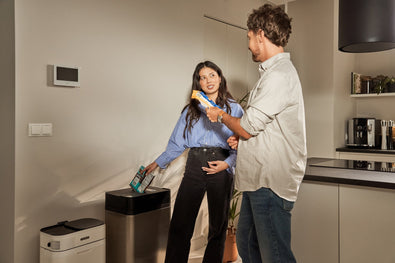

Survey reveals trash sparks more fights than ch...
Trash duties are the most underestimated part of modern household life—yet they’re one of the biggest sources of conflict. According to a Clear Drop survey of 800 U.S. adults living...
Survey reveals trash sparks more fights than childcare, and why recycling Is at the heart of It
Trash duties are the most underestimated part of modern household life—yet they’re one of the biggest sources of conflict. According to a Clear Drop survey of 800 U.S. adults living with partners, 1 in 2 couples argue about trash and recycling more often than childcare decisions. This article explores how waste management affects relationships, why soft plastic recycling is especially stressful, and what practical home tools can help restore fairness and reduce guilt while improving sustainability. Trash duties spark more fights than childcare — 1 in 2 couples admit to arguing about trash, survey finds While big parenting decisions or figuring out what's for dinner can stir up conflict, the real flashpoint in modern relationships might be taking out the trash. According to a Clear Drop survey, 52% of couples have argued about trash duties — more than about childcare. While 30% of respondents said they don't argue about chores at all, the rest named garbage as one of the top 4 conflict triggers, right after cleaning, cooking, and laundry. Why waste management gets no recognition One reason for such contention? Trash and recycling are 6x less appreciated than cooking. We celebrate a home-cooked meal, but barely notice where the scraps go. We unwrap gifts with joy, then immediately forget about the packaging. Dealing with our trash is the final act of everything we consume, yet 72% of Americans say waste management doesn't feel like a valued task. Better systems reduce not only landfill waste but also stress at home. Gender roles in waste and recycling tasks According to the survey, 52% of respondents said the man usually takes out the trash — a rather visible chore. But behind that single action are numerous tedious tasks. At-home recycling involves sorting, rinsing, decoding triangle symbols, deciphering which plastics are accepted, which takeout containers are not, and whether a lid needs to come off a bottle. Key findings on household waste division: 52% of men typically handle trash removal 54% of women handle recycling sorting and preparation Women perform 1.5x more invisible waste management tasks In this way, recycling has become a mirror of domestic inequality: the visible gestures skew masculine, while the invisible tasks are seen as more feminine. Clear Drop solutions help rebalance invisible labor by simplifying preparation and recycling steps. Why women feel more recycling guilt than men The emotional weight of sustainability isn't shared equally, either. When asked if they'd ever felt guilty for throwing plastic in the trash without sorting it, 63% of respondents said yes. But the guilt also skewed sharply by gender: women are 1.5 times more likely than men to feel guilty about not recycling properly. This emotional burden is particularly heavy when it comes to soft plastic recycling, where clear disposal options are often unavailable through traditional curbside programs. Most people don't trust the recycling system Even for those who do the sorting, they don't have much faith in the system. Over half of Americans (58%) say they're not confident their recycling actually gets recycled. Women are even more skeptical: 62% of women doubt their recycling efforts make it through the system 54% of men share similar doubts It's a telling contradiction: The people doing more of the emotional and invisible labor are also the ones least convinced it matters. Their doubt has merit — in the U.S., only about 5% of plastic is successfully recycled. That’s why Clear Drop develops real soft plastic recycling solutions that connect household effort with proven downstream processing. Why soft plastics are a hidden source of household stress When asked which type of waste feels hardest to manage at home, hazardous items like batteries and electronics topped the list, accounting for nearly 25% of all answers. Food waste came close behind at 24% — both categories stood out as the most frequently mentioned trouble spots across households. Glass ranked third, with 17% of all answers. It's technically recyclable, but many cities have specific rules. People often wonder if they need to remove labels or if broken glass can be recycled or not. For 13% of respondents, soft plastics (including wrappers, bags, mailers, and film packaging) were most difficult to manage. Since most of these materials aren’t accepted by curbside programs or specialty drop-offs, they often end up in the trash. With no clear path for disposal, soft plastics have become one of the biggest blind spots in household waste. Clear Drop’s soft plastic compactor is designed to remove this blind spot by turning tricky-to-recycle packaging into dense blocks ready for real recycling. Paper and cardboard accounted for nearly 12% of answers, while cans and metal made up about 9.5%. In short, no category felt entirely frictionless, but hazardous and organic waste were flagged most often. Less arguing, more efficient recycling We live in homes that produce waste daily, yet most of us don’t know how to properly handle it, don’t believe our systems work, and don’t fully recognize the people who do the work anyway. While sustainability often feels like a personal responsibility, it’s also deeply social. It’s often shaped by how couples talk (or don’t talk) about fairness, trust, and what counts as “real work.” Talking openly about waste — who handles it, who gets thanked, and what happens after it leaves our hands — is a first step toward shifting both habits and norms. It also means being honest about the gaps in the system: how confusing rules, broken infrastructure, and low transparency erode trust. Clearer guidance, better tools, and public solutions that match the effort people already put into recycling are the missing pieces. Make Recycling a Source of Peace, Not Conflict Clear Drop’s home solutions simplify waste management and reduce invisible labor. Soft Plastic Compactor (SPC) compresses soft plastics into clean, compact 12×8×4-inch blocks that can be recycled through Clear Drop partners. Organics Collector keeps food scraps odor-free and ready for proper composting. See how Clear Drop creates a cleaner home and a cleaner world: https://onecleardrop.com/pages/for-business Frequently Asked Questions Why is household waste such a common conflict source? It’s daily, necessary, and rarely appreciated. When the work is invisible or unbalanced, tension builds quickly. Why are soft plastics so frustrating to recycle? Most curbside systems can’t handle them. They require extra steps—sorting, storing, mailing, or drop-off—which often fall on one person. How does the SPC reduce household stress? It eliminates sorting uncertainty and reduces storage volume up to 90%, making recycling simpler and more efficient. Does Clear Drop ensure plastics are truly recycled? Yes. Soft plastic blocks are sent directly to certified recycling partners and turned into new durable products.

Fixing the broken recycling system: why Clear D...
The global recycling system is struggling to keep up with the waste we generate. Most soft plastics are not accepted curbside, and Soft Plastic Compactor solutions are needed to handle...
Fixing the broken recycling system: why Clear Drop® exists
The global recycling system is struggling to keep up with the waste we generate. Most soft plastics are not accepted curbside, and Soft Plastic Compactor solutions are needed to handle what traditional systems cannot. Organic waste in landfills releases harmful greenhouse gases. Clear Drop® exists to solve this gap – preparing household waste for real recycling before it leaves the home. This approach, called pre-recycling, enables every household to make measurable impact toward a ZeroTrash future. From the Soft Plastic Compactor and Organics Collector to new inventions in development, Clear Drop’s mission is simple: to fill the gap between home waste collection and the recycling industry. Clear Drop aims to create a practical and truly impactful pre-recycling system, one that ensures materials are properly prepared for final recycling and 100% recycled with our partners. We created Clear Drop to fill the gap between home waste collection and the recycling industry with an ultimate ZeroTrash goal. We believe that real environmental change starts not with complicated recycling systems, but with smart, seamless solutions. Pre-recycling concept Pre-recycling bridges the gap between how waste is generated and how recycling actually works. Instead of relying on facilities to separate and rescue recyclable materials, Clear Drop® enables households to pre-process waste at the source. Soft plastics are compacted into density-enhanced blocks for efficient transportation and real downstream recycling. Organic waste is collected and stabilized without odors while retaining its compost properties through the Organics Collector. Together, these devices turn two of the most problematic waste streams into materials that recycling infrastructure can finally work with. Pre-recycling is not a replacement for recycling – it is what makes recycling possible. How Clear Drop® Solves What Recycling Can’t Soft plastics are prepared for real recycling instead of going to landfill. Organics are stored without smell or mess and stay compost-ready. Households produce less trash and need fewer collection pickups. Trucking emissions are reduced because volume is minimized at home. More material stays in the circular economy and out of nature. Clear Drop team Founder and CEO Ivan Arbouzov brings 34 years of experience in the hardware industry. Over his career, he has launched several ventures, including a media company, multiple product development businesses, and most notably, a multinational optics and electronics company that became a global leader and an industry standard in its niche. Ivan has been an inventor since childhood, always driven to create innovative solutions. With Clear Drop, he envisions a future where recycling begins at home, enabling households to pre-process waste in a way that benefits the entire system. This vision underpins Clear Drop’s mission to revolutionize soft plastic recycling and organic waste management for a cleaner, greener future. Plastic, especially soft plastic, is almost invisible in how ordinary it is. And yet, it's almost impossible to recycle. We unwrap something and immediately discard what’s left, often into a system that’s not ready to deal with it. “I wanted to work on something that truly mattered. Something that could help shift how we treat the world around us. That’s why I built one of our products, the Soft Plastic Compactor. Not just as a tool, but as a way to catch the problem at the moment it starts, right when waste is created. I reinvested what I earned from past ventures because I believe it needs to exist. I believe we can do better, not through greenwashing or gimmicks, but with real, practical tools that help people take action at home, right when something becomes waste,“ shares Ivan. That’s what the Soft Plastic Compactor and Organics Collector are for. It’s not just a machine. It’s a small shift in how we deal with what we throw away, and a step toward a better system. How the pre-recycling concept started Clear Drop® began developing pre-recycling technology five years ago, combining engineering, chemistry, and industrial design expertise into a new category of home appliances. The first Soft Plastic Compactor prototype debuted at CES 2021, gaining strong validation from industry leaders. Today, Clear Drop® continues to collaborate with recycling facilities, municipalities, and sustainability organizations to build a closed-loop ecosystem – one that guarantees recycling when materials are properly pre-processed. We have initiated collaborations with numerous projects, recycling facilities, industry stakeholders, and local authorities to create a more sustainable waste management ecosystem and to take responsibility for closing the loop with waste collected and compacted with our devices. Clear Drop envisions a future where households actively participate in waste pre-processing at the source. Backed by industry leaders Global recycling experts advise Clear Drop® to ensure our solutions align with real-world processing requirements. David Nix – former sustainability lead for global plastics producers, now guiding scalable soft-plastic recovery partnerships. Robert Render – pioneer of closed-loop industrial recycling programs with more than 200 successful initiatives. Their leadership ensures that Clear Drop® products are not “nice to have” gadgets – but critical infrastructure solutions for the future of circular waste systems. Call to Action: Explore Clear Drop® Devices Soft Plastic Compactor (SPC) – https://onecleardrop.com/products/soft-plastic-compactor-spc Organics Collector (OC) – https://onecleardrop.com/products/organics-collector Our long-term goal is simple: to shift how waste is handled at the point of generation in any form, starting with flexible plastics and organic waste. By working with partners across recycling, policy, and technology, we’re laying the foundation for scalable, lasting solutions to one of the world’s most urgent problems.

Composting: electric vs. professional or tradit...
In the United States, food scraps make up a significant share of household waste — yet only about 5% of organic waste is composted. As electric composters gain popularity, many...
Composting: electric vs. professional or traditional options
In the United States, food scraps make up a significant share of household waste — yet only about 5% of organic waste is composted. As electric composters gain popularity, many homeowners believe they are creating usable compost. Environmental experts argue otherwise. This guide explains the differences between electric composting, true professional composting, and new home-friendly technologies that actually support a circular system and help reduce methane emissions from landfills. 5% of the annual 66.2 million tons of food waste in the U.S. is composted — the rest goes to landfill 70–90% volume reduction from electric composters — but the output is not true compost 160°F+ temperature used in electric composters — killing bacteria needed for real soil enrichment 30–40% moisture reduction with the Clear Drop OC — preserving organic matter for real composting How Electric Composters Work Electric composters use heat, grinding, and aeration to dehydrate and grind organic waste. They reach temperatures of around 160°F or above 212°F depending on the model — eliminating bacteria and pathogens in the process. The result is a dry powder or chunky fibrous material with 70–90% less volume than the original waste. That sounds convenient for keeping a kitchen odor-free and pest-free. But fully dehydrated and ground material is not compost — real compost requires microbial decomposition and active compost bacteria to benefit soil. The composting misconception "Right from the moment I saw the first unit, I questioned the 'composting' aspect. How can they compost so quickly when composting is a very slow process?" — Robert Pavlis, chemist, gardener, and author at GardenMyths.com The U.S. Environmental Protection Agency describes the output from these devices as a "dehydrated food waste byproduct" — not compost. This material is not biologically stable and often requires further decomposition before it can be safely used in soil. Applying it directly to plants may not deliver the intended benefits and could potentially harm plant health due to incomplete decomposition and high salt content. What the tests show Some environmentalist tests challenge electric composter claims, showing that the final material can be detrimental to plant growth and does not reliably eliminate odors — which can attract pests. Freshly ground material may also contain concentrated salts that create nutrient imbalances in garden beds. In cities where composting options are limited, electric composters do provide a practical way to separate food scraps from general trash. But since they don't produce real compost, meaningful progress requires a professional approach and municipal system participation. Professional Composting: How It Actually Works Unlike electric devices that grind and dry organic waste without microbial action, professional composting systems rely on natural decomposition to produce true compost. Feature Electric Composter Professional Composting Process Heat + grinding + aeration Aerobic microbial decomposition Output Dehydrated food waste byproduct True nutrient-rich compost Soil benefit Limited or potentially harmful Improves soil health and structure Waste types accepted Limited to certain organics Includes bioplastics, bones, and more Time to output Hours Weeks to months Professional composting, as understood by the US Composting Council, involves large-scale, controlled processes that handle significant volumes of organic waste under strictly managed conditions — aerobic decomposition with oxygen, controlled temperature, humidity and airflow, and the use of microorganisms with mechanical turning or forced aeration. A Better Home Alternative: The Organics Collector For households where traditional composting isn't an option and coping with flies, leaks, and odors feels like a mission, there's a middle path. Clear Drop's Organics Collector (OC) was designed specifically to solve the challenge of convenient household organic waste management — without full dehydration. It uses a combination of three technologies: drying without heating, aeration, and ozone treatment. Drying reduces moisture content by only 30–40%, preserving the essential organic matter so it can still be effectively composted in industrial facilities or a community pit. Aeration saturates the waste mass with air. Ozonation provides regular treatment with limited, safe doses of ozone. A carbon filter ensures all outgoing air is cleaned of odors. The key difference Electric composters destroy the organic value of food scraps. The OC stabilizes them — keeping waste compostable, reducing odors and leaks, and making it ready for the municipal or professional composting systems that actually close the loop. Real sustainability lies in supporting systems that return nutrients to the earth through natural decomposition. Whether through municipal composting services or home methods rooted in biology, the smarter path nurtures soil — not just simplifies disposal. Practical Steps for Cleaner Organics Collection at Home Keep food scraps separate from plastic packaging and other trash. Store organics in a sealed container to prevent mess and odors. Limit moisture and airflow exposure to slow decomposition and avoid pests. Use a home appliance that stabilizes food scraps without destroying their organic value. Deliver properly stored organics to municipal or professional composting programs where true composting occurs. Cleaner kitchen. Better composting. The Clear Drop® Organics Collector stabilizes food scraps using drying without heating, aeration, and ozone treatment — keeping them ready for true composting. Learn more about the Organics Collector →